Showing posts with label COLCOA. Show all posts

Sunday, October 9, 2022

WHAT TO WATCH AT THE AMERICAN FRENCH FILM FESTIVAL 2022

 By José Alberto Hermosillo

The American French Film Festival, formerly known as COLCOA (City of Lights - City of Angels), is presented through the Franco-American Cultural Fund, and it will be offering 80 films, series, and panels with distinguished guests. The Gallic yearly event will occur at the DGA (Directors Guild of America) Theater Complex from October 10th to 16th, 2022.

The 26th edition of the festival brings the best of French cinema to Los Angeles, a unique opportunity to meet the talent, directors, and stars behind the selected features, documentaries, classics, short films, and series.


The opening night film is “Notre-Dame is Burning,” by the legendary Oscar-winning director Jean-Jacques Annaud (“Black and White in Color,” “The Name of the Rose,” “The Lover,” “Seven Years in Tibet”). The cutting-edge drama involves one of the most significant and recent disasters in France’s history, the devasting fire of the “Cathedral of Our Lady of Paris.”


Another worthy productions to watch are the Austrian-French co-production “Corsage,” a film selected as the Austrian entry for Best International Feature Film at the 95th Academy Awards. The period piece presents the story of Empress Elizabeth of Austria, a woman known for an immense hunger for knowledge and love for life.


“The Night of the 12th” is a police crime investigation mystery drama where Captain Johan Vibes is haunted by an unsolved crime. The murder of Clara Royer in the French Alps is a case that hurts him more than the other cops, and he takes it personally. The film questions genre issues in a “man’s world.” This crime committed by men is also investigated by men and presents more questions than answers.

“Coupez” or “Final Cut” is the wacky gore-fest film that opens this year’s Cannes Film Festival and is now closing the French American Film Festival in Los Angeles. The remake of the Japanese zombie hit “One Cut of the Dead” is directed by an Oscar-winning director Michel Hazanavicius (“The Artist,” “The Search,’ “Godard Mon Amour”), and performed by his lifetime companion Berenice Bejo and Roman Duris, in a story about a filmmaker who wants to make a zombie movie with no-budget.

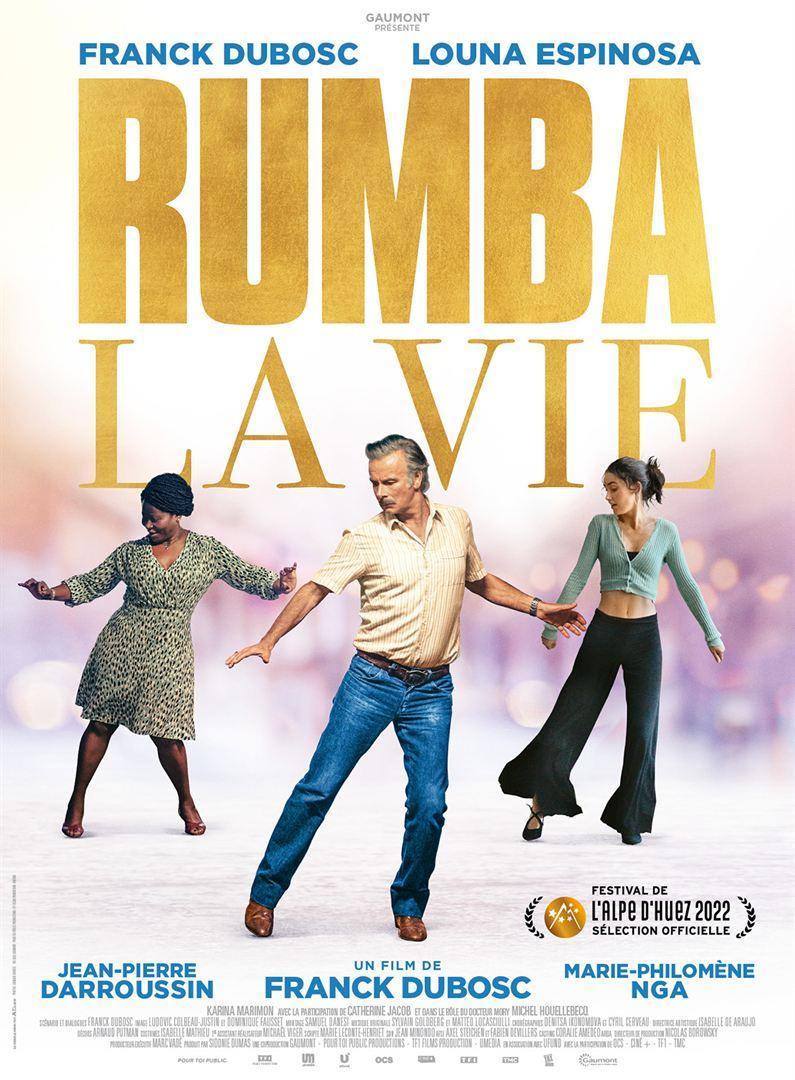
“Rumba Therapy,” in French, “Rumba La Vie” is a light-hearted comedy about ballroom dancing, directed and starring Franck Dubosc (“Rolling to You”). Franck plays a lonesome middle-aged school bus driver who abandoned his daughter when she was a baby twenty years ago. After his heart attack, the doctor recommends he reconnect with others. So, he goes to Paris to meet that daughter who is now teaching dancing and enrolls in her class incognito. In this therapy, he will learn more about life than a few dancing steps.  


One of the most awaited films this year, “En Corps,” or “Rise” in English, is directed by Cedric Klapish (“The Spanish Apartment”/“Russian Dolls”/ Chinese Puzzle trilogy, and currently working on his fourth installment named “Greek Salad”). In the world of dance, the film follows the life of Elisa, a ballerina of the Opera de Paris, who suffers an injury and struggles, and waits to see if she can ever go back ta dance again.


“Two of a Kind,” or “Jumeaux Mais Pas Trop,” tells the story of a working-class handyman and an Oxford-educated rich man who is now running for office in their hometown. The two opposite males have identical DNA even though one is black and the other white, and that test certifies them as twins. Once they know about the existence of each other, they have to learn to deal with such a dramatic situation.


DOCUMENTARIES:


CLASSICS

To buy tickets, click here.

Les Misérables Hollywood Premiere
Lodj Ly, director of  Les Misérables at COLCOA. Photo Jose Alberto Hermosillo, Festival in LA ©2019

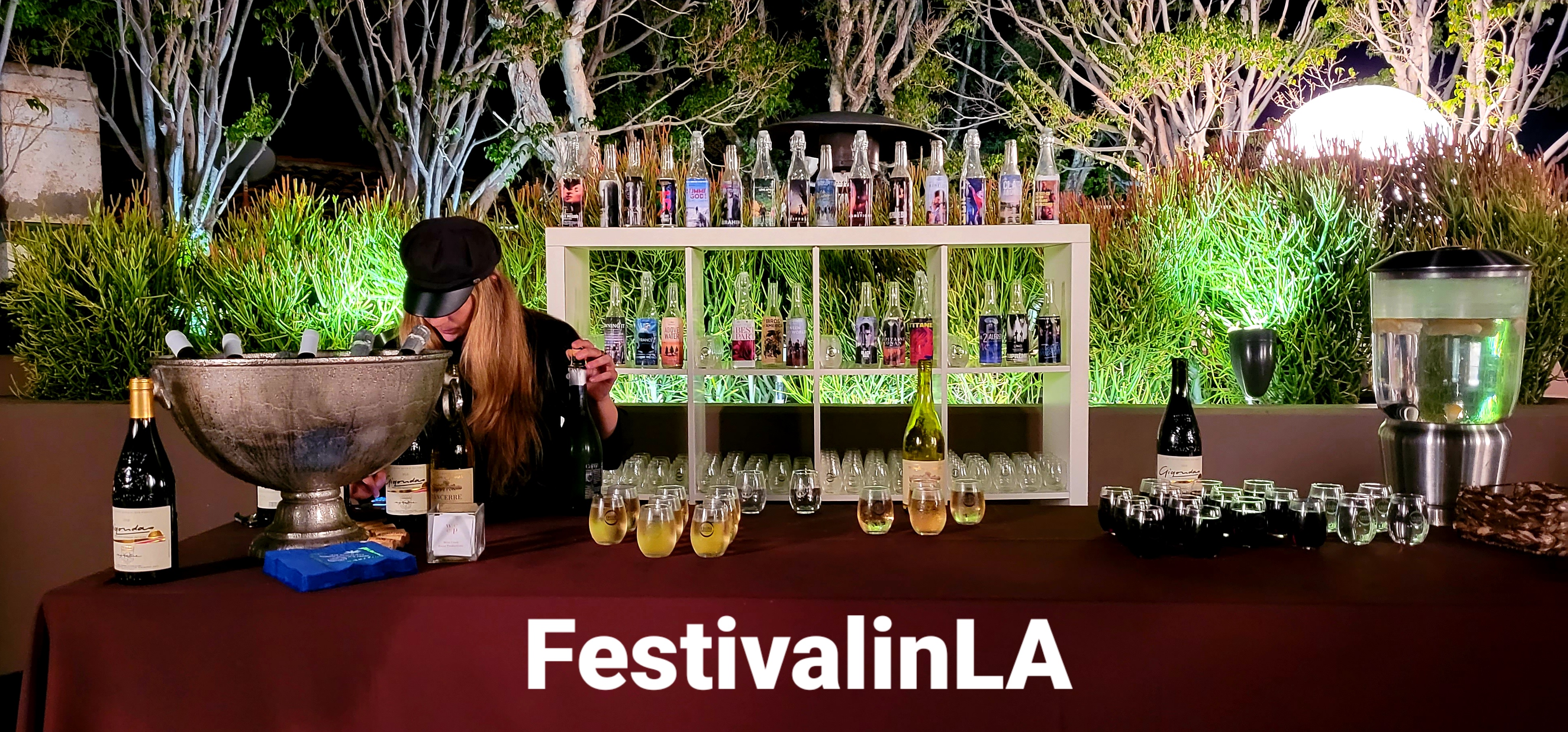
COLCOA's Reception. Photo: José Alberto Hermosillo, Festival in LA ©2019

COLCOA's Reception. Photo: José Alberto Hermosillo, Festival in LA ©2021

film critic: José Alberto Hermosillo, Festival in LA ©2022
 Film critic: José Alberto Hermosillo, Festival in LA ©2022

Director Jean-Jacques Annaud talks about his latest film NOTRE-DAME ON FIRE Director Jean-Jacques Annaud talks about his latest film NOTRE-DAME ON FIRE. 
Violette, When Women Dare to Write  

IF YOU ARE READING FROM A MOBILE DEVICE, CLICK: view web version FOR OTHER COOL FEATURES SUCH AS TRANSLATE POWERED BY GOOGLE, AN INTERACTIVE FILM FESTIVAL CALENDAR, AND MORE AWESOME ARTICLES.

Festival in LA ©2022

Monday, October 11, 2021

COLCOA CELEBRATES 25 YEARS OF FRENCH FILMS IN LOS ANGELES

By José Alberto Hermosillo


Related Articles:  

IF YOU ARE READING FROM A MOBILE DEVICE, CLICK: view web version FOR OTHER COOL FEATURES SUCH AS TRANSLATE POWERED BY GOOGLE, AN INTERACTIVE FILM FESTIVAL CALENDAR, AND MORE AWESOME ARTICLES.

Festival in LA © 2021

Monday, March 30, 2020

I Lost My Body: I Found A Masterpiece

By José Alberto Hermosillo
I Lost My Body, USA Poster. Photo courtesy Netflix ©2019 

“I Lost My Body” is a hypnotic and poetic animated masterpiece. Remarkable, surreal, bold, and fantastique!

The non-linear narrative unfolds in two parallel and symbolic universes, the Body and the Hand, which intricately converge at the heart-rending moment of separation.

The two leading players must face their unique reality. Naoufel, the body, is searching for love. The Hand, with a mind of its own, is searching for its body. Both characters struggle with a sense of belonging, intermittent recollections of their tragic past, and a mysterious quest to find what truly matters.

I Lost My Body, Gabrielle, and Naoufel. Photo courtesy Netflix ©2019

Working as a pizza delivery boy, Naoufel meets Gabrielle, a young librarian who leaves a lasting impression on him. This is the first occasion someone shows him a ray of affection, and Naoufel falls for Gabrielle.

Gabrielle is a self-absorbed, hardworking woman who looks after her elderly father, the owner of a carpentry shop on the verge of closing.

To break the routine and be close to Gabrielle, Naoufel gets a job at the older man’s shop, where his life will change forever.
 
I Lost My Body. Photo courtesy Netflix ©2019

“I Lost My Body” is an artistic representation of life grappling with tough existential questions.

The sublime and intricate French production is an adaptation of Guillaume Laurant’s novel Happy Hand.

Jérémy Chapin, director and Guillaume Laurant, writer. I Lost My Body. Photo José Alberto Hermosillo, Festival in LA ©2019

Mr. Laurant received his first Oscar nomination for Best Original Screenplay for Amélie in 2001. He also co-wrote A Very Long Engagement in 2004. Throughout a formal narrative, proper use of dialogue and symbolism - in Laurent’s newest adaptation, viewers can get a sense of his innovative “freestyle poetry.”

“It must be peaceful to be cut off from the world like that. To see nothing... hear nothing...” Naoufel.

Jérémy Chapin, director of I Lost My Body. Photo José Alberto Hermosillo, Festival in LA ©2019

First-time director Jérémy Chapin took a modern approach to the book’s narrative and structure. The auteur teamed up with Laurent to adapt the script.
 
Chapin’s style consists of making the invisible visible, which he masterfully achieves in “I Lost My Body.”

Before filming, Chapin asked himself, “How do we make a hand a vibrant character?” He began by looking at his Hand and discovered how to show the Hand’s point of view, then used that perspective to animate the inanimate.

I Lost My Body, The Hand. Photo courtesy Netflix ©2019
 
To lend authenticity to their unique character and to the rest of the film, Chapin underwent an immersive process using various animation techniques: abstract hand drawings, computer-generated animation, and CGI imagery.

“I Lost My Body” is a work of psychological fiction that achieves universality while addressing lost love and other meaningful themes.


CLICK PLAY ON AND CONTINUE READING:

The stunning soundtrack composed by Dan Levy is cosmic, mystical, and whimsical. We perceive ambient sounds blending in with classic, electronic, ethnic, contemporary, French rap, and lullabies. Digging deeper, a fusion of Buddhist and Middle Eastern music identifies with every character and complements the film’s haunting atmosphere.

I Lost My Body, French poster. Netflix ©2019
 
After I saw the film, I was intrigued by the similarities with the crawling Hand of the 1962 Mexican masterpiece “The Exterminating Angel/El ángel exterminador” by Luis Buñuel. I asked the director if he wanted to make a surreal animated piece. He replied, “No. “I Lost My Body” is hard to place in a box... I avidly wanted to find what it means to be a human in the story.” 

Chapin’s experimental narrative explores and mixes different genres: action, drama, suspense, romance, and horror. The concept, bold and volatile, works perfectly.


I Lost My Body, Q&A. Photo José Alberto Hermosillo, Festival in LA ©2019.

In recent years, only a handful of animated films can be considered existentialist: “Waking Life” (2001) and “A Scanner Darkly” (2006), both directed by Richard Linklater (“Boyhood”). Salma Hayek’s production of Kahlil Gibran’s “The Prophet” poems, 2014. “My Entire High School Sinking into the Sea,” 2016, and the Oscar-nominated Swiss-made stop-motion animation “My Life as a Zucchini” also from 2016.

This highly original European animation is set apart from Hollywood’s conventional narrative by exploring more daring subjects with a fresher approach. If “I Lost My Body” were Pixar, the Hand would be talking.

I Lost My Body, sign. Photo José Alberto Hermosillo, Festival in LA ©2019

“I Lost My Body” won numerous awards, becoming the first animated film to win the Critics’ Week Grand Prize at Cannes 2019, the COLCOA Audience Award, and the Best Feature Award at the Annecy Film Festival. It also won three Anny Awards, including Best Independent Animation, Best Music, and Best Writing. The film crowned its award season with a César Award and an Oscar nomination for Best Animated Feature.

To say, “I lost my body,” means declaring, “I lost myself.” 

Symbolically speaking, one is losing not only a part of the body but also dreams, goals, jobs, friendships, parents, love, and hope.

A melancholic feeling permeates the entire movie. One must find a sense of belonging in a society that continually alienates individuals, driving them to a state of complete emptiness.

“I Lost My Body” has plenty of excitement, evocative moments, and thought-provoking questions, and it hopes to remind us of our forgotten dreams from when we were kids.

Jérémy Chapin, director. Guillaume Laurant, writer. I Lost My Body. Film critic José Alberto Hermosillo, Festival in LA, ©2019


Related Articles:
IF YOU ARE READING FROM A MOBILE DEVICE, CLICK: view web version FOR OTHER COOL FEATURES SUCH AS TRANSLATE POWERED BY GOOGLE, AN INTERACTIVE FILM FESTIVAL CALENDAR, AND MORE.

Festival in LA ©2020