Showing posts with label Australia. Show all posts

Monday, February 12, 2024

Shayda; “A Separation” in Australia

By José Alberto Hermosillo

AFI FEST FILM REVIEW: “Shayda” is a thoughtful and profoundly moving family drama. It chronicles the journey of an Iranian mother and daughter as they endure a painful separation from their abusive husband in Australia in the 1990s.

Paraphrasing the title of the Oscar-winning 2011 Iranian film “A Separation,” directed by Asghar Farhadi, another story of separation among Iranians comes to the screen -- “Shayda,” based on the personal experience of first-time Iranian Australian director Noora Niasari, delivers a vivid portrayal of an abused Iranian single mother and her daughter as they wander in a foreign land.

Director Noora Niasari, Australia. Photo by José Alberto Hermosillo. Copyright © Festival in LA, 2023

 
The film strongly suggests Shayda’s darkest moments, including the reference to when she was beaten, raped, and sent out onto the street with her six-year-old daughter, Mona. To overcome adversity, she seeks refuge at a women’s shelter, where she finds counseling, legal aid, and friends in similar circumstances who teach her to empower herself to confront her husband and his family.


Over the Persian New Year celebration, Shayda would like to take comfort in the Nowruz rituals that symbolize a new beginning. But real life takes work. Escaping domestic violence and her country’s totalitarian ideology, Shayda needs to recapture her cultural identity by staying connected to her Iranian food, poetry, music, dances, traditions, and, above all, the Iranian people in Australia.


In this stressful cat-and-mouse drama, Shayda must be as far as possible from her abusive husband, Hossain (Osamah Sami), but the law does not grant her wishes. The patriarchal Australian system, unaware that the father wants to take his woman and daughter back to Iran to preserve his misogynist dominance, rules in favor of the father’s visitations.


The collaborative effort took six years to come to fruition. Noora’s mother was not only her inspiration but also stood by her side during production. Academy Award-winning actress Cate Blanchett, who served as an executive producer, was an essential part of the project, Niasari said at a Q&A after the screening of her film during the AFI Fest in Los Angeles in 2023.


The Persian-born director Noora Niasari, who grew up in Australia, returned to Iran at 19 to learn more about her roots, cultural identity, and other elements that would enrich the film. The symbolism of Shayda’s clothes, shapes, and colors represents the emotional journey and transformation, visually turning Shayda’s silhouette into a butterfly. 


In terms of place and time, the film powerfully analyzes how immigrants lived in Australia during the 1990s.


Actress Zar Amir Ebrahimi, Photo by José Alberto Hermosillo. Copyright © Festival in LA, 2023

Starring Tehran-born actress Zar Amir Ebrahimi (“Holy Spider” & “Tatami”) is as remarkable as Shayda. She displays a wide range of emotions, portraying a mother who is aware of her daughter’s well-being yet also needs empathy for herself.


Actress Zar Amir Ebrahimi & Selina Zahednia, Photo courtesy of Sony Classics, 2023

Mona, the little girl, is confident and expressive; young actress Selina Zahednia plays her. She understood acting from the beginning. The mother-daughter relationship looked natural on camera thanks to Selina and Zar Amir’s chemistry. They bonded by practicing their scenes in a child-friendly environment for two months.

“Shayda” is a woman-driven story that depicts the repercussions of the Australian immigration system and resonates with a new image of the Great Southern Land we have not seen before.

Noora Niasari dedicated her first work to her mom and all the brave women of Iran. She will continue working on her trilogy and has just announced that her next project is an adaptation of Mahsa Rahman’s novel “Raya” in North America.

“Shayda” is an affectionate, female-driven film with a sense of belonging. This cathartic project reflects the challenges experienced by a single mom during her separation from her abusive husband, as she moves away from her totalitarian country to find shelter and personal fulfillment for her and her daughter in a new land that represents a new beginning for both women who dream of a better future. 


Director Nooria Niasari & film critic José Alberto Hermosillo. Copyright © Festival in LA, 2023

Actress Zar Amir Ebrahimi & film critic José Alberto Hermosillo. Copyright © Festival in LA, 2023

Related Articles:

Invisible Life: Melodrama is Not Dead Thanks to Brazilian Cinema

Laura Pausini: Pleased to Meet You; Recounts the Life of the Megastar

IF YOU ARE READING FROM A MOBILE DEVICE, CLICK: view web version FOR OTHER COOL FEATURES SUCH AS TRANSLATE POWERED BY GOOGLE, AN INTERACTIVE FILM FESTIVAL CALENDAR, AND MORE AWESOME ARTICLES.

 Festival in LA ©2024

Friday, September 29, 2023

The New Boy: Politically, Spiritually and Religiously Australian

By José Alberto Hermosillo

“The New Boy” is a luminous work of art that embodies Australia’s cultural crossroads, faith, and magical realism.


During WWII, two Australian military officers captured an Aboriginal child who was fighting ferociously for freedom on the plains. They turned him over to a nun-run monastery in the middle of nowhere, where they wanted to “westernize” him. In the remote facility, children were prepared to be incorporated into the workforce to produce goods for the international conflict.


Asan Reid plays extraordinarily well as “The New Boy.”

Newcomer Asan Reid plays “the boy with no name” with extraordinary skill. On the farm, everyone calls him New Boy.


Even if no one trusts him, his noble inner strength is ready to do good, even for those who look at him differently and bully him.

New Boy is spiritually connected to the world, the land, and all the creatures of the animal kingdom.


Sister Eileen is connected to the story’s mystical aspect. She is a liberal and unorthodox Catholic nun who leads the convent and is both principled and well-organized. Academy Award-winning actress Cate Blanchett delivers an outstanding performance as the spiritual leader of this unique and intriguing place, conveying a wide range of emotions, from leadership to vulnerability.


As this unique, magical tale unfolds, the perfectly determined character arcs reflect both the archetype and the plot. Their natural evolution, internal conflicts, obsessions, goals, and adversities are easy to follow.


The magic the New Boy possesses illuminates the story. The religious elements serve as symbols of inspiration for some and oppression for others, creating a sense of unease due to the clash of both cultures, both visually and politically.


“The New Boy” boasts an outstanding cast, featuring Deborah Mailman as the sweet Sister Mom, Wayne Blair as George, Cate Blanchett in the lead, and Asan Reid as the new boy.


Other outstanding films in which children are removed from their natural environments and placed in strange settings, leading to their distress and isolation, include last year’s Oscar-nominated narrative short, “Le pupulle,” produced by Alice Rohrwacher and Alfonso Cuarón. 


More examples of the magic realism genre include “Érendira,” written by Nobel Prize-winning Gabriel García Márquez in 1983. The 1982 Oscar-nominated Nicaraguan feature “Alsino and the Condor.” In 2019, “The Painted Bird” shocked the film festival circuit. The endearing black-and-white film tells the story of a Jewish boy wandering alone in a conflict zone during WWII. Moving to a more contemporary reality is the 2017 Mexican production “Tigers Are Not Afraid,” in which orphaned children affected by the war on drugs struggle to survive in a dystopian land. New Zealand’s internationally successful road movie “Hunting for the Wilderpeople” is a comedy directed by Taika Waititi, featuring a troubled boy who runs into the wild with his step-grandfather.


Warwick Thornton, the director and cinematographer of “The New Boy” (DP on “September of Shiraz,” “Samson & Delilah,” and “Sweet Country”), was also responsible for photographing “The New Boy.” 


Warwick Thornton presents a sumptuous, visually stunning work, featuring vast, expansive landscapes and dramatic interiors. Chiaroscuro accentuates religious themes, providing the right balance of light and shadow for this remarkable project, rooted in the director’s childhood experience.


“The New Boy” was shot in South Australia, in the same region where Cate Blanchett started acting in the 1996 Australian movie “Parklands,” produced by her husband, Andrew Upton. Twenty-five years later, Cate returns to her homeland and stars in this new period drama directed by Dirty Films, her and her husband’s production company.


A key difference between the 1994 French film “Little Indian, Big City” and the 1997 American remake “Jungle to Jungle” is that “The New Boy” preserves the boy’s purity until his soul is corrupted by the religiosity of a Catholic baptism. The film’s magical realism is more intrinsic than in Alejandro Monteverde’s 2015 “Little Boy” (“Sound of Freedom”).


The ideal image of a harmonious blend of cultures in Australia is scrutinized in “The New Boy,” as the nation works to confront its colonial past with the Aboriginal people and with the rest of the world.


Padre Pio: Shia LaBeouf Internal Transformation

IF YOU ARE READING FROM A MOBILE DEVICE, CLICK: View web version FOR OTHER COOL FEATURES SUCH AS TRANSLATE POWERED BY GOOGLE, AN INTERACTIVE FILM FESTIVAL CALENDAR, AND MORE.

Festival in LA ©2023

Thursday, February 3, 2022

Lunana: A Yak in the Classroom, Children Bhutan's Hidden Treasure

By José Alberto Hermosillo

“Lunana: A Yak in the Classroom,” an unforgettable “Journey of Hope” to the Himalayas, sublime and heartfelt.  

Ugyen Dorji (Sherab Dorji) is an educated and determined young teacher from Thimphu, Bhutan's capital. 

Ugyen, like many other blossoming adults, enjoys modern music, karaoke bars, and nights out with friends. His ultimate goal is to abandon the national school system, emigrate, and become a famous rock star. However, bound by a long-term contract, his ambitious plans fail, and, to honor his commitment to the State, he is sent to the world’s most remote school to instruct children in need.

As a mentor, Ugyen is aware of climate change and global warming. However, he must experience firsthand the importance of maintaining a harmonious balance between the earth, people, and Mother Nature. The mountain will mold his attitude; he must find the “karmic connection.”

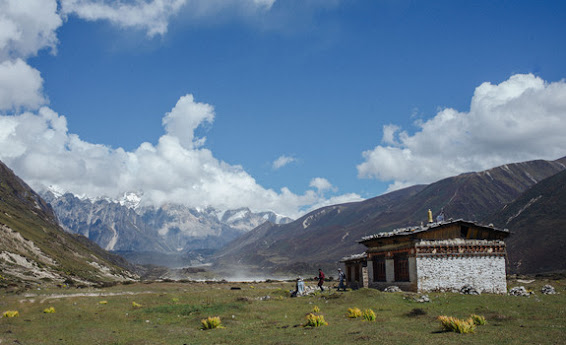
In Bhutan, villages are so isolated that they can only be reached on foot in five or more days. Lunana has only 56 residents, and the school sits at an elevation of 4,800 meters.

For Ugyen, meeting the children, their quaint schoolhouse, their yak-centered world, and hearing an enchanting song high above helped him to make a decision. 

Lunana: A Yak in the Classroom, Bhutan's Hidden Treasure

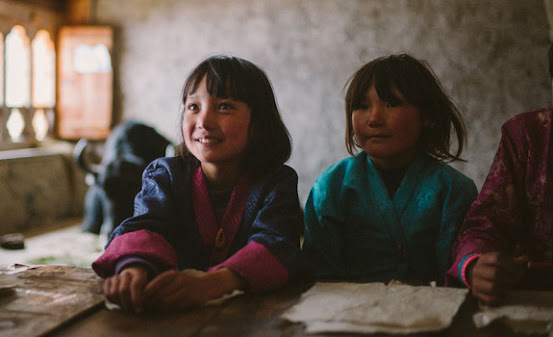
Despite the filmmaker's fear of working with children or animals, director Pawo Choyning Dorji had a sacred yak roam freely in the classroom, making it an essential part of the story. He also worked with a group of incredible children who had never watched a movie before, yet were charismatic and enthusiastic.

Filming remotely also compelled the director and crew to adapt to limited logistics. The only electrical power source there was unpredictable local solar power, as we see Ugyen’s MP3 player dying, which affected the filmmakers. They had to shoot everything without watching dailies, making the editing and post-production more challenging.

Bhutan has no funding for arts and crafts, let alone a budget for filmmaking. Choyning Dorji had to seek help overseas and received economic aid and equipment from India, Japan, and Australia. His next project is called “Once Upon a Time in Bhutan...”

Lunana: A Yak in the Classroom, Bhutan's Hidden Treasure

The First Amendment of Bhutan’s Constitution states: “It is the government’s responsibility to make its citizens happy, and if the government fails, the government has no right to exist.” Bhutan is the happiest country on earth and also one of the poorest.

“Lunana: A Yak in the Classroom” is Pawo Choyning Dorji’s exceptional first film as a writer, director, and producer – and it also became an opportunity to showcase his art and creativity to the world, despite his country’s limitations. Pawo honed his skills as a cameraman and producer for the award-winning monk and filmmaker Norbu.

Lunana: A Yak in the Classroom, Bhutan's Hidden Treasure

After traveling around the international film festival circuit and being nominated for the 94th Academy Awards in the category of Best International Feature Film, a modest yet beautiful project from Bhutan has attained unprecedented exposure — even among the locals, schoolchildren, and monks in the remote temples and monasteries who also experienced and embraced the film journey joyously.

The Oscar-nominated Bhutanese film “Lunana: A Yak in the Classroom” is a study of symbolism in which dress codes accentuate styles and status among women and men, peasants and leaders. Dress codes are required nationwide in public buildings and ceremonies, based on modesty and traditional Buddhist respect.

The dialogue is meaningful, and the semantics convey political and religious connotations that help the public learn more about Bhutan, an independent country protected by India from China’s interest after China annexed Tibet and the Buddhist leaders left in 1959.

Lunana: A Yak in the Classroom, Bhutan's Hidden Treasure

To avoid dwelling on common stereotypes of snowy mountains, the film’s breathtaking cinematography focuses on landscapes with people, especially children’s faces, as mirrors reflecting their purest emotions.

Songs and music provide a rewarding companion to the story; the lyrics connect the land, the people, and the mountain's spirits. Who would have guessed a movie from Bhutan could be so transcendental in our days of isolation during the pandemic?

Watch “Lunana: A Yak in the Classroom” and let your inner teacher come out and live through the wonder felt by the children of this magnificent movie.

Related Articles:  

IF YOU ARE READING FROM A MOBILE DEVICE, CLICK: view web version FOR OTHER COOL FEATURES SUCH AS TRANSLATE POWERED BY GOOGLE, AN INTERACTIVE FILM FESTIVAL CALENDAR, AND MORE AWESOME ARTICLES.

 Festival in LA ©2022