Showing posts with label Sweden. Show all posts

Saturday, January 14, 2023

SCANDINAVIAN FILM FESTIVAL LA 2023

By José Alberto Hermosillo

The Scandinavian Film Festival Los Angeles 2023 is back for in-person screenings on the weekends of Jan 14-15 & 21-22, 2023, at the Writers Guild of America Theater, 135 W. Doheny Drive, Beverly Hills, California, 90211. Tickets are for sale at the box office. 

The extraordinary selection of Nordic films includes Oscar entries from Denmark, Finland, Iceland, Latvia, Lithuania, Norway, and Sweden in the Best International Feature Film category for the 95th Academy Awards.

For more information and a full calendar, visit Scandinavian Film Festival L.A. 2023

Set in Iran, “Holy Spider” chronicles the journey of a religious serial killer named “Spider Killer,” who murdered 16 prostitutes in Iran between 2000-2001, and the brave female Iranian journalist who discovered the truth. The Diminish production directed by Ali Abbasi (“Border”) is an international success.

Norway’s participation in WWII is exhibited in “War Sailor,” where two best friends joined the armed forces to bring supplies to G.B. and get cough in the middle. At the war’s end, the government did not treat the veterans with honor, respect, monetary retribution, or financial aid.  


The celebrated film “Cairo Conspiracy,” also known as “Boy From Heaven,” Made in Egypt, produced by Sweden, France, and Finland, and directed by Tarik Saleh, talks about Adam, a young son of a fisherman with a scholarship to go to study Muslim in Cairo when a classmate takes him for a night out in the city. The film won best screenplay at Cannes 2022. 

A Finnish coming-of-age film directed by Alli Haapasalo. The Audience Award winner in the International competition at Sundance 2022 talks about three best friends getting along during the darkness of the winter in Finland, trying to make sense of their lives and loves under those weather conditions. 

The Icelandic Oscar entry “Beautiful Beings” narrates the story of Addi, a boy raised by a clairvoyant mother who decides to adopt a bullied misfit into his gang of outsiders. The boys explore aggression and violence but also learn about loyalty and love. As the group’s behavior escalates towards life-threatening situations, Addi begins to experience a series of dreamlike visions. Can his newfound intuition guide him and his friends back to a safer path, or will they dive irrevocably into further violence?

“The Wait” presents a love triangle between a pastor, his wife, and his friend on a remote Finnish island. The film is adapted from Juhani Aho’s novel The Pastor’s Wife. The music is composed by Esa-Pekka Salonen, the former Los Angeles Philharmonic music director.

 
CLOSING NIGHT FILM
 
“Everybody Hates Johan,” a Norwegian comedy about an adventurous and free-spirited middle-aged man named Johan Grande whose passion for horses and explosives represents a threat to his community. His quest for love will continue until the end.
 
For more information and a full calendar, visit:  
 
Related Articles:  
Violette, When Women Dare to Write  

IF YOU ARE READING FROM A MOBILE DEVICE, CLICK: view web version FOR OTHER COOL FEATURES SUCH AS TRANSLATE POWERED BY GOOGLE, AN INTERACTIVE FILM FESTIVAL CALENDAR, AND MORE AWESOME ARTICLES.

Festival in L.A. ©2023

Saturday, June 25, 2022

Clara Sola: Defines Feminism with Magical Realism in Costa Rica

By José Alberto Hermosillo  


“Clara Sola” is a powerful sisterhood drama from Costa Rica, rich in natural beauty and complex family relationships, infused with supernatural elements rooted in Latin American magical realism. It also deserves recognition. 

Over the past fifty years, Latin American cinema has increasingly challenged its traditional standards, leading to a new wave of post-colonial, post-political, and post-structural films that showcase diverse critical voices from remarkable filmmakers.

Following this groundbreaking trend, “Clara Sola” joins other essential and captivating Latin American magical realism classics such as “Eréndira,” directed by Ruy Guerra in 1983, based on the novel “The Incredible and Sad Tale of Innocent Eréndira and her Heartless Grandmother” by Nobel Prize-winning author Gabriel Garcia Marquez; the Mexican culinary classic “Like Water for Chocolate” by Alfonso Arau; the Colombian anti-war film “The Colors of the Mountain;” the Mexican-Spanish multi-award-winning fantasy “Pan’s Labyrinth” by Guillermo del Toro; the Oscar-nominated existentialist film “Biutiful” by Alejandro González Iñárritu; and more recently, the 2019 political thriller “La Llorona” by Guatemalan award-winning director Jayro Bustamante, along with the 2020 Netflix period drama “Tragic Jungle” by Yulene Olaizola, set at the border of Belize and Mexico.

Clara Sola vintage poster

The multi-layered fable unfolds on a small ranch in the remote village of Heredia, near the Poás volcano in Costa Rica. It features Clara, her mother, Fresia, and her niece, Maria. Each woman represents a different generation, set of beliefs, and goals within the story. The film’s protagonist is Clara, beautifully portrayed by first-time actress Wendy Chinchilla Araya, a dancer making her first major acting debut. Wendy Chinchilla exudes complete control over her emotions, confidently engaging the audience with her piercing gaze.


Clara has the gift of communicating with nature and animals—ranging from snakes and insects to her beloved tall white horse. She claims to work for God, and people believe her, while her mother exploits this belief. Clara also suffers from a rare spinal disease that causes excruciating pain, leading her to escape from reality. She keeps herself grounded by connecting with nature. 

Clara is physically abused by her repressive and religious elder mother, Fresia (Flor Maria Vargas Chavez). Clara’s precocious niece is Maria, played by Ana Julia Porras Espinoza, who is thrilled about her upcoming quinceañera. 

When Maria starts dating Santiago (Daniel Castañeda Rincón), the ranch hand, Clara— a forty-year-old woman who has never been with a man and is on the verge of her sexual awakening— finds herself overwhelmed with emotional pain. A new hostility takes hold of Clara and her niece, partly due to the twenty-five-year age difference and the conflicting feelings each has for the same man.

In “Clara Sola,” the male figure is portrayed as a “breeding stallion” who could please both the young teen and the older aunt. In Pier Paolo Pasolini’s 1968 drama “Teorema,” the conflicts are straightforward, and the male lead has premeditated sexual advances on every member of a wealthy Italian family. By contrast, in “Clara Sola,” the situation is reversed - women use the rancher only for their pleasure, presenting a very feminist perspective of the film.

Nathalie Álvarez Mesén - Festival in LA ©2022
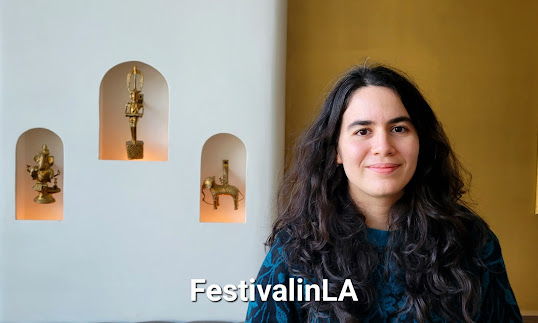
Nathalie Álvarez Mesén, Beverly Hills, California. Photo by José Alberto Hermosillo - FestivalinLA ©2021

First-time director Nathalie Álvarez Mesén was born in Stockholm but has strong ties to Costa Rica, her mother’s homeland. She and her family have spent several years living in a Central American country. She studied mime acting in Stockholm and film at Columbia University. She participated in the Berlinale Talents program, the Toronto Film Festival Filmmakers Lab, and the NYFF Artist Academy. 

With “Clara Sola,” Álvarez Mesén delivers an impressive debut film. She can direct both non-professional actors and experienced professionals. Álvarez Mesén collaborated closely with Colombian co-writer Maria Camila Arias. Together, they seamlessly contrasted personal, vivid images from their childhood to adulthood, incorporating key themes of the film such as religion, gender roles, machismo, social circles, and inner exploration.

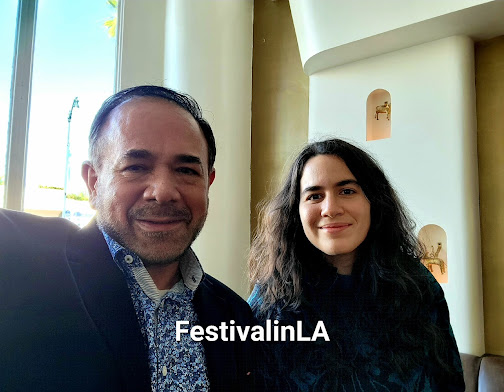
Critic José Alberto Hermosillo, director Nathalie Álvarez Mesén, Beverly Hills, California - FestivalinLA ©2021

Speaking fluently in Spanish after a private screening in Beverly Hills, Álvarez Mesén told me that she felt the project became more religious and spiritual once filming began. The site’s mystical vibe is directly reflected in the movie, and that was when she sensed the deep sense of community needed for her film. This atmosphere is something Hollywood hasn’t fully mastered yet. Foreign directors convey the community’s cultural traits through a more personal connection with the locals’ way of life and customs.


The film, directed, written, shot, and edited by women, was filmed in Costa Rica over 35 days. All editing and post-production took place in Belgium during the pandemic.


Director of Photography Sophie Winqvist Loggins subtly illuminates each scene, framing shots like open windows that reveal the forest’s interior or the inner spirit from the outside.


Beautifully shot in the vibrant Central American country where Universal Studios created “Jurassic Park,” the Swedish/Costa Rican/Belgian project was one of the best films ever made in Costa Rica. “Clara Sola” was the official Costa Rican entry for the 94th Academy Awards. It premiered at the Cannes 2021 Directors’ Fortnight. It won five Guldbagge Awards (Swedish Academy), including Best Film, Best Director, Best Cinematography, and Best Screenplay. It also received Best Picture awards at festivals such as Cleveland, Nashville, and Denver.


The drama and passion of “Clara Sola” deepen our appreciation for its beauty; the film’s climax is reminiscent of the 1976 cult horror flick “Carrie,” which the director had never seen before her feature film debut. She now takes that as a compliment.


“Clara Sola” is one of those rare films with a slightly feminist perspective, portraying a matriarchal lead as part of a “new normal” and depicting a family that evolves from traditional macho roles toward a more inclusive society. Unlike the Mexican horror film “We Are What We Are” from 2010, the story asks who will succeed in the patriarchal family hierarchy, a question reinforced through the dialogue.


“Clara Sola” depicts the male lead as merely an accessory for women. It’s a bold move and a very valid feminist perspective for a young female director who is now calling the shots with this extraordinary piece of filmmaking. Nathalie Álvarez Mesén’s next project is “Three Women” for Showtime.


Related Articles:
Laura Pausini: Pleased to Meet You, Recounts the Life of the Italian Megastar

IF YOU ARE READING FROM A MOBILE DEVICE, CLICK: view web version FOR OTHER COOL FEATURES SUCH AS TRANSLATE POWERED BY GOOGLE, AN INTERACTIVE FILM FESTIVAL CALENDAR, AND MORE AWESOME ARTICLES.

 Festival in LA ©2022

Wednesday, April 8, 2020

And Then We Danced: Folk, Love & Pride in Georgia

By José Alberto Hermosillo
 
AFI FEST FILM REVIEW: “And Then We Danced,” a coming-of-age, joyful drama about personal liberation and self-realization in Georgia. Unforgettable, warm, and unique.

The Swedish, Georgian, and French co-production, shot in the Caucasus region, chronicles the story of three aspiring professional dancers: Merab, Mary, and Irakli, the newcomer. They train hard and compete to win a coveted spot in the prestigious National Georgian Ensemble.

The first conflict arises when the strict instructor demands that the students adhere to the rules of the predominantly “masculine” dance. At the same time, the young dancers want to soften the harsh regulations of the old traditions, something nearly impossible in their society.

The second conflict occurs on a lucky day when a new dancer arrives, disrupting the group’s natural balance. Irakli is a strong male who impresses everybody with his prodigious dancing skills, instant charisma, and charming smile. Everybody, including Merab, feels jealous and powerless when he enters the competition.

Besides prestige, being a lead dancer means being socially accepted, making the family proud, and being a much-needed steady source of income in difficult times.

And Then We Danced, still courtesy of Music Box Films
And Then We Danced, still courtesy of Music Box Films.
 
The rivalry between Merab and Irakli intensifies on the dance floor, but their common struggle draws them together.

Merab slowly discovers that his happiness and world center around another man, Irakli. Feeling pushed aside, Mary hangs on to her friendship with Merab and will do anything to keep him happy.
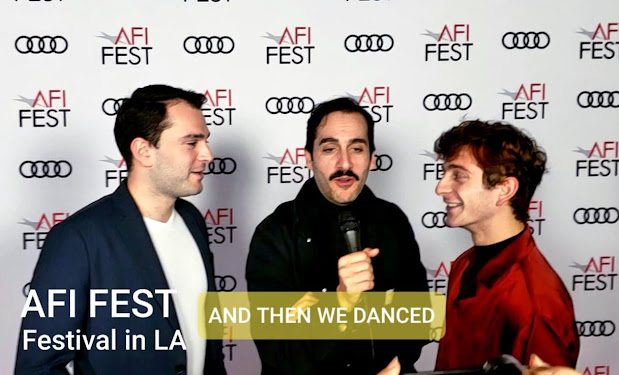
And then We Danced. Photo by José Alberto Hermosillo, Festival in LA ©2019
And then We Danced. Actor Bachi Valishvili, director Levan Akin, and actor Levan Gelbakhiani. Photo by José Alberto Hermosillo, Festival in LA ©2019

“And Then We Danced” takes an authentic approach to Georgian and Armenian cultures, blending those traditions with the modernity of a new generation who want to express themselves freely in their homeland.

The daring writer/director Levan Akin originally planned to make a documentary on Georgian dancers. After watching the first footage, he saw a coherent story and turned it into a feature with a formal narrative. He went out to the streets without permission and shot it “Guerrilla-Style.”

Akin considers himself an extensive researcher, and to make his film even more authentic, he studied the symbolism in Georgian dances, music, and costumes. Then, he juxtaposed those traditional elements of the country’s contemporary culture, subtly displaying the differences between parents, grandparents, and the invigorating youth.
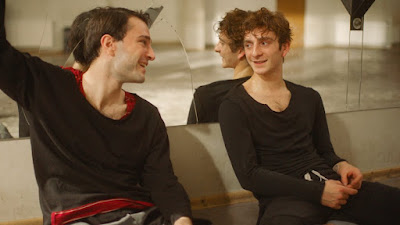
And Then We Danced, still courtesy of Music Box Films
And Then We Danced, still courtesy of Music Box Films.
 
Initially, Akin interviewed some of the best dancers from a locally established dance group, many of whom already knew each other. Once the cast was set, they spent three months rehearsing. 

Levan Gelbakhiani and Bachi Valishvili never knew each other before being cast as Merab and Irakli, respectively. Nevertheless, they dived in and found the chemistry right from the very first moment - and they could externalize those deep emotions for each other in front of the camera from the beginning.
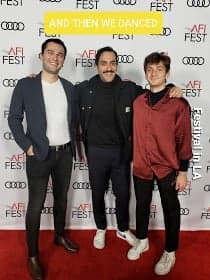
And then We Danced. Actor Bachi Valishvili, director Levan Akin, and actor Levan Gelbakhiani. Photo by José Alberto Hermosillo, Festival in LA ©2019

First-time actor Levan Gelbakhiani is as extraordinary as Merab. His performance brings freshness and intensity to the character. His most challenging scene was dancing alone in the living room - not only because of the space limitations but also because of the physicality required and the real pain he felt in his feet. The young actor recounted how his grandma dragged him to those Georgian dance performances – she wanted to pass on her ancestral culture to her grandson.

Bachi Valishvili plays Irakli beautifully and has a bright future ahead of him in showbiz. He is a professional dancer, not an actor, but he is open to continuing to grow as an actor and a person. He humbly expressed that during Q&A at Fest 2019.

The vivid soundtrack contains traditional Georgian folk music that contrasts with the joyful ABBA songs. The director clarified that ABBA was very popular in Georgia when it was part of the Soviet Union.

“And Then We Danced” is the most controversial film in Georgia’s history, not only for centering the story on a young man who discovers his fascination with another man, but also for mixing new mannerisms with traditional, charged, sacred dances, all with an enormous amount of testosterone and masculinity. These manly rigorous dances are also used as part of their formal weddings.
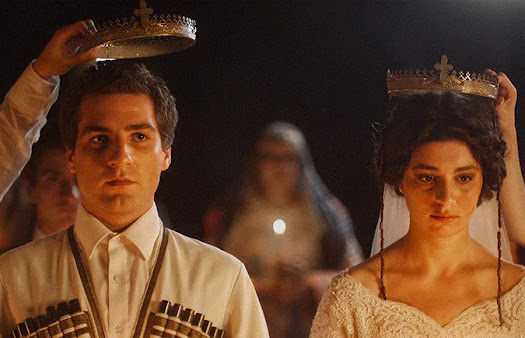
And Then We Danced, Armenian wedding. Photo courtesy of Music Box Films
And Then We Danced, an Armenian wedding. Photo courtesy of Music Box Films
 
The director and the cast received death threats during and after production. The actors said they were surprised by the public’s hostile reactions in their native land. Anti-gay groups sent interrupters to the screenings, and even today, some people are very upset about using the Georgian “ultra-masculine” culture in what they called a “gay movie.”

Amid the conservative confines of Eastern Europe, Georgia is perhaps one of the most progressive countries when it comes to LGBTQ rights. However, those civil liberties are not embraced by all members of society. In other former Soviet Republics, including Russia, the punishment is considerable jail time.

Georgian dance schools were established in the 1950s as a symbol of national identity to preserve centuries of dance tradition. Today, talented and attractive folk dancers are a big tourist attraction.

Yet another controversy arose when Sweden, not Georgia, chose “And Then We Danced” as its best International Feature Film candidate for the 92nd Academy Awards. 

This charming and delightful picture is worth seeing more than once for its honesty and authenticity. After all, we only live once and should do it openly with different cultures and lifestyles.

 

And then We Danced. Actor Bachi Valishvili, director Levan Akin, actor Levan Gelbakhiani & critic José Alberto Hermosillo, Festival in LA ©2019
And then We Danced. Actor Bachi Valishvili, director Levan Akin, actor Levan Gelbakhiani & film critic José Alberto Hermosillo, Festival in LA,  ©2019

Related Articles: 
 
IF YOU ARE READING FROM A MOBILE DEVICE, CLICK: view web version FOR OTHER COOL FEATURES SUCH AS TRANSLATE POWERED BY GOOGLE, AN INTERACTIVE FILM FESTIVAL CALENDAR, AND MORE.
 
Festival in LA ©2020