Friday, July 14, 2023

The Territory: The Battle to Save the Amazon Has Just Begun

By José Alberto Hermosillo

“The Territory” is a bold, award-winning documentary that bravely reveals the mystery behind the fires in the Amazon rainforest.


In 2019, many believed the destruction of the Amazon rainforest was caused by natural factors, such as dry seasons, as well as by climate change. However, behind those fires and deforestation were individuals in power—landowners, multinational corporations, and dangerous men with guns—who sought to take the land that had long belonged to the indigenous people of Brazil.


Intentional Fires in the Amazon, The Territory, Copyright © National Geographic 2022


During his political campaign, the Bolsonaro regime started hate speech against Brazil’s indigenous people: “There won’t be getting one more inch of the indigenous reserve land.” When the populist candidate won the presidency, his government did nothing to protect the land, the natives, the flora and fauna, and the endangered species.


The original story was revealed when Neidinha Bandeira, a forest defender and activist, received enough hate mail, death threats, and a kidnapping attempt, prompting her to send an urgent message about her safety and the area’s security to journalists around the world.


Director Alex Pritz, producer Gabriel Uchida & producer Sigrid Dyekjær. Photo by José Alberto Hermosillo.
Raleigh Studios, Hollywood.
Copyright © Festival in LA, 2022

In 2016, a friend of the award-winning Brazilian journalist and producer Gabriel Uchida advised him to cover and document the story of the fires and the full-scale warfare the natives endured to protect the rainforest. Since then, Gabriel has moved to Amazonian communities to continue his journalistic work and shed light on the reexamination of those tragic events.

Director Alex Pritz, producer Gabriel Uchida. Photo by José Alberto Hermosillo.
Raleigh Studios, Hollywood.
Copyright © Festival in LA, 2022

In New York, director Alex Pritz began conversations with elderly Indigenous people and, with their permission, documented their lives. Later, he became interested in filming Brazilian natives in their land. Their resilience, courage, and resistance motivated him to participate in the documentary.


Respectful of indigenous cultural identity, Alex Pritz avoided exploiting the natives’ land, culture, or language, recognizing that white settlers had taken so much from them, including their land. White people assumed ownership of the indigenous narrative and traditions.


The Territory, Copyright © National Geographic 2022

After a devastating fire, Neidinha questions the conscienceless actions of those who acted illegally and the massive environmental damage they have inflicted on humanity. She also requests safety for the Uru-eu-wau-wau people and wonders how many more must die to protect the rainforest.


Alex Pritz’s subtle camera work is outstanding. His footage ranges from tiny insects to aerial shots of the Amazon. He shares cinematography credits with an insider, Tangãi Uru-eu-wau-wau.


Alex Pritz reached out to the Invaders, comparing his personal experience and the white trespassers in Brazil with American colonialism, which often sees itself as heroic without understanding its actions.


It took three years to produce the documentary, and the challenges were significant. The crew often had to drive 6 to 12 hours to reach remote locations, especially during the rainy season.


Editor Carlos Rojas presents the film in a natural flow, allowing viewers to follow each character as their struggles and hopes unfold. The transitions are seamless. However, maintaining visual balance among all storylines is essential. The excess expository dialogue reduces the emotional impact of this already powerful film.


Katya Mihailova’s music is unforgettable. She exudes positivity, and her lively rhythms heighten tension during dangerous scenes. To showcase each character’s uniqueness, the composer gave each a distinct score, enhancing the sounds of the frontier and rainforest.


Renowned director Darren Aronofsky (“The Whale,” “Black Swan,” “The Wrestler”) also participated, along with Sigrid Dyekjær (“The Cave,” “Food and Country”) and Gabriel Uchida from the outstanding production team, providing full support and control to director Alex Pritz.


The Territory, Copyright © National Geographic 2022

Knowledge empowers people. Therefore, Amazonians must document every incursion, intentional fire, and attempt on their lives using cameras, drones, computers, and social media as tools against the invaders. Now, they can send the material directly to news broadcasters and engage more people in helping protect Brazil’s indigenous lands.


Director Alex Pritz, producer Gabriel Uchida, film critic José Alberto Hermosillo & producer Sigrid Dyekjær.
Raleigh Studios, Hollywood.
Copyright © Festival in LA, 2022

Fans of President Bolsonaro learned about the making of the film, how the documentary empowered native communities, wanted the filmmakers out of Brazil, and sent death threats to their phones, emails, and homes.


During its three-week theatrical run in Brazil, “The Territory” received a strong response from locals, with half of the audience coming from indigenous communities.


“The Territory” is a highly recommended documentary nominated for three Primetime Emmy Awards, including Exceptional Merit in Documentary Filmmaking, Outstanding Cinematography for a Nonfiction Program, and Outstanding Direction for a Documentary/Nonfiction Program. It is now streaming on Hulu.


The National Geographic/Brazilian co-production won the Audience Award and the Special Jury Award for Best Documentary at the 2022 Sundance Film Festival. It also received the Cinema for Peace Award and Best Documentary at the Zurich Film Festival.


The Territory | Official Trailer | National Geographic

Director Alex Pritz, producer Gabriel Uchida & film critic José Alberto Hermosillo.
Raleigh Studios, Hollywood.
Copyright © Festival in LA, 2022

Related Articles:
Laura Pausini: Pleased to Meet You, Recounts the Life of the Italian Megastar

IF YOU ARE READING FROM A MOBILE DEVICE, CLICK: view web version FOR OTHER COOL FEATURES SUCH AS TRANSLATE POWERED BY GOOGLE, AN INTERACTIVE FILM FESTIVAL CALENDAR, AND MORE AWESOME ARTICLES.

Festival in LA ©2022

Friday, July 7, 2023

Final Cut: An Unconventional French Tribute to Z Movies

 By José Alberto Hermosillo 

“Final Cut” is a frenetic dark comedy about a film crew becoming zombies while making a Z movie. 


What seems like a clumsy French parody of the Japanese “cult film” “One Cut of the Death” by Shin’ichirô Ueda becomes a massive tribute to “Z movies” by Academy Award-winning director Michel Hazanavicius (“The Artist” and “The Search”).

Oscar-winning director Michel Hazanavicius. Photo by film critic José Alberto Hermosillo. 
Copyright © Festival in LA, 2022

In “Final Cut,” Michel Hazanavicius pays tribute to those who tirelessly work in the film industry. Their skills and resourcefulness keep the essence of the filmmaking process alive. The team comprises technicians, producers, actors, and those who make movies even without dialogue. The relationship between the filmmakers and the film itself is a symbiotic yet challenging collaboration, even if the result is a complete disaster. According to the director, making a movie is heroic, even if it is a flop.

In 2020, during the first lockdown, Hazanavicius wanted to work on a comedy when the German producers, who had secured the rights to the Japanese “cult classic,” offered him the golden opportunity to remake that successful Asian box-office hit in France. The idea was brilliant and perfect for what he wanted to do during the pandemic. Hazanavicius saw some weird situations in the original that inspired him to juxtapose these images with his French reality. You can start with a script based on a book and, in this case, based on a movie. The original writing was challenging, and adapting to a European version was even more difficult.
In the movie, as in real life, problems arise, such as shooting an extended scene on a full memory card without realizing it. The original Japanese director said he understood his movie even more while watching the French version.
The first “one-shot” sequence is 33 minutes long. It took much preparation, from drawing the storyboard through many rehearsals with the actors, cinematographer, props, makeup, sound, and the rest of the crew, until everything came together. They used 54 cameras to capture every angle and every actor’s actions and reactions. They shot that specific sequence four times over four days, up to the final take, and it was still not that great, according to the director.

To differentiate between the movie and the making-of film, the director used various post-production techniques, such as color saturation, timing, and texture, so the audience could follow both storylines easily.
Michael Hazanavicius’ career ranges from experimental, quirky films to the most formal and academic productions. “Final Cut” is a very personal movie about making a movie. The question always arises: why did the director want to place himself in such a problematic situation by presenting an embarrassing project to the masses? He said that, in his defense, his films are always made in joyful sets with positive energy.

Zombie movies are fascinating and profitable. From big Hollywood productions like “World War Z” with Brad Pitt to more independent releases like “Zombieland” and Jim Jarmusch’s “The Dead Don’t Die,” which also competed for the Palmer d’Or at Cannes in 2019. The 2018 French zombie thriller “The Night Eats the World/ La Nuit a dévoré le mondé” depicts a contemporary world where zombies invade Paris.
Other worldwide cult classics are George Romero’s “Dawn of the Dead” and the British production “28 Days Later” by Academy Award-winning director Danny Boyle (“Slumdog Millionaire,” “Trainspotting”). There is also the low-budget British high school zombie musical “Anna and the Apocalypse,” which I loved. 
Other Asian countries have made substantial contributions to the Zombie genre, from “Train to Busan” to the 2016 Zombie Pandemic South Korean animated film “Seoul Station.” One of my favorite Korean genre movies is the extraordinary production “Peninsula.” It is also considered the best Korean Zombie movie, “The Wailing.” 
The Japanese productions have their fan base as well; “Versus,” “Miss Zombie,” “Helldriver,” and “One Cut of the Dead” are among the most popular. Highly recommended is the new apocalyptic Taiwanese zombie thriller “Sadness.”
In recent years, American television series about zombies have been widely successful. “The Last of Us,” with Pedro Pascal, just received 24 Emmy nominations. And “The Walking Dead” ran for eleven seasons.
Romain Duris. Photo by film critic José Alberto Hermosillo. 
Copyright © Festival in LA

In “Final Cut,” all the performers did a hell of a job. Chameleonic French actor Romain Duris (“Eiffel,” “The Confession,” “Populaire,” “The New Girlfriend”) plays Rémi, the hectic movie director, and also Higurashi in the zombie movie within a movie. Duris’s work is synonymous with dedication, perseverance, quality, and excellence.

Michel Hazanavicius’ wife and Oscar-nominated actress Bérénice Bejo play Nadia and Natsumi, respectively. Michel confessed that working with his wife on many projects is easy because they know each other well. She keeps it professional; in the set, she knows he is the boss. He does not congratulate her on a good performance. He likes to give confidence to all of his actors. Their daughter, Simone Hazanavicius, and her friend round out the terrific cast.
Michel Hazanavicius’ next film is an animated feature set during a war, written by his parents’ friend, titled “The Most Precious Cargo.” I cannot wait to see what this incredibly inventive director will do next in animation.
“Final Cut” was selected as the opening piece of the 2022 Cannes Film Festival, where critics trashed the movie without mercy. According to Mr. Hazanavicius, brutal exposure to the international press was intentional. 
The satirical story presented in “Final Cut” is not for everyone, but those who like dark comedies, like me, can feel in heaven watching a cinematic gory feast.
Oscar-winning director Michel Hazanavicius and film critic José Alberto Hermosillo. 
Copyright © Festival in LA, 2022


IF YOU ARE READING FROM A MOBILE DEVICE, CLICK: view web version FOR OTHER COOL FEATURES SUCH AS TRANSLATE POWERED BY GOOGLE, AN INTERACTIVE FILM FESTIVAL CALENDAR, AND MORE AWESOME ARTICLES.

Festival in LA ©2023

Friday, June 16, 2023

Padre Pio: Shia LaBeouf Internal Transformation

By José Alberto Hermosillo


Profoundly inspirational, spiritual, and controversial.

“Padre Pio” is a realistic depiction of a specific moment in the history of San Giovanni Rotondo, Province of Foggia, Italy, when the Franciscan Capuchin Friar Francesco Forgione, known as Padre Pio (Shia LaBeouf).

The inspiring story of Padre Pio begins when he arrives at the monastery, where wounded and starving soldiers returning from the battlefield at the end of the Great War in 1920 find only repression in their homeland. Without sensationalism, the film subtly and tastefully weaves in elements of stigmata, demonic possession, and oppression by the “Holy See”—and, most importantly, it shows at least one of the hundreds of miracles attributed to Padre Pio, maintaining a proper balance between confronting ideologies and historical facts.


The journey of Padre begins with a series of long mêlées between his imaginary mentor and himself, which culminate in possession. In these internal battles, we learn about Pio’s true feelings—mainly guilt over being unable to continue fighting in the war because of his fragile health.

After the war, as Italy prepared to celebrate its first free election, the country was divided by hunger and greed. Russian ideologies, as espoused by Lenin and Trotsky, influenced some educated people; however, a social revolution was not part of the Italian reality.

The socialist convinced hungry soldiers, farmers, and their families to join their party. In contrast, wealthy landlords, political leaders, and fascist tyrants felt threatened by the rebellious people. They sought to maintain their power and preserve their land and traditional beliefs. Moving forward, “Padre Pio” is a theoretical film about faith and the paradoxes of people’s destinies. 

The recollection of the events surrounding Pio is purely observational, not inquisitive – the film doesn’t question faith, socialism, or anarchy; instead, it skillfully explores those three compelling storylines without favoring one over the others. However, the movie directly depicts religious, political, and ideological conflicts.

In the film, as in modern times, worshippers are not inspired by faith. They follow the man, flesh, and human nature. Remember the words of Jesus, “You will work until you become dust.”

According to Pio, he was born four times. The first was from his mother. The second was when he received baptism. The third was when he answered the call to join the Franciscan order. The fourth was when the Lord visited him.


Shia LaBeouf’s performance is flawless and insightful. After stepping away from major Hollywood blockbusters like “Transformers,” “Indiana Jones,” “Disturbia,” and “Lawless,” he has become an actor who enjoys taking risks, writing, performing, and producing independent films. A clear example of his bold choices is his role in the semi-autobiographical, child-actor drama “Honey Boy.” However, his involvement in other edgy films such as “Pieces of a Woman” and the Latinx gangster flick “The Tax Collector” has earned him respect, and he is now taking on more serious roles.

The mastery and semi-slow style of the film, by veteran American independent director Abel Ferrara (“Bad Lieutenant,” “The Funeral,” “The Addiction”), lends an artistic look to this collection of stories within the story. Mr. Ferrara now directs and produces European films, such as “The Projectionist,” in Greece. “Tommaso,” “Plaza Vittorio,” and “Pasolini” in Italy.
According to the director, “Padre Pio” is a spiritual journey of one of the most venerated Italian Saints in history, parallel with the personal transformation of its lead, Shia LaBeouf.
The American actor moved away from earthly things to prepare for the role before departing for Italy. Mr. LaBeouf lived in his truck for weeks with no cell phone or other communication devices, and, more importantly, he spent a few months in a California monastery, where he assimilated Jesus’ teachings to better embody the character and convert from Judaism to Catholicism in real life.
Marco Leonardi as Gerardo in “Padre Pio.”

It is worth highlighting the participation of the excellent supporting cast, including Marco Leonardi (“Cinema Paradiso,” “Like Water for Chocolate,” “Once Upon a Time in Mexico). There is a brief appearance by Asia Argento as the “Tall Man” and by Stella Mastrantonio (“Romanzo Radicale,” “The Italian Recipe”). 

Salvatore Ruocco interpreta Vincenzo in “Padre PIO.”


Salvatore Ruocco is a true revelation portraying Vincenzo, a decorated war hero caught in the middle of conflicting forces. The talented Italian actor will soon appear alongside Denzel Washington in “The Equalizer 3.”
 
“Padre Pio” cannot escape controversy by avoiding a full biopic of the polemical Italian priest’s life, which includes the miracles attributed to him, the hospital he built, the thousands who followed him, his sermons during Mass, and the suffering he endured on numerous occasions at the hands of the Vatican.
 
The German-Italian co-production, in English, unfolds with a stark lack of sentimentality within a disjointed structure, making the three storylines easy to relate to our daily lives.


Without pretensions, “Padre Pio” is an intimate film of natural beauty. Alessandro Abate’s cinematography (“Martin Eden,” ‘Certified Copy’) is breathtaking and humble.


The simplicity of the film, which premiered at the Venice Film Festival in 2022, is comparable to other religious and social works, such as Pier Paolo Pasolini’s “The Gospel According to St. Matthew/Il vangelo secondo Matteo,’ and Giuseppe Tornatore’s “The Star Maker’ (“Cinema Paradiso”). Additionally, it resonates with the human struggle depicted in ‘Canoa: A Shameful Memory,” a true story about the lynching of students in Canoa, Puebla, Mexico. Lastly, the 1985 Oscar-nominated Mexican film “Letters from Marusia’ tells the story of struggling Chilean miners who sought to unionize but were crushed by authorities.

“Padre Pio” does not aim to preach religion, but it can serve as a reflection of our current times. For some, the film’s stark absence of God might signal the coming of the Anti-Christ.


“Padre Pio” questions the genuine meaning of trust in the beloved Italian saint and vividly depicts events in San Giovanni Rotondo. The film is remarkable and far from a “Hallmark movie,” but what viewers choose to believe is up to each person.

IF YOU ARE READING FROM A MOBILE DEVICE, CLICK: view web version FOR OTHER COOL FEATURES SUCH AS TRANSLATE POWERED BY GOOGLE, AN INTERACTIVE FILM FESTIVAL CALENDAR, AND MORE AWESOME ARTICLES.

Festival in LA ©2023

Thursday, May 25, 2023

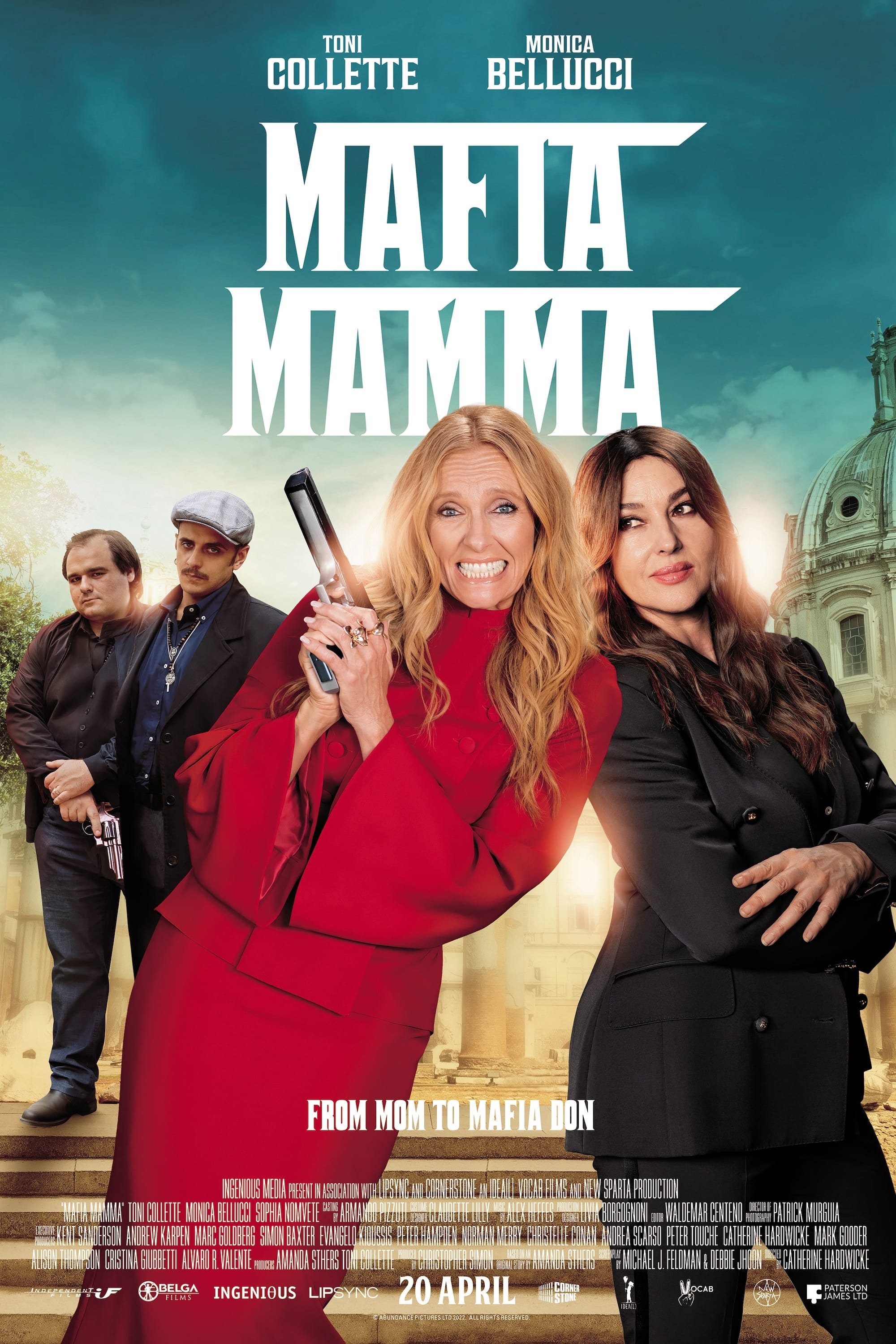
Mafia Mamma: The Accidental Female Version of "The Godfather"

By José Alberto Hermosillo


“Mafia Mamma” is one hundred and one minutes of pure fun! The women-driven dark comedy pleases everyone, including those fine Italian members of “La Cosa Nostra” and other groups of dubious reputation.


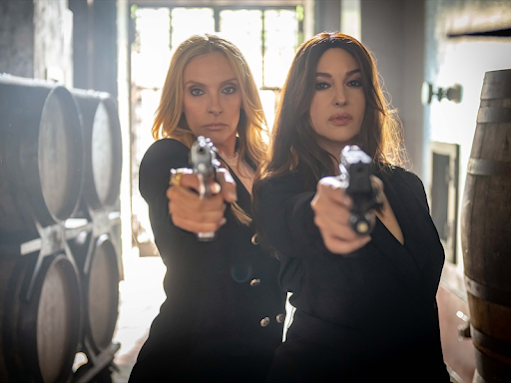
In “Mafia Mamma,” Toni Collette moves out of her comfort zone and plays an Italian-American struggling-class mother neglected by a cheating husband, a diligent teenage son, and a toxic and misogynistic working environment. When her grandfather is killed by the Italian mafia, Kristin Balbano, her character, receives a call to become an accidental female version of “The Godfather” or perhaps one of the Capos of “The Sopranos.” Tony Collette can pull off a hell of a gang fight. 


Colette had never played this type of witty action character since the beginning of her successful career back in Australia, when she started in the unforgettable international hit “Muriel’s Wedding,” followed by her Hollywood breakthrough in the stupendous blockbusters “The Sixth Sense” and “Miss Little Sunshine.” Both works earned her an Academy Award Nomination for Best Supporting Actress. Then, other contemporary suspenseful and horror pieces came out, such as “Hereditary,” “Nightmare Alley,” and “Knives Out.”


Once Kristin’s grandfather, Don Giuseppe Balbano, passes in Italy, Bianca, played by the gorgeous former “Bond Girl” Monica Bellucci (“Malena,” “The Matrix,” and “Irreversible”), calls, demanding that Kristin go to Italy immediately to take over Don Giuseppe’s affairs. This business includes running a poorly managed Italian winery and all the other mafia affairs. Kristin has no idea how to deal with those eventful situations, mostly because she has not watched any of the “The Godfather” movies since they are over three and a half hours long.

Accidentally, Kristin becomes no “Don” (recalling “Don Corleone”), but “Dona Balbano,” and her first task is to make peace with the enemy, in this case, Carlo Romano, the new appointee of the opposite Italian mob. At their first meeting, a toast with limoncello in his hotel room can be the next best thing, and the Italian heartthrob becomes a magnet. As we previously learned in the long expository lines at the beginning, Kristin had not had sex in three years. Therefore, her effervescent body is ready to co-mingle with the attractive Italian capo. But things sour when she says she hasn’t watched “The Godfather II.” While she is getting killed by the seductive man, her bodyguards eat cannoli outside in the hallway, making every situation even more comedic.

“Mafia Mamma” does not abuse the Italian stereotypes as HBO’s series “The White Lotus, season 2” does. The film, cleverly directed by Catherine Hardwicke (‘Twilight” and “Lords of Dogtown’), uses those stereotypes to its advantage, advancing women’s empowerment and a more feminist point of view.

“Mafia Mamma” is a story of casualties. The main character falls into difficult circumstances and slowly moves from the “traditional American working mom” role to a genuine Capo one. The exciting thing is that the character’s arc evolves into that of a newly liberated woman seeking success. Her entire progression comes too late to make the film transcend into something more than pure entertainment.


The film could be more stylish and more adrenaline-fueled. Still, it is not about “Baby Driver.” It is more of a realistic adaptation of what could happen to an American woman who inherited a vineyard in the Basilicata region of Italy during a mafia war between two powerful families.


After the movie, do not forget to drink a nice glass of rosé. This Balbano vintage has an extra kick that will make you feel like you are already in Italy. 


“Mafia Mamma” is a delightful female-driven dark comedy with an authentic Italian flavor, where, in the end, men will be men and women will rule.


MAFIA MAMMA | Official Trailer

Violette, When Women Dare to Write  

IF YOU ARE READING FROM A MOBILE DEVICE, CLICK: view web version FOR OTHER COOL FEATURES SUCH AS TRANSLATE POWERED BY GOOGLE, AN INTERACTIVE FILM FESTIVAL CALENDAR, AND MORE AWESOME ARTICLES.

Festival in LA ©2023