Showing posts with label Best Picture. Show all posts

Monday, January 13, 2020

JOKER DOMINATES THE OSCAR NOMINATIONS 2020

José Alberto Hermosillo


"Little Women" will face-off the Big Men at the 92nd Academy Awards on Sunday, January 9th, 2020.

OSCAR NOMINATIONS
Oscar Nominations 2020
This year, the stories reflected in the Best Picture category are mostly male-driven works directed by men. Those titles include, "Joker," "1917," "Ford v Ferrari," "Jojo Rabbit," "Once Upon a Time... in Hollywood," "The Irishman," but "Marriage Story" and "Parasite" are more gender-balanced projects. "Little Women" looks up for more gender equality in every sense.

Most of the films qualifying in the main categories were screened in theaters in Los Angeles and New York in 2019. Looking back, the year 2019 will be remembered as one of the most uneven years in recent history. Optimistically thinking, with more productions directed by women and other communities, we will start seeing the #OscarsSoWhite like something from the past.

Many new Hollywood productions are oriented to close "the gender gap." The producers are also looking up for more "diversity and inclusion."

In the mid-time, we can relax, sit back and enjoy the admirable works that so many talented people in the industry brought us and who deserve recognition by the members of the Academy.
The big favorite is "Joker" with more nominations, 11; "1917" and "Once Upon a Time... in Hollywood" have 10, and "Little Women" has 8.

"Parasite" with six nods is the 11th non-English Best Picture nominee. Therefore, it did not break the record of more nominations for a foreign film like "Roma" had last year with 10 or "Crouching Tiger, Hidden Dragon" also with 10 nominations for a non-English film in the year 2000.

"Pain and Glory" has two, Antonio Banderas for the best actor and Spain for the best international feature.

"Honeyland" from North Macedonia opened in theaters mid-July, and it has two nominations, for best international feature film and for best documentary feature.

Once again, no women were nominated for the best director, but more women were nominated in other essential categories as best picture producers, writers, and music composers.
Parasite cast and creo on Oscar Night
Parasite cast and crew on Oscar Night. Photo by José Alberto Hermosillo, Festival in LA ©2019


Nominations for the 92nd Academy Awards
OSCARS 2020

Performance by an actor in a leading role
  • Antonio Banderas in “Pain and Glory
  • Leonardo DiCaprio in “Once Upon a Time...in Hollywood”
  • Adam Driver in “Marriage Story”
  • Joaquin Phoenix in “Joker” (WINNER)
  • Jonathan Pryce in “The Two Popes” 
Performance by an actor in a supporting role
  • Tom Hanks in “A Beautiful Day in the Neighborhood”
  • Anthony Hopkins in “The Two Popes”
  • Al Pacino in “The Irishman”
  • Joe Pesci in “The Irishman”
  • Brad Pitt in “Once Upon a Time...in Hollywood” (WINNER)


Performance by an actress in a leading role
  • Cynthia Erivo in “Harriet”
  • Scarlett Johansson in “Marriage Story”
  • Saoirse Ronan in “Little Women”
  • Charlize Theron in “Bombshell”
  • Renée Zellweger in “Judy” (WINNER)
Performance by an actress in a supporting role
  • Kathy Bates in “Richard Jewell”
  • Laura Dern in “Marriage Story”(WINNER)
  • Scarlett Johansson in “Jojo Rabbit”
  • Florence Pugh in “Little Women”
  • Margot Robbie in “Bombshell”
Best animated feature film of the year
  • “How to Train Your Dragon: The Hidden World” Dean DeBlois, Bradford Lewis and Bonnie Arnold
  • “I Lost My Body” Jérémy Clapin and Marc du Pontavice
  • “Klaus” Sergio Pablos, Jinko Gotoh and Marisa Román
  • “Missing Link” Chris Butler, Arianne Sutner and Travis Knight
  • “Toy Story 4” Josh Cooley, Mark Nielsen and Jonas Rivera, (WINNERS)
Achievement in cinematography
  • “The Irishman” Rodrigo Prieto
  • “Joker” Lawrence Sher
  • “The Lighthouse” Jarin Blaschke
  • “1917” Roger Deakins (WINNER)
  • “Once upon a Time...in Hollywood” Robert Richardson
Achievement in costume design
  • “The Irishman” Sandy Powell and Christopher Peterson
  • “Jojo Rabbit” Mayes C. Rubeo
  • “Joker” Mark Bridges
  • “Little Women” Jacqueline Durran (WINNER)
  • “Once upon a Time...in Hollywood” Arianne Phillips
Achievement in directing
  • “The Irishman” Martin Scorsese
  • “Joker” Todd Phillips
  • “1917” Sam Mendes
  • “Once upon a Time...in Hollywood” Quentin Tarantino
  • Parasite Bong Joon Ho (WINNER)
Best documentary feature
  • “American Factory” Steven Bognar, Julia Reichert, and Jeff Reichert (WINNER)
  • The Cave Feras Fayyad, Kirstine Barfod, and Sigrid Dyekjær
  • “The Edge of Democracy” Petra Costa, Joanna Natasegara, Shane Boris and Tiago Pavan
  • “For Sama” Waad al-Kateab and Edward Watts
  • Honeyland Ljubo Stefanov, Tamara Kotevska and Atanas Georgiev
Best documentary short subject
  • “In the Absence” Yi Seung-Jun and Gary Byung-Seok Kam
  • “Learning to Skateboard in a Warzone (If You're a Girl)” Carol Dysinger and Elena Andreicheva (WINNER)
  • “Life Overtakes Me” John Haptas and Kristine Samuelson
  • “St. Louis Superman” Smriti Mundhra and Sami Khan
  • “Walk Run Cha-Cha” Laura Nix and Colette Sandstedt
Achievement in film editing
  • “Ford v Ferrari” Michael McCusker and Andrew Buckland (WINNER)
  • “The Irishman” Thelma Schoonmaker
  • “Jojo Rabbit” Tom Eagles
  • “Joker” Jeff Groth
  • Parasite Yang Jinmo
Best international feature film of the year
Achievement in makeup and hairstyling
  • “Bombshell” Kazu Hiro, Anne Morgan and Vivian Baker (WINNER)
  • “Joker” Nicki Ledermann and Kay Georgiou
  • “Judy” Jeremy Woodhead
  • “Maleficent: Mistress of Evil” Paul Gooch, Arjen Tuiten and David White
  • “1917” Naomi Donne, Tristan Versluis, and Rebecca Cole
Achievement in music written for motion pictures (Original score)
  • “Joker” Hildur Guðnadóttir (WINNER)
  • “Little Women” Alexandre Desplat
  • “Marriage Story” Randy Newman
  • “1917” Thomas Newman
  • “Star Wars: The Rise of Skywalker” John Williams
Achievement in music written for motion pictures (Original song)
  • “I Can't Let You Throw Yourself Away” from “Toy Story 4.”
    Music and Lyric by Randy Newman
  • “(I'm Gonna) Love Me Again” from “Rocketman”
    Music by Elton John; Lyric by Bernie Taupin (WINNER)
  • “I'm Standing With You” from “Breakthrough”
    Music and Lyric by Diane Warren
  • “Into The Unknown” from “Frozen II”
    Music and Lyric by Kristen Anderson-Lopez and Robert Lopez
  • “Stand Up” from “Harriet”
    Music and Lyric by Joshuah Brian Campbell and Cynthia Erivo 
Best motion picture of the year
  • “Ford v Ferrari” Peter Chernin, Jenno Topping, and James Mangold, Producers
  • “The Irishman” Martin Scorsese, Robert De Niro, Jane Rosenthal, and Emma Tillinger Koskoff, Producers
  • “Jojo Rabbit” Carthew Neal, and Taika Waititi, Producers
  • “Joker” Todd Phillips, Bradley Cooper and Emma Tillinger Koskoff, Producers
  • “Little Women” Amy Pascal, Producer
  • “Marriage Story” Noah Baumbach and David Heyman, Producers
  • “1917” Sam Mendes, Pippa Harris, Jayne-Ann Tenggren and Callum McDougall, Producers
  • “Once upon a Time...in Hollywood” David Heyman, Shannon McIntosh, and Quentin Tarantino, Producers
  • Parasite” Kwak Sin Ae and Bong Joon Ho, Producers (WINNER)
Achievement in production design
  • “The Irishman” Production Design: Bob Shaw; Set Decoration: Regina Graves
  • “Jojo Rabbit” Production Design: Ra Vincent; Set Decoration: Nora Sopková
  • “1917” Production Design: Dennis Gassner; Set Decoration: Lee Sandales
  • “Once upon a Time...in Hollywood” Production Design: Barbara Ling; Set Decoration: Nancy Haigh (WINNER)
  • “Parasite Production Design: Lee Ha Jun; Set Decoration: Cho Won Woo 
Best animated short film
  • “Dcera (Daughter)” Daria Kashcheeva
  • “Hair Love” Matthew A. Cherry and Karen Rupert Toliver (WINNER)
  • “Kitbull” Rosana Sullivan and Kathryn Hendrickson
  • “Memorable” Bruno Collet and Jean-François Le Corre
  • “Sister” Siqi Song 
Best live-action short film
  • “Brotherhood” Meryam Joobeur and Maria Gracia Turgeon
  • “Nefta Football Club” Yves Piat and Damien Megherbi
  • “The Neighbors' Window” Marshall Curry (WINNER)
  • “Saria” Bryan Buckley and Matt Lefebvre
  • “A Sister” Delphine Girard
Achievement in sound editing
  • “Ford v Ferrari” Donald Sylvester
  • “Joker” Alan Robert Murray
  • “1917” Oliver Tarney and Rachael Tate (WINNER)
  • “Once upon a Time...in Hollywood” Wylie Stateman
  • “Star Wars: The Rise of Skywalker” Matthew Wood and David Acord
Achievement in sound mixing
  • “Ad Astra” Gary Rydstrom, Tom Johnson and Mark Ulano
  • “Ford v Ferrari” Paul Massey, David Giammarco and Steven A. Morrow (WINNER)
  • “Joker” Tom Ozanich, Dean Zupancic and Tod Maitland
  • “1917” Mark Taylor and Stuart Wilson
  • “Once upon a Time...in Hollywood” Michael Minkler, Christian P. Minkler, and Mark Ulano 
Achievement in visual effects
  • “Avengers: Endgame” Dan DeLeeuw, Russell Earl, Matt Aitken, and Dan Sudick
  • “The Irishman” Pablo Helman, Leandro Estebecorena, Nelson Sepulveda-Fauser, and Stephane Grabli
  • “The Lion King” Robert Legato, Adam Valdez, Andrew R. Jones, and Elliot Newman
  • “1917” Guillaume Rocheron, Greg Butler, and Dominic Tuohy
  • “Star Wars: The Rise of Skywalker” Roger Guyett, Neal Scanlan, Patrick Tubach and Dominic Tuohy
Adapted screenplay
  • “The Irishman” Screenplay by Steven Zaillian
  • “Jojo Rabbit” Screenplay by Taika Waititi (WINNER)
  • “Joker” Written by Todd Phillips & Scott Silver
  • “Little Women” Written for the screen by Greta Gerwig
  • “The Two Popes” Written by Anthony McCarten 
Original screenplay
  • “Knives Out” Written by Rian Johnson
  • “Marriage Story” Written by Noah Baumbach
  • “1917” Written by Sam Mendes & Krysty Wilson-Cairns
  • “Once upon a Time...in Hollywood” Written by Quentin Tarantino
  • Parasite” Screenplay by Bong Joon Ho, Han Jin Won; Story by Bong Joon Ho (WINNER).
José Alberto Hermosillo, film critic, Festival in LA ©2019
 
Related Articles:
TWENTY BEST MOVIES OF 2020 

IF YOU ARE READING FROM A MOBILE DEVICE, CLICK: view web version FOR OTHER COOL FEATURES SUCH AS TRANSLATE POWERED BY GOOGLE, AN INTERACTIVE FILM FESTIVAL CALENDAR, AND MORE.

José Alberto Hermosillo, film critic, Festival in LA ©2019
Festival in LA ©2020

Friday, January 25, 2019

Roma: Anarchy and Repression in an Epic B&W Mexican Drama

By Jose Alberto Hermosillo
“Roma” Anarchy and Repression in an Epic B&W Mexican Drama- Festival in LA ©2019 Netflix

“Roma” is a film of extraordinary beauty and endless poetry, featuring a powerful humanistic and sociological perspective along with subtle political implications.


This exceptional black-and-white Mexican drama gains universal appeal as we delve into its emotional depths beneath the compelling story that could happen to anyone, anywhere in the world.


Alfonso Cuarón’s childhood memories focus on the importance of “place” and “time,” two of the most definitive elements for understanding the true meaning of “Roma.”


In “Roma,” women are depicted as brave, fearless, and lonely. They look out for themselves, support one another, and care for their children. Men are portrayed as irresponsible, with infidelity, irresponsibility, and constant machismo pushing them out of the picture.


Roma is being screened at the Academy by Netflix. Photo Jose Hermosillo ©2019 Festival in LA

The main character of “Roma” is Cleo, played by Yalitza Aparicio, delivering a remarkable and fearless performance.


She is the nanny for four kids: a little girl and three young boys, including Alfonso, the stubborn middle child. The youngest is Carlos, a boy with a vivid imagination.


Cleo has an affair with Fermín (Jorge Antonio Guerrero). He and hundreds of other young trainees are counter-fighters trained by an American CIA agent and a Korean instructor, who are hired to violently suppress leftist students protesting.


What “Roma” doesn’t tell you is that in 1971, right after the Olympic Games Mexico 68 and the 1970 Soccer World Cup, Mexico City was on the verge of economic and political chaos. The protesters in the film are portrayed as “victims” of the circumstances. Yet, these so-called victims were also contributing to the chaos by breaking the law—beating up business owners, patrons, and workers—stealing, looting, graffiti-ing, and harming innocent people.


Moreover, these actions by the students don’t justify the government’s killing of over a hundred people during the “Corpus Christi Massacre,” depicted in the film, when Cleo and the grandmother enter a furniture store to buy a cradle for the baby.


“Roma” attempts to portray Mexican history accurately, but it fails to present both sides of the “tortilla.”


Alfonso Cuarón’s personal political agenda subtly accuses and points fingers through symbolism.


The propaganda elements set the right mood for the film. Still, even these are open to interpretation, and many witnesses of those chaotic times may perceive the events differently.


Most of Cuarón’s films are set within specific time frames. For example, “Gravity” takes place during one orbit of a shuttle around Earth, while “Roma” unfolds over nine months of Cleo’s pregnancy.


At the start of this essay, we discussed the importance of “place,” not just as a physical location but as a transitional space where events happen.


In “Colonia Roma,” people pass by without stopping. Their destination might be the Zócalo, but we’re not meant to know for sure. That’s why the film’s framing is intentionally narrow.


Alfonso Cuarón working in Roma behind the scenes, ©2019 Netflix.


The cinematography of “Roma” is stunning, and Cuarón handled the camera work with great care. Beyond its beauty and emotional depth, the film also conveys other stories through its rich symbolism.


The bright black-and-white visuals evoke the Golden Age of Mexican cinema.


Recreating 1971 Mexico City was difficult because of the area’s history of damage from two major earthquakes.

Production designer and Oscar© winner Eugenio Caballero (“Pan’s Labyrinth,” “A Monster Calls”) also grew up in Cuarón’s neighborhood. The extensive pre-production process involved detailed research to accurately portray the specific political moments depicted in the story.


Yalitza Aparicio as Cleo in Roma ©2019 Netflix

It is fascinating to spot scenes referencing films by Guillermo del Toro, Alejandro G. Iñárritu, and Cuarón himself, often called “The Three Amigos.” 


For example, the extended scene where Cleo enters the sea to rescue little Sofi resembles the moment when Maribel Verdú goes into the water in “Y tu mamá también.


Another example is the European man inside the costume at the party in the woods; it’s a tribute to “Pan’s Labyrinth.”


Finally, the dog “El Borras” escaping the house references “Amores Perros.


These fun-to-watch moments are easy to recognize for their perfect recreation and camerawork, driven by Cuarón’s energetic eye.


Roma behind the scenes ©2019 Netflix


This semi-autobiographical film, set in the 1970s, draws on the Italian Neorealism period. The black-and-white epic features no musical score, and the songs are incidental, coming from the radio or TV. These songs influence the characters’ moods.

 The sound design is a vital part of the film. These sounds enhance the climactic moments with a hyper-realistic effect and a vivid sense of experiencing the events, such as the earthquake and ocean waves, connecting them with nature.


Roma’s real family members and the actors who played them. www.festivalinla.com


Roma’s casting directors carefully searched for people who looked and felt like the original family.


They traveled all the way to Tlaxiaco in the southern state of Oaxaca to find the lead actress, Yalitza Aparicio, who was then a kindergarten teacher.


Yalitza Aparicio, Kindergarten Teacher. Festival in LA.

Yalitza said, “It was a real-life experience to work with Alfonso Cuarón.” She was also fortunate to meet Cuarón’s honest nanny, Libo. Before filming started, the two women passionately discussed their roots. Both came from indigenous, marginalized communities.


“Libo is a woman with a big heart,” Yalitza said. “I wanted to honor her life with my performance, for Libo gave her work and heart to the Cuarón family.”


In the most awarded film of the year, the audience cares about every character without sugar-coating their emotions.


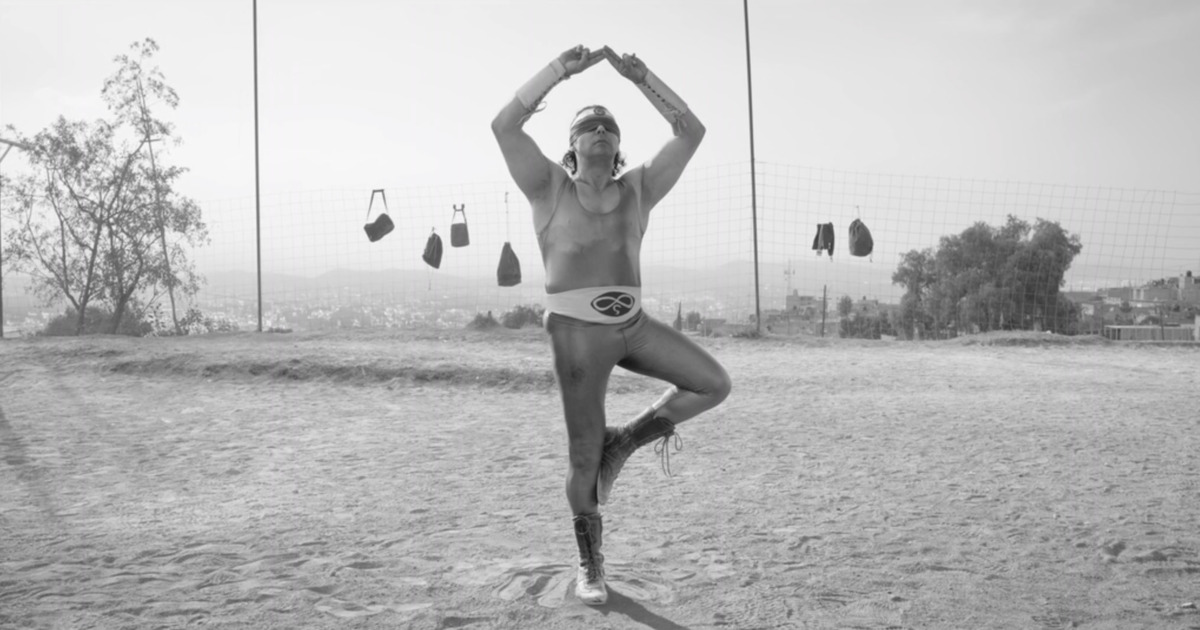
The film includes elements of magic realism. The famous Professor Zovek, an actor called Latin Lover, standing on one leg, provides moments of humor.


Latin Lover as Professor Zovek in Roma ©2019 Netflix

For the director, “Roma” is a corridor full of memories. Cuarón wanted to keep it authentic, so he didn’t give the full script to any actors or crew members. He wanted realistic reactions and for the actors to focus on the family’s journey, responding spontaneously.


Roma behind the scenes ©2019 Netflix

The Academy Award-winning director stated, “The events depicted in ‘Roma’ have consequences in today’s society, where hate and exclusion expose the vulnerability of the human race.”


The Golden Lion winner also reminds us, “When we watch a movie, viewers share the same experience; they open their senses and connect with the story. It is part of human nature.” He added, “The variety of colors reflects the richness of our society.”


For many critics, including me, “Roma” is the best movie of the year, not only for its visual beauty but also for how it makes us feel.


“Roma” is a significant achievement for all the talented people involved in its creation and for Alfonso Cuarón, who rightly earns his place among the most visionary directors of contemporary cinema.

Monday, December 24, 2018

Roma: An Unprecedented Best Picture Nomination for a Movie in Spanish

By José Alberto Hermosillo

After the announcement of the Golden Globe and Independent Spirit Awards nominations, “Roma,” the epic Mexican film in Spanish, faces the possibility of being nominated only for Best Foreign Language Film. However, the winner of the Golden Lion at the Venice Film Festival is a strong contender in other categories, including Best Picture at the 2019 Oscars®. 


The New York Film Critics Circle and the LA Film Critics Association agree that “Roma” is the best Picture of the year.


In recent years, the Oscars® have faced criticism for a lack of diversity and inclusion. In response, the Academy® has expanded memberships to include more individuals from the global film industry. These new international members could significantly improve the chances for foreign films like “Roma,” “Cold War,” and “Shoplifters.”


The Academy can’t please everyone with the most popular film award, and giving out an Oscar® isn't the “Miss Congeniality” contest. Controversially, the Academy often chooses to highlight a film's technical qualities over popular preference.

Members of each branch have specific standards for evaluating submitted films and awarding them fairly.


Academy® voters may overlook a black-and-white Spanish film without big stars, mainly if it depicts life in Mexico City in 1971.

The style of the Mexican film leans toward Italian Neorealism and may not appeal to many American viewers, but some are passionate fans of the director’s work. At the same time, members will recognize the talent, beauty, and craftsmanship in the Netflix production called “Roma.


One main reason Guillermo del Toro’s “The Shape of Water” captivated voters last year was its seamless blend of filmmaking elements—direction, acting, cinematography, art design, costumes, makeup, sound, and music. Something similar could happen with “Roma.” 


As long as the film made by the director of “Y tú mamá también” adheres to Academy rules, it can compete in other categories such as Best Original Screenplay, Editing, Cinematography, Set Design, Sound Design, Costumes, Directing, Acting, and even Best Picture.


One thing is undeniable: the visionary filmmaker Alfonso Cuarón created this masterpiece without revealing the entire script to his actors. A challenge that only great directors can pull off.


Understanding the movie might require multiple viewings, mainly because we need to grasp the significance of the film’s setting and time—Mexico City, 1971—two of the key elements in this complex film.


The richness of the production in “Roma” is evident in the authentic reconstruction of Colonia Roma and its surroundings.


The director worked tirelessly with Oscar®-winning set designer Emilio Caballero (“Pan’s Labyrinth”), who previously reconstructed the devastated area of the Tsunami in Asia for the film “The Impossible.” More recently, Emilio did an excellent job in the fantastic movie “A Monster Calls.”


Creating the interiors and exteriors for “Roma” was a monumental artistic effort, especially since the “colonia” was demolished after the earthquakes in 1985 and 2017.


Roma ©2018 Netflix


To build all the streets, hospitals, and movie theaters, Alfonso Cuarón and Emilio Caballero had to rely on pictures, videos, newspapers, and memories of their childhood.


The filmmakers want us to discover specific details that the film has but doesn’t tell us openly.


Roma is a town located in the middle of Mexico City. It is a transit hub where people pass by on their way to the “Zócalo,” also known as Plaza de la Constitución. People’s destination is the Civic Center, which we don’t see in the picture. That place is considered Ground Zero for individuals to publicly celebrate, dance, vote, protest, and demonstrate their political concerns.


"Roma" actresses, Yalitzia Aparicio (Cleo), Nancy Garcia (Adela), María de Tavira (Señora Sofía). Photo José Hermosillo ©2018 Festival in LA

The story of “Roma” takes place during a turbulent period under the “populist” or “leftist” presidency of Luis Echeverria (1970-1976). He was responsible for the “Corpus Christi Massacre,” carried out by government-sponsored and CIA-trained units called the “Falcons,” also known as the “Alcones,” as shown in the film. More than one hundred students were killed.


Echeverria was elected “democratically,” but also played a significant role in the riots of 1968. The army killed dozens of students protesting in the streets of the Tlatelolco neighborhood in 1968.


These turbulent times in Mexico included hosting the 1968 Olympic Games and the 1970 Soccer World Cup, as well as building the subway. These events contributed to setbacks in Mexico’s economy.


The government aimed to present a different image of Mexico to the world. In the 1970s, the people bore the consequences of the heavy burden those investments caused.


Roma ©2018 Netflix

In Oscar history, a film in Spanish has never been nominated for Best Picture. There is a list of movies that were “partially” spoken in Spanish but never won: “The Treasure of Sierra Madre” (1948), “Giant” (1956), “The Postman/Il Postino” (1995), “Traffic” (2000), and “Babel” (2006). Another example of a foreign-made film nominated for Best Picture is the silent movie set in Hollywood, “The Artist.” A French, USA, and Belgian production, it won Best Picture at the 2011 Academy Awards. It was a French victory for many.


Therefore, a foreign language film released in U.S. theaters a week before December 25th can qualify to be nominated in most categories. “Roma” aims to make history by becoming the first film entirely spoken in Spanish to be nominated for Best Picture. Alfonso Cuarón will not only be nominated for Best Director but also is the frontrunner to win the Oscar. Additionally, he will be nominated for Best Cinematography and Original Screenplay.


Festival in LA ©2018

Tuesday, May 15, 2018

Bohemian Rhapsody is Getting an Early Oscar© Buzz

By José Alberto Hermosillo
The new teaser trailer of the highly anticipated Queen biopic "Bohemian Rhapsody" was posted on YouTube and the internet went nuts. In one day, the new trailer reached 2,300,000 views and counting.
Rami Malek as Queen in Bohemian Rhapsody. 20th Century Fox
Since the first image of actor Rami Malek ("Mr. Robot") unveiled dressed as Freddy Mercury, the leader of the legendary British rock-band a few weeks back, people freaked out for the stunning resemblance between both of them. The agent who did the cast of the talented Californian young actor nailed the selection.
Bohemian Rhapsody. 20th Century Fox
This is a massive production of 20th Century Fox and Regency Enterprises, directed by Dexter Fletcher and Bryan Singer. They reconstructed the 1970's era to perfection with authentic sets and locations, costumes, great makeup and hairdos, and above all, the talented people who accomplished such an ambitious project.
Bohemian Rhapsody. 20th Century Fox
By launching the trailer early this year, producers and distributors are looking to create enough expectation to grab multiple Oscar© nominations - the film, strategically, will be released in U.S. theaters November 2nd.
Bohemian Rhapsody poster insert
"Bohemian Rhapsody" could follow the footsteps of this year's Best Picture Oscar© winner "The Shape of Water," premiering at the prestigious Venice Film Festival. 
Rami Malek as Queen in Bohemian Rhapsody.
To create more excitement, the trailer has the following slogan "The only thing more extraordinary than their music is his story." 

Now, we need to wait and see if the music and the performances will drive the masses out to the movie theaters, and the Academy members to vote for this epic, music driven, energetic, work of art.

TO ACCESS OUR INTERACTIVE FILM FESTIVAL CALENDAR FROM YOUR MOBILE
CLICK AT THE END: View web version.


Related Articles:
Latinas Tackle the "Latinx Issue" in Hollywood The World's Best Female Lead Singer Movies

Copyright © 2018 Festival in LA