Showing posts with label Cine Mexicano. Show all posts

Thursday, September 21, 2023

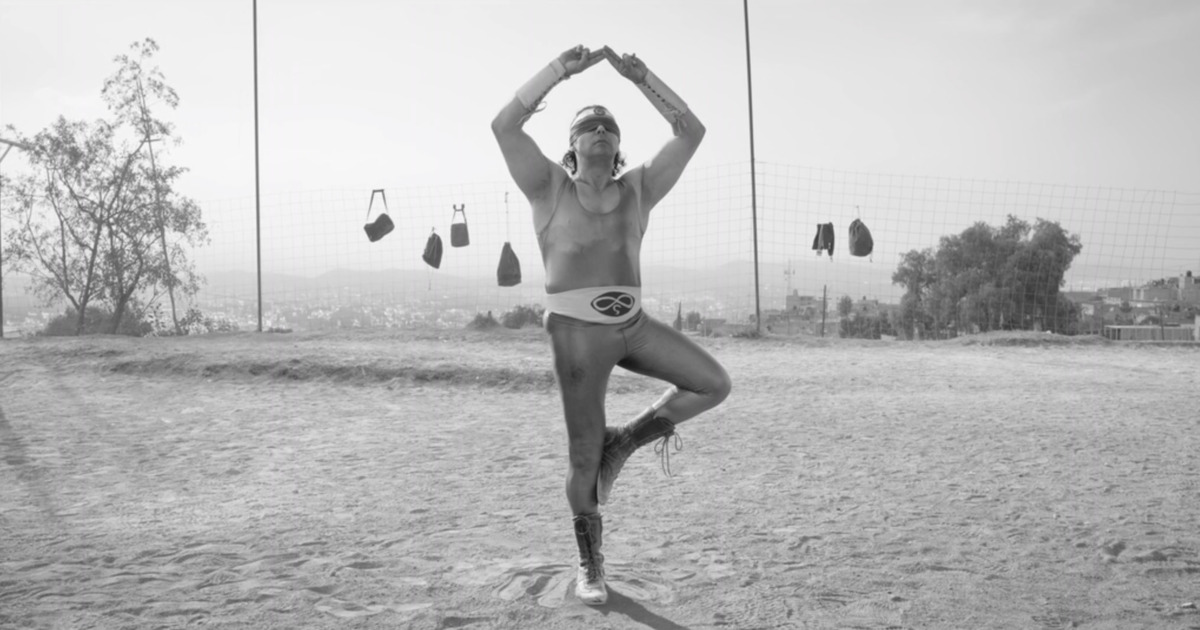
Cassandro: From a Mexican Wrestler to a Superhero in Drag

  By José Alberto Hermosillo 

Cassandro, movie review

“Cassandro” is one of the best biopics about an openly gay Mexican wrestler ever! (Actually, it is the only one. The original drama is inspiring and moving, with moments of shame and glory. 


Gael Garcia Bernal as Cassandro, Amazon Prime Video
Gael García Bernal as Cassandro, Amazon Prime Video

Cassandro won over the crowds with his provocative personality, feminine touches, deep respect for other wrestlers, and devoted admiration for El Hijo del Santo.

At the peak of his career, Gael García Bernal flawlessly portrayed the real-life of the iconic wrestler with remarkable physicality and keen intuition.

The film traces Saúl Armendáriz’s transformation into Cassandro, a wrestler who fights not only a giant opponent like Gigántico de Tijuana but also the society that supports macho fighters in the arena. Of course, his small size, physicality, femininity, and lack of technical skill often cause him to lose, like all the exóticos. Still, we must remember that he is a fighter, not a loser. 

Saúl dreams of becoming a strong wrestler; one day, he might eventually win. He learns about the “exóticos,” a group of male wrestlers dressed in drag with feminine touches.


The “exóticos” are now a vital part of “Lucha Libre,” alongside the “Rudos” and “Técnicos” (bad and good guys). The exóticos inspired Saúl Armendáriz to become Cassandro.


Saúl left when he was thirteen. He and his mother, Yocasta (Perla de la Rosa), share a close yet condescending relationship. They dream of someday owning a big house with a heart-shaped swimming pool, but it’s tough for a peasant to escape the barrio.


Lady Anarquía trains him without pay; she will do it in exchange for something later, like friendship. They consider the idea of becoming exótico. However, he rejects it, saying they don’t let exóticos win. His new name idea also comes from a telenovela they watch on TV.


Saúl’s spectacular portrayal as Cassandro is set against the backdrop of the Spanish version of Gloria Gaynor’s worldwide hit “I Will Survive/Sobreviviré,” creating a stunning theatrical entrance for the newcomer.


Cassandro leaves his mark with his captivating moves in the ring, always striving to win, even against Gigántico. More battles lie ahead, including one of the most memorable with El Hijo del Santo (the son of the legendary Mexican wrestler, producer, and movie star El Santo) in Mexico City. Cassandro will keep fighting, rising to the top, only to hit rock bottom.


Cassandro’s signature move is a flying jump.


The film Idiosyncrasy knows no boundaries. Crossing the border back and forth daily through the international bridge in El Paso, Texas, seems normal for locals.


Cassandro’s mother compassionately tells him to give water to the immigrants crossing the border through their backyard—you never know if they will be thirsty and hungry or be bringing little children.


Roger Ross Williams & film critic José Alberto Hermosillo. Copyright © Festival in LA, 2016


The award-winning documentarian Roger Ross Williams (“Love to Love You Baby,” “The Apollo”) embraces Latino culture as his own, making “Cassandro” his first narrative feature. 


In 2016, Ross Williams directed the Oscar-nominated documentary “Life, Animated,” which vividly recounts the life of an autistic boy who communicates through Disney drawings. In “Cassandro,” Ross Williams courageously explores the diverse subcultures of Latino, Mexican, Chicano, LGBTQ+, and Macho Wrestling communities with great respect and understanding.


Brazilian composer Marcelo Zarvos 

The music score by Brazilian composer Marcelo Zarvos (“The Equalizer 3,” “Flamin’ Hot,” “Human Capital,” and “Sin Nombre”) is exquisite, slow, and haunting. The music in the end credits has a heroic rhythm that lingers, reminding us of the life and legacy of the now-legendary “Cassandro,” the exótico.

Bad Bunny & Gael García Bernal in "Cassandro."
Bad Bunny & Gael García Bernal in “Cassandro.”

Big shoutout to casting director Luis Rosales for assembling such an impressive international cast: Gael García Bernal, pop superstar Bad Bunny (Benito Antonio Martínez Ocasio), El Hijo del Santo, Joaquín Cosio, Perla de la Rosa, Roberta Colindrez, Julieta Ortiz, Leonardo Alonso, Raúl Castillo, and real-life wrestlers. 
It was a huge challenge to assemble such exceptional talent on both sides of the border. It demands a broad set of skills and a willingness to get things right in both languages. In Hollywood, many companies split their operations into English- or Spanish-speaking divisions, leaving little for a bilingual audience or bilingual talent. It is tough to reach either group in a divided, competitive industry that markets projects globally.

Cassandro, The Exótico
French documentary “Cassandro, The Exótico.” Available on Tubi.

The 2018 French documentary about the life of the wrestler born in Ciudad Juárez and residing in El Paso, Texas, “Cassandro, the Exótico!” by Marie Losier, provides more understanding of the goals and the tremendous success of the epic fighter. The star of the gender-bending, cross-dressing Mexican wrestler states that he does not like to be labeled as the “gay exótico” for the way he dresses or for kissing his opponents in the fights. Everything is part of the amusement and well-choreographed show. He is determined to demonstrate his talent and professional skills, both inside and outside the ring, by training others to continue fighting.

As we dig deeply into the story and learn more about this “sui generis” character, Gael Garcia’s performance in the ring, with its kicking and flying phenomenon, is almost like watching the real Cassandro during his epic fights.

“Cassandro” is highly entertaining for those who like fights, enjoy queer movies, and genuinely love good cinema.

Cassandro and Gael Garcia, Sundance Film Festival 2023.


IF YOU ARE READING FROM A MOBILE DEVICE, CLICK: view web version FOR OTHER COOL FEATURES SUCH AS TRANSLATE POWERED BY GOOGLE, AN INTERACTIVE FILM FESTIVAL CALENDAR, AND MORE AWESOME ARTICLES.

Festival in LA ©2023

Friday, August 23, 2019

Tigers Are Not Afraid: The Lost Boys & Girls of Mexico

By José Alberto Hermosillo
Tigers Are Not Afraid, poster. ©2019 Shudder


“Tigers Are Not Afraid/Vuelven” crosses the line between fiction and reality - timely, powerful, and provocative! 

A decade of the ongoing “War on Drugs” has resulted in thousands of deaths and missing persons in Mexico. The acclaimed writer-director Sa López courageously addresses the growing problem of the forgotten children of war. In her new genre film, street children bargain with drug dealers and corrupt politicians and face death.

 Issa López Photo: José Alberto Hermosillo ©2019 Festival in LA.
 
In Issa López’s magical-realism universe, fantasy clashes with harsh realities. She powerfully depicts school shootings, kidnappings, torture, murder, and mass graves — balancing them with dragons, fairies, and mythology. The story of “The Prince and the Tiger” works perfectly as the film’s central thread, symbolically speaking.
 
Tigers Are Not Afraid ©2019 Shudder.
 

López started her career writing successful comedies like “Casi Divas/Road to Fame,” but she always dreamed of working in drama. She is a big fan of genre movies. As a disciplined writer for this project, López woke up an hour early to write one scene each day. For her, blending the fairy-tale elements of the character archetype was very satisfying.


The idea behind making this “Tiger” movie came from López’s conversation with a journalist. They wondered what was happening to the child victims of the War on Drugs. These children live alone in ghost towns. López cleverly considers her film a reflection of Mexican reality.


Tigers Are Not Afraid ©2019 Shudder.

The director explains that her biggest challenge was finding children who could perform authentically in front of the camera. The production auditioned 600 youngsters, narrowed it down to 200, and finally selected five. All of the children were first-time actors who did an outstanding job.


Handling children’s exposure to violence is challenging. Therefore, Issa López collaborated with the Brazilian casting director of the realistic film “City of God.” She told her, “You need to work with the emotions of those children.” López used techniques to capture and release the children’s reactions, encouraging their best performances.


López says, “In a movie, fear is the hardest emotion to portray.” Before filming, she discussed fantasies, misconceptions, and other realities with the children. “It was easy for them to empathize with the other children who have no parents,” she explains.


The story begins with the poetic narration of the fairy tale “The Prince and the Tiger.” Estrella (Paola Lara), a ten-year-old girl, subconsciously slips into a fantasy that blends with her reality, where angels fly overhead. To ease the tension, the schoolteacher grants her three wishes. From that moment, a magical sense of blood follows the little girl.


A few days pass, and Estrella realizes her mom is not coming back to feed and hug her. When she wishes for her mother’s return, whispers in her ear seem to echo. Feeling hungry, she has no choice but to join the street children to survive.


Tigers Are Not Afraid ©2019 Shudder.

El Shine (Juan Ramón López) is the clan’s leader. He refuses to accept a girl as a new member, but Estrella has what it takes to challenge him. El Shine has a cellphone with an incriminating video of one of the Narcos torturing Estrella’s mother and other women.


Technically, the script is detailed, and the short dialogues are unique and relevant to each character, ensuring the narrative flows smoothly.


Issa López’s style aligns with that of other great directors, such as Alejandro Amenábar’s “The Others,” J.A. Bayona’s “The Orphanage,” Guillermo del Toro’s “The Devil’s Backbone,” Jeff Nichols’ “Midnight Special,” and, more recently, “Brightburn” by David Yarovesky.


The timing of this film couldn’t be better for what children are experiencing around the world.  The director compares children left alone in Mexico with those from Central America who escape violence, cross the US border, and are separated from their families, often being hauled in containers.


American children can’t escape the chaos caused by mass school shootings. Child soldiers in African countries, the Sicario kids in South America, and many children worldwide face terrifying times.


In Issa López’s world, believing in fairy tales to face these challenges is essential. Remember, you only have three wishes to fulfill your destiny.


José Alberto Hermosillo, Issa López. Photo: ©2019 Festival in LA.
 

Related Articles:

GOAT: WHITE BOYS DO CRY

TO ACCESS OUR INTERACTIVE FILM FESTIVAL CALENDAR FROM YOUR MOBILE DEVICE, CLICK: View web version.  
Festival in LA ©2019

Friday, January 25, 2019

Roma: Anarchy and Repression in an Epic B&W Mexican Drama

By Jose Alberto Hermosillo
“Roma” Anarchy and Repression in an Epic B&W Mexican Drama- Festival in LA ©2019 Netflix

“Roma” is a film of extraordinary beauty and endless poetry, featuring a powerful humanistic and sociological perspective along with subtle political implications.


This exceptional black-and-white Mexican drama gains universal appeal as we delve into its emotional depths beneath the compelling story that could happen to anyone, anywhere in the world.


Alfonso Cuarón’s childhood memories focus on the importance of “place” and “time,” two of the most definitive elements for understanding the true meaning of “Roma.”


In “Roma,” women are depicted as brave, fearless, and lonely. They look out for themselves, support one another, and care for their children. Men are portrayed as irresponsible, with infidelity, irresponsibility, and constant machismo pushing them out of the picture.


Roma is being screened at the Academy by Netflix. Photo Jose Hermosillo ©2019 Festival in LA

The main character of “Roma” is Cleo, played by Yalitza Aparicio, delivering a remarkable and fearless performance.


She is the nanny for four kids: a little girl and three young boys, including Alfonso, the stubborn middle child. The youngest is Carlos, a boy with a vivid imagination.


Cleo has an affair with Fermín (Jorge Antonio Guerrero). He and hundreds of other young trainees are counter-fighters trained by an American CIA agent and a Korean instructor, who are hired to violently suppress leftist students protesting.


What “Roma” doesn’t tell you is that in 1971, right after the Olympic Games Mexico 68 and the 1970 Soccer World Cup, Mexico City was on the verge of economic and political chaos. The protesters in the film are portrayed as “victims” of the circumstances. Yet, these so-called victims were also contributing to the chaos by breaking the law—beating up business owners, patrons, and workers—stealing, looting, graffiti-ing, and harming innocent people.


Moreover, these actions by the students don’t justify the government’s killing of over a hundred people during the “Corpus Christi Massacre,” depicted in the film, when Cleo and the grandmother enter a furniture store to buy a cradle for the baby.


“Roma” attempts to portray Mexican history accurately, but it fails to present both sides of the “tortilla.”


Alfonso Cuarón’s personal political agenda subtly accuses and points fingers through symbolism.


The propaganda elements set the right mood for the film. Still, even these are open to interpretation, and many witnesses of those chaotic times may perceive the events differently.


Most of Cuarón’s films are set within specific time frames. For example, “Gravity” takes place during one orbit of a shuttle around Earth, while “Roma” unfolds over nine months of Cleo’s pregnancy.


At the start of this essay, we discussed the importance of “place,” not just as a physical location but as a transitional space where events happen.


In “Colonia Roma,” people pass by without stopping. Their destination might be the Zócalo, but we’re not meant to know for sure. That’s why the film’s framing is intentionally narrow.


Alfonso Cuarón working in Roma behind the scenes, ©2019 Netflix.


The cinematography of “Roma” is stunning, and Cuarón handled the camera work with great care. Beyond its beauty and emotional depth, the film also conveys other stories through its rich symbolism.


The bright black-and-white visuals evoke the Golden Age of Mexican cinema.


Recreating 1971 Mexico City was difficult because of the area’s history of damage from two major earthquakes.

Production designer and Oscar© winner Eugenio Caballero (“Pan’s Labyrinth,” “A Monster Calls”) also grew up in Cuarón’s neighborhood. The extensive pre-production process involved detailed research to accurately portray the specific political moments depicted in the story.


Yalitza Aparicio as Cleo in Roma ©2019 Netflix

It is fascinating to spot scenes referencing films by Guillermo del Toro, Alejandro G. Iñárritu, and Cuarón himself, often called “The Three Amigos.” 


For example, the extended scene where Cleo enters the sea to rescue little Sofi resembles the moment when Maribel Verdú goes into the water in “Y tu mamá también.


Another example is the European man inside the costume at the party in the woods; it’s a tribute to “Pan’s Labyrinth.”


Finally, the dog “El Borras” escaping the house references “Amores Perros.


These fun-to-watch moments are easy to recognize for their perfect recreation and camerawork, driven by Cuarón’s energetic eye.


Roma behind the scenes ©2019 Netflix


This semi-autobiographical film, set in the 1970s, draws on the Italian Neorealism period. The black-and-white epic features no musical score, and the songs are incidental, coming from the radio or TV. These songs influence the characters’ moods.

 The sound design is a vital part of the film. These sounds enhance the climactic moments with a hyper-realistic effect and a vivid sense of experiencing the events, such as the earthquake and ocean waves, connecting them with nature.


Roma’s real family members and the actors who played them. www.festivalinla.com


Roma’s casting directors carefully searched for people who looked and felt like the original family.


They traveled all the way to Tlaxiaco in the southern state of Oaxaca to find the lead actress, Yalitza Aparicio, who was then a kindergarten teacher.


Yalitza Aparicio, Kindergarten Teacher. Festival in LA.

Yalitza said, “It was a real-life experience to work with Alfonso Cuarón.” She was also fortunate to meet Cuarón’s honest nanny, Libo. Before filming started, the two women passionately discussed their roots. Both came from indigenous, marginalized communities.


“Libo is a woman with a big heart,” Yalitza said. “I wanted to honor her life with my performance, for Libo gave her work and heart to the Cuarón family.”


In the most awarded film of the year, the audience cares about every character without sugar-coating their emotions.


The film includes elements of magic realism. The famous Professor Zovek, an actor called Latin Lover, standing on one leg, provides moments of humor.


Latin Lover as Professor Zovek in Roma ©2019 Netflix

For the director, “Roma” is a corridor full of memories. Cuarón wanted to keep it authentic, so he didn’t give the full script to any actors or crew members. He wanted realistic reactions and for the actors to focus on the family’s journey, responding spontaneously.


Roma behind the scenes ©2019 Netflix

The Academy Award-winning director stated, “The events depicted in ‘Roma’ have consequences in today’s society, where hate and exclusion expose the vulnerability of the human race.”


The Golden Lion winner also reminds us, “When we watch a movie, viewers share the same experience; they open their senses and connect with the story. It is part of human nature.” He added, “The variety of colors reflects the richness of our society.”


For many critics, including me, “Roma” is the best movie of the year, not only for its visual beauty but also for how it makes us feel.


“Roma” is a significant achievement for all the talented people involved in its creation and for Alfonso Cuarón, who rightly earns his place among the most visionary directors of contemporary cinema.