Showing posts with label Oscars 2019. Show all posts

Thursday, November 14, 2019

AFI FEST 2019 BRINGS WORLD CINEMA NEAR YOU

By José Alberto Hermosillo
AFI FEST presented by Audi Official Poster

AFI FEST presented by Audi will showcase 125 films, including Bold New voices, World Premieres, Galas, Cinema’s Legacy, Auteurs, Documentaries, American Independents, shorts, and the best of World Cinema this November in Los Angeles. Most of those movies will have red-carpets, and Q & A’s with the filmmakers, writers, cinematographers, and stars.

AFI FEST represents a unique opportunity to watch films that will take months to arrive at the movie theaters, digital platforms - or maybe those gems will never show again. Some of the selected films won relevant prizes in festivals around the world and will leave a lasting impression during the awards, including the Golden Globes and the Oscars.

In the year 2019, the AFI FEST is returning to charge for tickets to most of its selection. The festival still is offering some relevant screenings and events free of charge at the festival’s box office. Those titles include “The Cave,” “The Kingmaker,” “American Factory,” “The Apollo,” Italy’s Oscar entry “The Traitor.” 

“The Cave” An Underground “Elysium” for Children in Syria

Also, the fest in Hollywood has a complimentary event called “An Evening with Martin Scorsese.” “Clute” and “Sophie’s Choice” are a part of the tribute to director and producer Alan J. Pakula free of charge as well.
AFI FEST presented by Audi. Photo Jose Alberto Hermosillo
AFI FEST presented by Audi brings the best of world cinema, selecting influential films worth watching on the big screen, now by ticketing purchase.


And Then We Danced, Sweden.
AND THEN WE DANCED
A romance among friends and rivals intensifies by the exposure that threatens their career, family, and the entire community. DIR Levan Akin. Georgia, Sweden, France – Sweden’s Oscar entry.
Antigone, Canada.
ANTIGONE
An immigrant family is ripped apart by a police shooting in Quebec. DIR Sophie Deraspe – Canada’s Oscar entry.
Bacurau poster, Brazil
BACURAU
A remote Brazilian village feels under attack when they realize that their town was erased from the map. Tension explodes into a war when the community bands together, determined to survive the assault. DIR Juliano Dornelles, Kleber Mendoca Filho. Brazil, France.

BALLOON (QI QIU), China
BALLOON (QI QIU)
Shepard Dargye and his wife, Drolkar, live a simple life with their sons and patriarch on the family farm. When a death in the family occurs, the family must make a decision, as faith and political realities collide in this delicate and beautiful film. Everyone needs to see more of those stories about the turmoil China is causing in Tibet. Dir. Pema Tseden. China.

Corpus Christi, Poland
CORPUS CHRISTI
A troubled young man, disguised as a priest hides in a small town. The town also has
an obscure past. When the priest tries to approach the community to comfort their grief with faith, unexpected results happen. Dir. Jan Komasa – Poland’s Oscar entry.

Deerskin still, France
DEERSKIN
A surreal, dark comedy, with the performance of Best Actor Oscar winner Jean Dujardin (“The Artist”), who’s facing his existential midlife crisis. When he was able to place his hands on a deerskin vintage jacket, he falls into a violent psychotic breakdown. Dir. Quentin Dupieux continues the obsession with quirky themes he started with “Rubber” in 2010 and continued with “Wrong.“ France.

A Hidden Life, USA, Germany
A HIDDEN LIFE
A true-life tale about a conscientious objector forced to reconcile beliefs about church and country, and personal convictions. Dir. Terrence Malick. USA, Germany.

I WAS AT HOME, BUT... (ICH WAR ZUHAUSE, ABER...)
The winner of Best Director at the 2019 Berlinale presents a familial trauma in a series of fragmented vignettes. Dir. Angela Schanelec. Serbia
Liberté, France, Portugal, Spain
LIBERTÉ
Libertines seek sexual freedom in a small German town. Dir. Albert Serra. France, Portugal, Spain.
 
PROXIMA 

A French astronaut who earns her dream job – a spot on a year-long mission to Mars. Dir. Alice Winocour. France, Germany.
Los Sonámbulos, Argentina
THE SLEEPWALKERS (LOS SONÁMBULOS)
Luisa and her husband spend a summer-holiday at her in-laws’ cottage. She discovers that her sister-in-law is a sleepwalker. Dir. Paula Hernandez. Argentina, Uruguay.

SON-MOTHER (PESAR-MADAR)
An unsentimental critique of Iranian traditions and impossible choices. A single mother faces the dilemma, whether to marry a single father who will provide for her and one of her children or leave the 12-year-old son behind. Dir. Mahnaz Mohammadi. Iran.

TO THE ENDS OF THE EARTH
A Japanese crew goes to shooting a travelogue in Uzbekistan begins to untap anxieties, alienation, and loneliness. Dir. Kiyoshi Kurosawa. Japan, Uzbekistan, Qatar.

The Traitor, Italy
THE TRAITOR
A true story of the Sicilian Mafia and its capo Tommaso Buscetta. Dir. Marco Bellocchio (FISTS IN THE POCKET, 1965) – Italy’s Oscar entry.

The Truth, France, Japan.
THE TRUTH
Hirokazu Kore-eda (SHOPLIFTERS) casts Catherine Deneuve and Juliette Binoche as a fading star and her daughter in a battle of two women in the movie business. Dir. Hirokazu Kore-eda. France, Japan.

THE WHISTLERS
An inventive crime thriller about laundering schemes with hidden cameras that threaten to expose the protagonist in this complicated network of deception. Dir. Corneliu Porumboiu. Romania, France, Germany – Romania’s Oscar entry

Beanpole, Russia.
BEANPOLE
After WWII, a very tall nurse with PTSD and seizures will try to survive during the communist era and the industrialization of her city. Dir. Kantemir Balagov – Russia’s Oscar Entry.

SCHEDULE, TICKETS PURCHASE, AND COMPS: www.AFIFEST.com

Related Articles:     

The Academy Museum of Motion Pictures Opens at Last 

Under the Volcano: The Golden Era of a Recording Studio in the Caribbean


TO ACCESS OUR INTERACTIVE FILM FESTIVAL CALENDAR FROM YOUR MOBILE DEVICE CLICK: View web version.  

Festival in LA ©2019

Friday, January 25, 2019

Roma: Anarchy and Repression in an Epic B&W Mexican Drama

By Jose Alberto Hermosillo
“Roma” Anarchy and Repression in an Epic B&W Mexican Drama- Festival in LA ©2019 Netflix

“Roma” is a film of extraordinary beauty and endless poetry, featuring a powerful humanistic and sociological perspective along with subtle political implications.


This exceptional black-and-white Mexican drama gains universal appeal as we delve into its emotional depths beneath the compelling story that could happen to anyone, anywhere in the world.


Alfonso Cuarón’s childhood memories focus on the importance of “place” and “time,” two of the most definitive elements for understanding the true meaning of “Roma.”


In “Roma,” women are depicted as brave, fearless, and lonely. They look out for themselves, support one another, and care for their children. Men are portrayed as irresponsible, with infidelity, irresponsibility, and constant machismo pushing them out of the picture.


Roma is being screened at the Academy by Netflix. Photo Jose Hermosillo ©2019 Festival in LA

The main character of “Roma” is Cleo, played by Yalitza Aparicio, delivering a remarkable and fearless performance.


She is the nanny for four kids: a little girl and three young boys, including Alfonso, the stubborn middle child. The youngest is Carlos, a boy with a vivid imagination.


Cleo has an affair with Fermín (Jorge Antonio Guerrero). He and hundreds of other young trainees are counter-fighters trained by an American CIA agent and a Korean instructor, who are hired to violently suppress leftist students protesting.


What “Roma” doesn’t tell you is that in 1971, right after the Olympic Games Mexico 68 and the 1970 Soccer World Cup, Mexico City was on the verge of economic and political chaos. The protesters in the film are portrayed as “victims” of the circumstances. Yet, these so-called victims were also contributing to the chaos by breaking the law—beating up business owners, patrons, and workers—stealing, looting, graffiti-ing, and harming innocent people.


Moreover, these actions by the students don’t justify the government’s killing of over a hundred people during the “Corpus Christi Massacre,” depicted in the film, when Cleo and the grandmother enter a furniture store to buy a cradle for the baby.


“Roma” attempts to portray Mexican history accurately, but it fails to present both sides of the “tortilla.”


Alfonso Cuarón’s personal political agenda subtly accuses and points fingers through symbolism.


The propaganda elements set the right mood for the film. Still, even these are open to interpretation, and many witnesses of those chaotic times may perceive the events differently.


Most of Cuarón’s films are set within specific time frames. For example, “Gravity” takes place during one orbit of a shuttle around Earth, while “Roma” unfolds over nine months of Cleo’s pregnancy.


At the start of this essay, we discussed the importance of “place,” not just as a physical location but as a transitional space where events happen.


In “Colonia Roma,” people pass by without stopping. Their destination might be the Zócalo, but we’re not meant to know for sure. That’s why the film’s framing is intentionally narrow.


Alfonso Cuarón working in Roma behind the scenes, ©2019 Netflix.


The cinematography of “Roma” is stunning, and Cuarón handled the camera work with great care. Beyond its beauty and emotional depth, the film also conveys other stories through its rich symbolism.


The bright black-and-white visuals evoke the Golden Age of Mexican cinema.


Recreating 1971 Mexico City was difficult because of the area’s history of damage from two major earthquakes.

Production designer and Oscar© winner Eugenio Caballero (“Pan’s Labyrinth,” “A Monster Calls”) also grew up in Cuarón’s neighborhood. The extensive pre-production process involved detailed research to accurately portray the specific political moments depicted in the story.


Yalitza Aparicio as Cleo in Roma ©2019 Netflix

It is fascinating to spot scenes referencing films by Guillermo del Toro, Alejandro G. Iñárritu, and Cuarón himself, often called “The Three Amigos.” 


For example, the extended scene where Cleo enters the sea to rescue little Sofi resembles the moment when Maribel Verdú goes into the water in “Y tu mamá también.


Another example is the European man inside the costume at the party in the woods; it’s a tribute to “Pan’s Labyrinth.”


Finally, the dog “El Borras” escaping the house references “Amores Perros.


These fun-to-watch moments are easy to recognize for their perfect recreation and camerawork, driven by Cuarón’s energetic eye.


Roma behind the scenes ©2019 Netflix


This semi-autobiographical film, set in the 1970s, draws on the Italian Neorealism period. The black-and-white epic features no musical score, and the songs are incidental, coming from the radio or TV. These songs influence the characters’ moods.

 The sound design is a vital part of the film. These sounds enhance the climactic moments with a hyper-realistic effect and a vivid sense of experiencing the events, such as the earthquake and ocean waves, connecting them with nature.


Roma’s real family members and the actors who played them. www.festivalinla.com


Roma’s casting directors carefully searched for people who looked and felt like the original family.


They traveled all the way to Tlaxiaco in the southern state of Oaxaca to find the lead actress, Yalitza Aparicio, who was then a kindergarten teacher.


Yalitza Aparicio, Kindergarten Teacher. Festival in LA.

Yalitza said, “It was a real-life experience to work with Alfonso Cuarón.” She was also fortunate to meet Cuarón’s honest nanny, Libo. Before filming started, the two women passionately discussed their roots. Both came from indigenous, marginalized communities.


“Libo is a woman with a big heart,” Yalitza said. “I wanted to honor her life with my performance, for Libo gave her work and heart to the Cuarón family.”


In the most awarded film of the year, the audience cares about every character without sugar-coating their emotions.


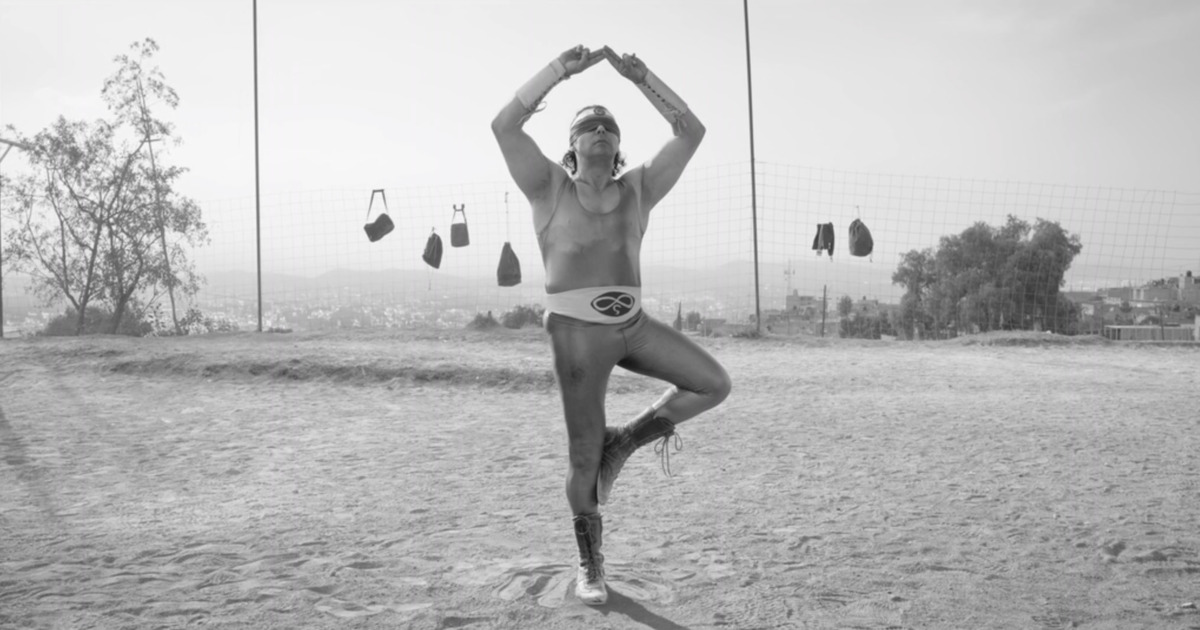
The film includes elements of magic realism. The famous Professor Zovek, an actor called Latin Lover, standing on one leg, provides moments of humor.


Latin Lover as Professor Zovek in Roma ©2019 Netflix

For the director, “Roma” is a corridor full of memories. Cuarón wanted to keep it authentic, so he didn’t give the full script to any actors or crew members. He wanted realistic reactions and for the actors to focus on the family’s journey, responding spontaneously.


Roma behind the scenes ©2019 Netflix

The Academy Award-winning director stated, “The events depicted in ‘Roma’ have consequences in today’s society, where hate and exclusion expose the vulnerability of the human race.”


The Golden Lion winner also reminds us, “When we watch a movie, viewers share the same experience; they open their senses and connect with the story. It is part of human nature.” He added, “The variety of colors reflects the richness of our society.”


For many critics, including me, “Roma” is the best movie of the year, not only for its visual beauty but also for how it makes us feel.


“Roma” is a significant achievement for all the talented people involved in its creation and for Alfonso Cuarón, who rightly earns his place among the most visionary directors of contemporary cinema.

Monday, December 24, 2018

Roma: An Unprecedented Best Picture Nomination for a Movie in Spanish

By José Alberto Hermosillo

After the announcement of the Golden Globe and Independent Spirit Awards nominations, “Roma,” the epic Mexican film in Spanish, faces the possibility of being nominated only for Best Foreign Language Film. However, the winner of the Golden Lion at the Venice Film Festival is a strong contender in other categories, including Best Picture at the 2019 Oscars®. 


The New York Film Critics Circle and the LA Film Critics Association agree that “Roma” is the best Picture of the year.


In recent years, the Oscars® have faced criticism for a lack of diversity and inclusion. In response, the Academy® has expanded memberships to include more individuals from the global film industry. These new international members could significantly improve the chances for foreign films like “Roma,” “Cold War,” and “Shoplifters.”


The Academy can’t please everyone with the most popular film award, and giving out an Oscar® isn't the “Miss Congeniality” contest. Controversially, the Academy often chooses to highlight a film's technical qualities over popular preference.

Members of each branch have specific standards for evaluating submitted films and awarding them fairly.


Academy® voters may overlook a black-and-white Spanish film without big stars, mainly if it depicts life in Mexico City in 1971.

The style of the Mexican film leans toward Italian Neorealism and may not appeal to many American viewers, but some are passionate fans of the director’s work. At the same time, members will recognize the talent, beauty, and craftsmanship in the Netflix production called “Roma.


One main reason Guillermo del Toro’s “The Shape of Water” captivated voters last year was its seamless blend of filmmaking elements—direction, acting, cinematography, art design, costumes, makeup, sound, and music. Something similar could happen with “Roma.” 


As long as the film made by the director of “Y tú mamá también” adheres to Academy rules, it can compete in other categories such as Best Original Screenplay, Editing, Cinematography, Set Design, Sound Design, Costumes, Directing, Acting, and even Best Picture.


One thing is undeniable: the visionary filmmaker Alfonso Cuarón created this masterpiece without revealing the entire script to his actors. A challenge that only great directors can pull off.


Understanding the movie might require multiple viewings, mainly because we need to grasp the significance of the film’s setting and time—Mexico City, 1971—two of the key elements in this complex film.


The richness of the production in “Roma” is evident in the authentic reconstruction of Colonia Roma and its surroundings.


The director worked tirelessly with Oscar®-winning set designer Emilio Caballero (“Pan’s Labyrinth”), who previously reconstructed the devastated area of the Tsunami in Asia for the film “The Impossible.” More recently, Emilio did an excellent job in the fantastic movie “A Monster Calls.”


Creating the interiors and exteriors for “Roma” was a monumental artistic effort, especially since the “colonia” was demolished after the earthquakes in 1985 and 2017.


Roma ©2018 Netflix


To build all the streets, hospitals, and movie theaters, Alfonso Cuarón and Emilio Caballero had to rely on pictures, videos, newspapers, and memories of their childhood.


The filmmakers want us to discover specific details that the film has but doesn’t tell us openly.


Roma is a town located in the middle of Mexico City. It is a transit hub where people pass by on their way to the “Zócalo,” also known as Plaza de la Constitución. People’s destination is the Civic Center, which we don’t see in the picture. That place is considered Ground Zero for individuals to publicly celebrate, dance, vote, protest, and demonstrate their political concerns.


"Roma" actresses, Yalitzia Aparicio (Cleo), Nancy Garcia (Adela), María de Tavira (Señora Sofía). Photo José Hermosillo ©2018 Festival in LA

The story of “Roma” takes place during a turbulent period under the “populist” or “leftist” presidency of Luis Echeverria (1970-1976). He was responsible for the “Corpus Christi Massacre,” carried out by government-sponsored and CIA-trained units called the “Falcons,” also known as the “Alcones,” as shown in the film. More than one hundred students were killed.


Echeverria was elected “democratically,” but also played a significant role in the riots of 1968. The army killed dozens of students protesting in the streets of the Tlatelolco neighborhood in 1968.


These turbulent times in Mexico included hosting the 1968 Olympic Games and the 1970 Soccer World Cup, as well as building the subway. These events contributed to setbacks in Mexico’s economy.


The government aimed to present a different image of Mexico to the world. In the 1970s, the people bore the consequences of the heavy burden those investments caused.


Roma ©2018 Netflix

In Oscar history, a film in Spanish has never been nominated for Best Picture. There is a list of movies that were “partially” spoken in Spanish but never won: “The Treasure of Sierra Madre” (1948), “Giant” (1956), “The Postman/Il Postino” (1995), “Traffic” (2000), and “Babel” (2006). Another example of a foreign-made film nominated for Best Picture is the silent movie set in Hollywood, “The Artist.” A French, USA, and Belgian production, it won Best Picture at the 2011 Academy Awards. It was a French victory for many.


Therefore, a foreign language film released in U.S. theaters a week before December 25th can qualify to be nominated in most categories. “Roma” aims to make history by becoming the first film entirely spoken in Spanish to be nominated for Best Picture. Alfonso Cuarón will not only be nominated for Best Director but also is the frontrunner to win the Oscar. Additionally, he will be nominated for Best Cinematography and Original Screenplay.


Festival in LA ©2018

Friday, October 19, 2018

Shoplifters: The Universal Art of Stealing in Japan

By José Alberto Hermosillo

AFI FEST movie review: A hyper-realistic Japanese masterpiece that tugs at your heart endlessly. Unforgettable!


This year’s Palme d’Or winner, “Shoplifters” (2018) by Hirokazu Koreeda (“Nobody Knows,” “Like Father, Like Son”), is a transcendent morality-crime drama that places family bonds at its center.


“Shoplifters” can be connected to other notable classic works on similar themes, such as the Italian Neo-realistic film “Bicycle Thieves/Ladri di Biciclette” (1948) by Vittorio de Sica. Robert Bresson’s French New Wave film “Pickpocket” (1951) is another example. More recently, the Mexican horror film “Somos lo que hay/We Are What We Are” (2010) by Jorge Michel Grau and the 2015 Argentine crime-family drama “The Clan” by Pablo Trapero also explore a similar theme of complicity in a family crime.


These powerful films depict a family of criminals working together toward a common goal—illegally obtaining goods that their harsh living conditions prevent them from affording. 


Family ties and complicity are at the heart of their actions, and their methods are similar. They naively believe there is nothing wrong with their actions, even as their crimes include petty theft, kidnapping, and, in some cases, murder.


“Shoplifters” begins when a young man, in collusion with his father, enters a store to steal goods. Their plan relies on hand signals, body language, and a smooth escape.


Over dinner, the older and prettier “sister” complains about why they forgot to steal the shampoo. The “grandmother” is an excellent cook and a clever deal-maker. 


The “wife” is exhausted but still has enough energy to find out what’s happening to the little girl, the father and their talented “son” found in a cold alley.


They want to do the right thing and take the little girl to her proper parents. Soon, they realize the girl has bruises from domestic violence. Without understanding the legal consequences, they bring her home, change her appearance, and treat her as their “daughter.”


“Shoplifters” achieves universality by depicting a working-class family struggling to meet their financial goals through part-time jobs. As a result, they steal goods they cannot afford to survive. But we must remember, “two wrongs don’t make a right.”


The controversy centers on Japanese morality and the image Japan projects to the world as a developed nation, while some of its people still endure hardship, isolation, and poverty.


“Shoplifters” is a remarkable work of art, featuring compelling performances, sharp cinematography, a well-structured script that thoroughly details each character’s background, and a convincing ending. The film’s pace moves the story along quickly thanks to its skillful editing.


Venerable actress Kirin Kiki (“After the Storm,” “Still Walking,” “Kamikaze Girls”) delivers a wonderful performance as the grandmother. Sadly, she passed away from cancer three months after returning from Cannes 2018.


Actor Lily Franky (“Scoop!,” “Blank 13,” “Like Father, Like Son”) plays the family patriarch, Osamu Shibata, who naively teaches his children to steal. The mother, Nobuyo Shibata, is passionately portrayed by actress Sakura Andó (“Love Exposure,” “100 Yen Love,” “0.5 Mn”), completing the impressive cast.


Hirokazu Kore-eda’s latest film explores the truth about family lessons, questioning who is truly the right person for another. What makes a parent?


The one who gives birth, or the one who raises the children, ironically speaking.


“Shoplifters” depicts a cold world where everyone is searching for love. However, the unconventional actions that drive them apart cast doubt on the family’s love.


Hirokazu Koreeda, director. Film critic José Alberto Hermosillo

The film’s harsh reality is underscored by the characters’ wrongdoings, betrayals, and illicit affairs, which call into question the concepts of loyalty, love, and self-respect in a desolate, dark universe.


“Shoplifters” is the Japanese Official Entry for Best Foreign Language Film at the 91st Academy Awards and, without a doubt, is a strong contender for an Oscar nomination this year.


“Shoplifters” is amusing, unforgettable, and heartbreaking. For some audiences, it is hard to connect with the actions and relationships of every character in the film due to the story’s cryptic, opaque, and at the same time complex emotions.


Festival in LA ©2018