Tuesday, September 12, 2023

Passages: A Very Sui Generis Love Affair in Paris

By José Alberto Hermosillo


In the era of diversity and inclusion, “Passages” is a successful attempt by Queer Cinema to crossover into mainstream media. 

“Passages” is a refreshing and sophisticated new French/German Queer drama attempting to explore the laws of attraction, arousal, behavior, and human sexuality without bounds in this modern love story.

The eternal triangle scenario centers naturally on a same-sex couple struggling over an infidelity one of them had with a woman. The problem is that the suitor likes exploring his bisexuality further with the opposite sex and wants to keep it that way, but his heart is attached to his husband.


Triggered by his husband’s rejection, self-centered German director Tomas Freiburg (Franz Rogowski) falls into an extramarital steamy relationship with Agathe (Adèle Exarchopoulos), an elementary school teacher, who falls for him carelessly. 


In a short period, Tomas’s intellectual husband, Martin (Ben Whishaw), witnesses how Tomas is going into self-destruction mode and how his erratic conduct affects other people’s lives, including their fifteen-year marriage.


Franz Rogowski as Tomas is extraordinary. He plays the perfect antihero of the story as an openly gay film director with enormous emotional baggage.


Rogowski’s charming and even cynical smile and profound gaze convey the right emotions to captivate his audience, elements that make the actor continue to grow, as evident in his previous performances in “Transit,” “Undine,” “Great Freedom,” and the upcoming “Disco Boy.” With enormous confidence, he conquers the screen as one of the greatest European actors of our time.


His counterpart, British actor Ben Whishaw, is terrific as the dedicated and betrayed husband. His character, Martin, is a low-key graphic artist and owner of a high-end print shop. In the film, his break-up does not prevent him from fooling around with other guys in their social circle. 


Whishaw is a chameleonic actor who has performed excellently for almost three decades. His most iconic roles were in the 2006 “Perfume: The Story of a Murder,” alongside Dustin Hoffman, and in the British period film “Bright Star.” More recently, he worked in “Paddington,” “Skyfall,” “No Time to Die,” and the Award-winning feminist piece “Women Talking” as the raconteur of the women’s struggle.
 
The questionable concubine Agathe is exquisite, confident, and feminine with traditional French parents. She is a practical woman who does not give importance to her new partner’s lifestyle. Agathe is played by the always sumptuous Adèle Exarchopoulos (“Blue is the Warmest Color,” “Les anarchistes,” and “The White Crow”).


Film director Ira Sachs (“Frankie,” “Love is Strange”) ’s fierce and meticulous method of directing actors demonstrates her ability to get the most out of them professionally. In her work, she introduced a new kind of “Teorema,” referring to the type of sexuality presented in the 1968 Pier Paolo Pasolini’s Italian Cult Classic “Theorem.” 


“Passages” has intricate relationships and a playful tone similar to Bernardo Bertolucci’s “Dreamers.” The modernity of Nadav Lapid’s storytelling in “Synonyms” elevates Sachs’s work to a new and profound level of understanding human behavior.
The luxurious cinematography enhances the sharp colors, and close-up imagery focuses on the subjects, a responsibility of talented Josée Deshaies (“Lamb,” “Saint Laurent,” “Curling”). It has an effervescent atmosphere and creates an uneasy feeling of wonder and anxiety in the spectator.


A big shout-out to the costume department for showing French fashion on a large scale. Every character is dressed in a way that reflects their personality, leaving no doubt about who is who in the story.
 
The set design department did a fabulous job choosing those unknown locations in Paris. The interior design, furniture, and accessories are superbly colored. On the couple’s living room wall hangs the iconic poster for the 2019 Emmy-nominated LGBTQ documentary The Circus of Books by Rachel Mason. It is festive and refers to Tomas’ passion for fine print and the couple’s happiness when they were together.


“Passages” is a freshly made, entirely original film full of surprises, making it impossible to know where every scene will take you next.


Besides how strident and sexually explicit y the film can be, there is a time for reflection on the direction our society is taking. In times of solitude, moving on from a long-term relationship is complicated, especially when the people they trust and love are not supportive. Therefore, it is worth our time to watch one of the year’s best films, which features strong production values, impeccable direction, and terrific performances that convey emotion to the audience. 


IF YOU ARE READING FROM A MOBILE DEVICE, CLICK: view web version FOR OTHER COOL FEATURES SUCH AS TRANSLATE POWERED BY GOOGLE, AN INTERACTIVE FILM FESTIVAL CALENDAR, AND MORE AWESOME ARTICLES.

Festival in LA ©2023

Saturday, September 9, 2023

The Eternal Memory: An Indelible Story of Love and Alzheimer's

 By José Alberto Hermosillo

The Eternal Memory poster

“The Eternal Memory” is this year’s most affectionate, endearing, and absorbing documentary. A total eye-opening experience! 

After the success of “The Mole Agent,” Academy Award-nominee Chilean documentarian Maite Alberdi, in her most recent work, “The Eternal Memory,” tackles another concern troubling our elderly population: Alzheimer’s, where she vividly displays the progression of the disease in her personal, observational, and moody style.
Augusto and Paulina. “The Eternal Memory.”
“La memoria infinita,” in Spanish, unfolds in the most intimate and affecting possible way the lives of the characters’ interaction in their daily routine and natural habitat, including their fear that the memory will start fading one day.
The lineal love story follows Augusto and Paulina, a Chilean couple who have been together for 25 years and plan to stay that way until death separates them.
Augusto Góngora was a respected Award-winning author, journalist, and broadcaster who lost his memory due to Alzheimer’s. But he always remembers something: his love for his devoted wife, Paulina.
Paulina Urrutia is a theater actress, an elected public official, and an affectionate caregiver. The news of Augusto’s sickness was devastating, mainly because you have to realize someone is here, but the memories are not. Critical decisions, such as going to the hospital, staying in a nursing home, continuing on life support, or other essential family matters, must be made collectively, including Augusto’s sons from his previous marriage.
During the Covid shutdown, they ended up isolated in their house, and the news on the radio announcing the number of people dead was frightening and challenging to understand for the 60-year-old. Still, those numbers mean nothing compared to the devastating number of people who lost a loved one. Augusto’s memory tried to make sense of those numbers as Paulina explained their meaning and ramifications.
Augusto and Paulina contemplating the eclipse. “The Eternal Memory.”
As the sickness progressed gradually, Augusto left all his jobs. He was very active when he was diagnosed with Alzheimer’s. He was the head of Chile’s Cultural Affairs for the National TV Department (TVN). Paulina had to continue working in theater and even in public TV to generate a source of income for their household. At one point, she had to bring Augusto to work, where he was pleased to talk to his former colleagues. She was not the only one taking care of him. It was the entire community, the barrio, who took care of him and other people with special needs. His most significant decline was during the pandemic. People’s isolation is harmful.
Maite remembers that the post-production process could have been smoother. While trying to finish editing the story, almost at the end, Paulina found in their basement an archive of invaluable tapes with Augusto’s shows, interviews, and personal memories, including powerful images of Pinochet’s dictatorship a few decades back and other vital photos with the work he did for former elected President Michelle Bachelet. According to the director, those materials were to enrich the project and must be added to the final cut. The recently found footage chronicling Chile’s internal and external movements and its transition from Pinochet’s dictatorship to actual democracy gives more meaning to the documentary.
In a Q&A session after one of the first screenings in Santa Monica, California, Paulina said, “Augusto’s sickness ran for almost ten years. It was like death in slow motion.” Still, Augusto’s most consequential act was to participate in the making of this transcendental project and preserve their love story forever. She also said that when Paulina came up with the idea of making the documentary, she was not convinced to let the film crew interrupt the most intimate moments of their daily lives and show it to the world until she saw the film. It was right after Augusto’s passing in May of 2023. Then, at that pivotal moment, she understood a long-lasting legacy of preserving his memory with this outstanding work of art, which she gratefully and humbly treasured.
Paulina Urrutia, "The Eternal Memory." Photo by José Alberto Hermosillo. Copyright © Festival in LA, 2023
Paulina Urrutia, “The Eternal Memory,” Santa Monica, California. Photo by José Alberto Hermosillo. Copyright © Festival in LA, 2023
During Covid, Paulina had to learn to use the camera and to record themselves. It ended up being a big gift during the lockdown. Paulina feels sorry for the terrible job she did with shaky and out-of-focus images. Her new job was a source of company during their most lonely moments. It was marvelous to have something to spend their days. She set the camera, pressed play, and let it run all day until she realized the battery was down. But she feels proud of her job and has enormous respect for the patience and dedication of the director.
The idea of making this original story came when documentarian Maite Alberdi read an interview in a magazine regarding a journalist who was on his way to pick up a National Award and developed Alzheimer’s disease. His wife, Paulina, cared for him lovingly and compassionately until the end. 
To get the subjects used to the cameras, weeks before the shooting, the director spent plenty of time with the characters and the crew in a small environment and made them feel comfortable acting as usual as if the team was not there; the same technique she used in “The Mole Agent.” 
In the music department, Maite used classic song covers from other Latin artists she admired, such as Cuban songwriter Pablo Milanes’ “Eternamente Yolanda.” The credits rolled with inserts of the couple’s transcendental moments. 
Some questions were left unsolved: his sons rarely appeared on camera, and we do not know who they were, what they do for a living, or how they helped their father in the last moments. There is a brief moment where we see Augusto in a nursing home, how long he has been there, and so on. Still, the documentary is a powerful tool to help study adult behavior during the progression of Alzheimer’s disease.
“The Eternal Memory” has similarities with the 2014 Award-winning South Korean documentary “My Love Don’t Cross that River,” which presented an almost hundred-year-old couple living together in the isolated mountains of the peninsula until the end of their lives. 
The same year, Juliane Moore won an Oscar for her powerful performance in the narrative Still Alice, which examines in depth one person’s loss of memory due to Alzheimer’s disease.
Maite Alberdi, "The Eternal Memory." Photo José Alberto Hermosillo. Copyright © Festival in LA, 2023
Maite Alberdi, "The Eternal Memory," Santa Monica, California. Photo José Alberto Hermosillo. 
Copyright © Festival in LA, 2023
Maite Alberdi makes documentaries about people she wants to be with, who make her feel joy, happiness, and love. As a filmmaker, she is looking for love in different situations. She sees everyone with the potential to tell a good story.
The 2023 Sundance’s Grand Jury Prize Award-winner is produced by Rocío Jaude and Oscar winners Juan de Dios Larrain and Pablo Larrain (“A Fantastic Woman”). The couple in this story parallels Chile’s recent history and can be relatable to everyone.
After experiencing loneliness during the pandemic and other illnesses affecting our aging population, Maite and Paulina's panel powerfully agreed: “It is our responsibility not to leave elderly people isolated.”
The heartbreaking documentary “The Eternal Memory” is not about someone losing their memory. It is about keeping the memory of the ones we lost due to Alzheimer’s disease. 
Maite Alberdi, "The Eternal Memory" & film critic José Alberto Hermosillo. Copyright © Festival in LA, 2023

Paulina Urrutia, "The Eternal Memory" & film critic José Alberto Hermosillo. Copyright © Festival in LA, 2023


The Eternal Memory - Official trailer

Related Articles:
Laura Pausini: Pleased to Meet You, Recounts the Life of the Italian Megastar

IF YOU ARE READING FROM A MOBILE DEVICE, CLICK: view web version FOR OTHER COOL FEATURES SUCH AS TRANSLATE POWERED BY GOOGLE, AN INTERACTIVE FILM FESTIVAL CALENDAR, AND MORE AWESOME ARTICLES.

Festival in LA ©2023

Friday, July 28, 2023

Afire: Fire in a Poignant German Holiday

 By José Alberto Hermosillo 

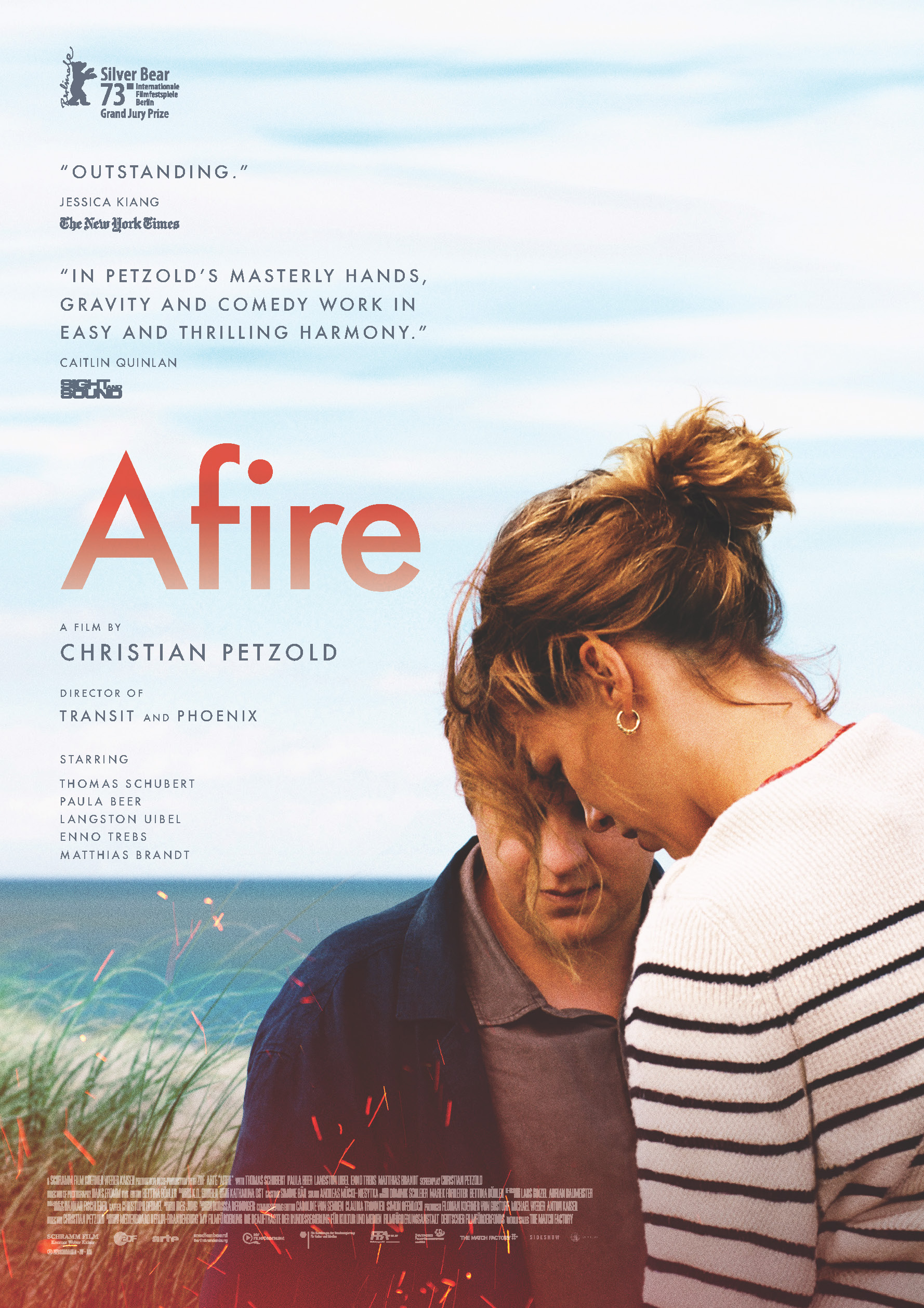
Afire poster

“Afire” is an elegantly simple film driven by fire, desire, and dry humor, directed by the renowned German filmmaker Christian Petzold, who delivers yet another masterful work. 


The story unfolds gradually. As it progresses, the plot blooms into a wave of intense emotions. The characters’ relationships evolve naturally, and their romances ignite both internally and environmentally.


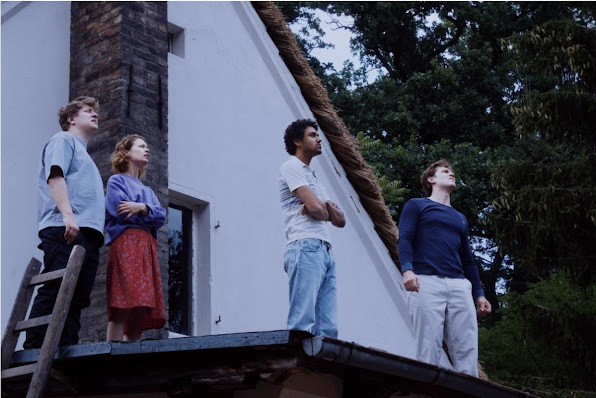
Leon and Felix drive to a seaside resort town on the Baltic Coast to enjoy some quality time when their car breaks down in the woods. They must walk several miles to reach Felix’s mother’s country house.


Absorbed in finishing his next novel, Leon, played by Thomas Schubert, becomes the story’s anti-hero because of his insecurities and desire to be left alone. The joy of having dinner with friends slips away from him. Others perceive his uncharismatic attitude as a waste of his potential. According to director Christian Petzold, Leon is a total jerk that many viewers might relate to.


His partner, Felix (Langston Uibel), is an outgoing photographer searching for inspiration for a series of portraits. While trying to sleep, they listen to a series of sexual sounds from the next room. Nadja is having sex with Devid (Enno Trebs), the attractive beach lifeguard who openly embraces his bisexuality.


Paola Bear (“Franz,” “Never Look Away,” “Undine”) delivers a superb performance as Nadja, an educated, mysterious, and blissful woman who, aside from her sex addiction, sells ice cream in the plaza while hiding her literary knowledge. 

Leon’s novel, “Club Sandwich,” turned out very poorly. It took Christian three days to write the first chapter for the publisher Helmut (Mathias Brandt), who then read it aloud and found it awkward on film.

In the scene where Nadja criticizes Leon’s work, he dies figuratively, unaware that she is more than just an ice cream seller. She doesn’t show off her intellectual abilities or her true self, so she must seem casual and sincere about herself and his feelings. At the same time, he needs to be cautious and smart about the situation because now he realizes she is not the object of his desire.


Nevertheless, Leon’s uncharismatic, insecure, and contradictory character is depicted with Christian’s personal touches and autobiographical elements in his writing. It functions as a form of psychoanalysis for the director, who is also an artist. He portrayed himself as a loser in his early films, like in “Cuba Libre,” so why not continue doing so in “Afire”? 


In Christian Petzold’s previous complex projects, “Transit” and “Undine,” the female characters always betray their male counterparts, and “Afire” is no exception. The male figures consistently struggle to express their feelings, and their difficulties with seeking intimacy are clear. 


After finishing filming “Undine,” the award-winning director planned to meet with his recurring actress, Paola Bear, in Paris in 2020. However, both were stranded in their respective cities due to COVID-19. While recovering, they decided to meet in Berlin to start working on “Afire”—titled in German, “Roter Himmel” or “Red Sky.” Both the director and the actress had previously collaborated on “Transit” and “Undine.” 


In a conversation with dozens of fans and film students between the “Afire” and “Phoenix” screenings in Santa Monica, California, Christian Petzold said he was fascinated by dystopian movies. Now, he writes and adapts films that are more rooted in reality.


Afire director Christian Petzold in Santa Monica
Christian Petzold & film students at the Aero in Santa Monica. Photo José Alberto Hermosillo. Copyright © Festival in LA, 2023

Petzold added something even more profound: “The badge we leave behind is meaningful and will make sense later in our professional and personal lives. Because the real value is not on material things such as a car, a book, or a manuscript, it is more about the emotional badges within a relationship and the possibilities of personal growth with the person you love.”

Christian Petzold & film students at the Aero in Santa Monica. Photo José Alberto Hermosillo. Copyright © Festival in LA, 2023

People often asked him if he would choose another element to complete the trilogy after starting the series with “Undine,” representing water, and “Afire,” representing fire. The answer is no. He plans to take a sabbatical. 

The director does not lecture his audience about the environment or global warming through his latest work, nor does he have a political agenda. The fire symbolizes what needs to be extinguished, and the main characters could deepen their intellectual abilities, adding complexity and surprises to the ending. 

The idea of “labor and leisure” shown in “Afire,” where a writer retreats to the woods to focus on his next novel, is similar to Mia Handset-Løve’s 2021 film “Bergman Island,” where a couple seeks inspiration for their upcoming projects on the same island where Ingmar Bergman created his most famous works. 

In John Stahl’s 1945 thriller “Leave Her to Heaven,” everything is intentionally ambiguous, making viewers wonder who the characters are: the writer and the obsessed woman who never considers the consequences of her actions. Lastly, Roman Polanski’s “The Ghost Writer” presents a darker, more sinister example set in Martha’s Vineyard, where a second writer is hired to replace and write the memoirs of a former British Prime Minister. 


The Grand Jury Prize Silver Bear winner at the Berlin Film Festival is a movie that makes viewers aware of their surroundings. Petzold’s latest project is clever, humorous, and sophisticated, where audiences can relate to these smart, well-developed characters, and where dreams can be tested by weather conditions and climate change.

AFIRE - Official Trailer


Christian 
Petzold & film critic José Alberto Hermosillo. 
Copyright © Festival in LA, 2023

IF YOU ARE READING FROM A MOBILE DEVICE, CLICK: view web version FOR OTHER COOL FEATURES SUCH AS TRANSLATE POWERED BY GOOGLE, AN INTERACTIVE FILM FESTIVAL CALENDAR, AND MORE AWESOME ARTICLES.

Festival in LA ©2023