Showing posts with label Ukraine. Show all posts

Wednesday, March 1, 2023

A House Made of Splinters: And the Shattered Children of Ukraine

 By José Alberto Hermosillo

A House Made of Splinters
A House Made of Splinters: And the Shattered Children of Ukraine

“A House Made of Splinters” is a powerful and moving documentary of extraordinary beauty made in Ukraine before the invasion. It is emotionally devastating.


The documentary follows the lives of several Ukrainian children inside a shelter where they find refuge during the chaos of the outside world.


The chaos in Ukraine occurs within every broken family, impacting the most vulnerable—children.


Things seem to be going smoothly in a children’s refuge in East Ukraine. Outside the facility, people still feel the early signs of war and stay inside their homes. This story takes place a year or two before the Russian invasion and during earlier conflicts.


The facility’s director describes the situation as overwhelming and complicated. The film pairs her caring narration with distant shots of the impoverished Eastern European country. She says, “Life was difficult, but the war worsened things. So many people lost their jobs. Now, every tenth door hides a broken family. When a family is broken due to alcoholism, violence, or homelessness, the social worker brings the children to our shelter.”


The Oscar-nominated docudrama beautifully depicts children actively engaging with their teachers and classmates. However, the children miss their parents and still want to stay in contact, even though they know their parents are alcoholics and cannot be reached. The children experience the joy of friendship, their first love, the heartbreak that follows, loneliness, and the hope that comes with it.


The children speak, in first person, about their experiences with domestic violence and physical abuse, and some have even witnessed the murder of a parent. The unseen chaos of war zones is brought into their homes, causing anxiety, depression, and internal conflicts.


Moving the children from the shelter to an orphanage or foster family is difficult for some, especially if they have siblings still at the center. Breaking up families is always upsetting and emotionally challenging for the young ones.


When grandparents or a mother visit or pick up a child, their joy is overwhelming and unmistakable.


The exceptional camerawork by cinematographer and director Simon Lereng Wilmont captures an intimate space where shelter residents can interact naturally. Mr. Wilmont patiently waits for the right moments to capture the children’s most tender and honest moments as they open up with bravery and sincerity.


In “A House Made of Splinters,” each child’s story follows a similar pattern—Sasha, Kolya, Eva, Zhenyia, Kristina, and Polina. Most of them need professional help because it’s heartbreaking to feel that nobody wants them. These memories will stay with them forever. No one deserves to feel unwanted.


When a girl grows up, she can also become a mother, and she might struggle with alcoholism and potentially give up her parental rights to a foster family. For Ukrainian children, the future does not look promising.


El cuarto desnudo/The Naked Room

Another profound and analytical documentary on children’s psychology and mental conflicts is “El cuarto desnudo/The Naked Room,” directed by Nuria Ibañez in 2013. It portrays children undergoing psychological evaluation and receiving special treatment in a hospital with bare walls in Mexico City.


“A House Made of Splinters” keeps viewers engaged and wondering about the future of these vulnerable children. They are not necessarily victims of their parents’ actions or their violent environment, but they must still live within their circumstances.


The children need to be loved, and we all must learn to appreciate beauty and vitality, as “hope does last.” The film ends with a lullaby, leaving us feeling heartbroken, helpless, and powerless. 


Related Articles:
Laura Pausini: Pleased to Meet You, Recounts the Life of the Italian Megastar

IF YOU ARE READING FROM A MOBILE DEVICE, CLICK: view web version FOR OTHER COOL FEATURES SUCH AS TRANSLATE POWERED BY GOOGLE, AN INTERACTIVE FILM FESTIVAL CALENDAR, AND MORE AWESOME ARTICLES.

Festival in LA ©2023 

Thursday, November 18, 2021

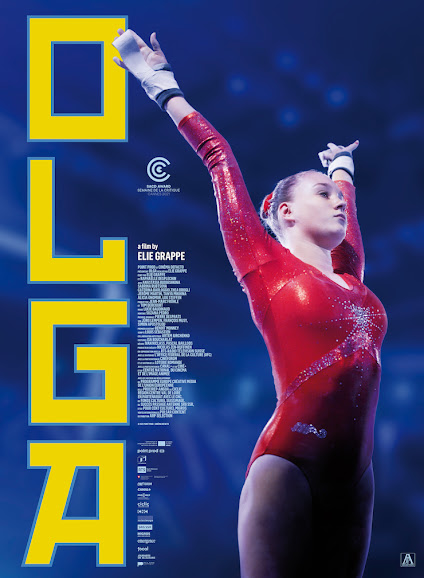
Olga: The Ukrainian Gymnast Who Represented Switzerland at the European Championships

By José Alberto Hermosillo

COLCOA REVIEW: “Olga” is a realistic and captivating dramatization of a Ukrainian gymnast who struggles to achieve her dreams in and outside her country.

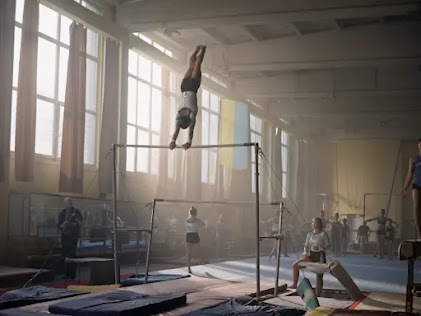
The Swiss/French co-production is a fascinating and honest portrait of the world of gymnastics and what athletes must do to participate in international competitions. Young female athletes undergo intense “military” training conjoined with a tumultuous external political environment, which affects their mental health and well-being. 


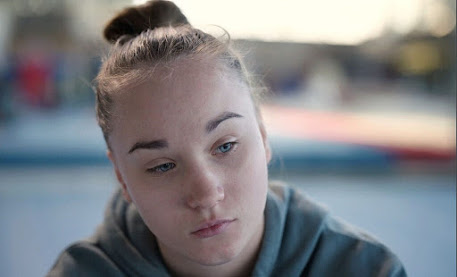
Gymnast-turned-actress Anastasia Budiashkina is a true revelation. 

Olga, a 15-year-old Ukrainian gymnast who was exiled to Switzerland, works tirelessly to secure a place at the country’s National Sports Center and compete at the European championships.

The story progresses from her specific physical training to the external political conflict afflicting her homeland, which touches Olga’s psychological stability.

Her mom is a notorious journalist who worked to uncover corruption cases and to expose President Yanukovych’s refusal to sign the free trade agreement with the European Union. During Ukraine’s Euromaidan of 2013, Olga’s mother became a victim of political persecution, repression, and brutality.

Witnessing the riots in Switzerland, Olga suffers anxiety and excessive psychological damage that affects her performance. Far from her Ukrainian teammates, she can still connect with them through a smartphone, where she catches a glimpse of what is happening with her mom.

The film simultaneously depicts the girl’s experience of the political crisis in her native land, her adolescent crisis, and the immigrant challenges in her social world.

Actress Anastasia Budiashkina delivers Olga’s astonishing, raw, and faithful incarnation. Her strong body denotes solid gymnastic skills, conveyed by her expressive blue eyes, which flawlessly exhibit her character’s vulnerability.

Elie Grappe, “Olga” director at COLCOA. Photo: José Alberto Hermosillo. Festival in LA ©2021

First-time French director Elie Grappe pulls off a compelling work. Fortunately for the director, project, and viewers, she is both a professional actor and athlete accustomed to competing in large-scale arenas.

In a related real-life story, the turmoil that affected the US gymnastics team at the Tokyo 2020 Olympic Games was psychological pressure, mental stress, and other external factors that physically undermined the athletes’ performances. As news of the American team’s challenges spread worldwide, the timing of “Olga’s” release could not be better, serving as an inspirational beacon for thousands of young athletes who dream of competing in the Olympics and can relate to Olga’s experience.

Elie Grappe gave the young actresses enough space to display their emotions, as he wanted to show their passion, desires, and true nature right from the beginning. The story focuses on a young girl with a strong body and an athletic complexion, ready for an international championship.

Elie Grappe tells the story authentically through functional, spacious settings, clearly intended to lend his first feature film a “documentary look” while creating dramatic moments in intimate settings.

Elie Grappe, “Olga” director at COLCOA. 
Photo by José Alberto Hermosillo. Festival in LA ©2021

The director made the good work an essential part of the film to heighten the intensity of every scene, focusing on the athlete’s stress, training, failures, and accomplishments. He wanted to convey the main character’s anger and confrontation with the rest of the world through sound, acoustics, and vital musical tones. He thus bolsters the whole atmosphere by recording the participants’ training with dynamic microphones.

French director Elie Grappe emigrated to Switzerland at 17, and it took him 10 years to make “Olga.” 

The COVID-19 crisis, too, severely impacted the crew during the lockdown. When one of the members died, filming was suspended. After a year, they faced another challenge and returned to complete the movie. Evidently, the young actors had grown relatively quickly and no longer looked the same as before the pandemic.  

The editing slows down the action, and Olga’s failures are repetitive, leaving the audience wondering if she will succeed.

Selected as the Swiss entry for the Best International Feature Award at the 94th Academy Awards, “Olga” is the winner of the SACD Award at the Critics’ Week in Cannes 2021. It also won Best Picture at the Brussels International Film Festival and Best Feature at the Hamburg International Film Festival.

“Olga” is about the struggles and choices a gymnast has to make to become somebody, whether she wants to be a Swiss champion or a Ukrainian patriot. 

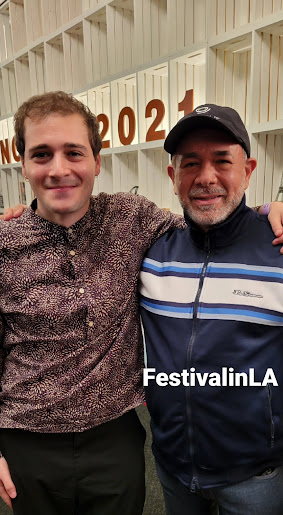
Elie Grappe, “Olga” director at COLCOA, and film critic José Alberto Hermosillo. Festival in LA ©2021

OLGA, French trailer

Related Articles:  

IF YOU ARE READING FROM A MOBILE DEVICE, CLICK: view web version FOR OTHER COOL FEATURES SUCH AS TRANSLATE POWERED BY GOOGLE, AN INTERACTIVE FILM FESTIVAL CALENDAR, AND MORE AWESOME ARTICLES.

 Festival in LA ©2021