|
| The Cave poster. National Geographic ©2019 |
“The Cave” is a remarkable, powerful, and shocking documentary featuring stunning firsthand material that will leave you uneasy about the Syrian war and hopeful about the people who make a difference. An undeniable Oscar contender.
This National Geographic presentation will tear your heart out until the end, with some praiseworthy moments for hope.
This National Geographic presentation will tear your heart out until the end, with some praiseworthy moments for hope.
 |
| The Cave, an air attack in Syria. National Geographic ©2019 |
“The Cave” opens with relentless airstrikes and bombings by powerful Russian warplanes in an already destroyed city of Ghouta, near Damascus, Syria. Those impressive images seem to come from a Hollywood movie with special effects and loud recorded sounds. But no, it is the cruel reality of war.
While watching those catastrophic events on the screen made me think, what if the same airstrikes could happen in New York, Los Angeles, London, or Moscow? What if America suffers the same fate as Syria? Of course, we don’t have a totalitarian regime like the Syrian government or ISIS. Still, if we place ourselves in the shoes of others, we can begin to feel a little empathy for the Syrian people.
Fayyad grew up in a family of seven vigorous women, where he learned to respect them and appreciate the work they do for their families.
When the award-winning director heard about a female pediatrician in charge of an underground children’s hospital, he wanted to meet Amani right away and be able to tell her story on the big screen. Her profile fulfilled other vital topics Fayyad had not touched on in his previous films.
Very few women work in the medical field in Syria and other Muslim countries. When Fayyad met Amani, he knew he had found his main character immediately. A woman doctor barely in her 30s, Amani, is in charge of this ragged underground hospital. Guiding a devoted staff of men and women, Amani has the strength and courage to continue her journey of helping those in need.
While watching those catastrophic events on the screen made me think, what if the same airstrikes could happen in New York, Los Angeles, London, or Moscow? What if America suffers the same fate as Syria? Of course, we don’t have a totalitarian regime like the Syrian government or ISIS. Still, if we place ourselves in the shoes of others, we can begin to feel a little empathy for the Syrian people.
Passing the arresting opening sequence, we are welcomed to the first Syrian underground children’s hospital managed by a Muslim woman. The impoverished institution survives thanks to the efforts of Amani Ballour, a young female pediatrician who leads a team of doctors, nurses, and volunteers in helping wounded children.
 |
| Feras Fayyad, director of “The Cave.” Photo: José Alberto Hermosillo. Festival in LA ©2019 |
The filmmaker, Feras Fayyad, had his first Oscar nomination last year for “Last Men in Aleppo.” It is a compelling documentary about the White Helmets, a group of first responders working dangerously in the fields, removing landmines, and protecting children.
Now, Fayyad bravely takes us underground - to another, more chaotic place called “The Cave.” A subterranean hospital that not only deals with limited resources to attend wounded ones but also with the omnipresent sexism against women.
Before shooting his first film, Fayyad was subject to an unlawful arrest. He remained in jail for eighteen months, tortured, like many of his countrymen. In Syria, thousands disappeared in the hands of the totalitarian regime.
When he was able to leave Syria, he kept in contact with his Cinematographers, Muhammed Khair Al Shami, Ammar Sulaiman, and Mohammed Eyad. The photographers continued to document every injustice, wrongdoing, and foreign intervention with their cellphones and tiny cameras, and compiled those powerful images into compelling films.
“The Cave” is Feras Fayyad’s latest approach to the unresting situation in Syria. The subjects he chooses have meaningful and complex stories to tell. Fayyad confines his characters in place and time, following them in their natural environment to bring about intimate and cathartic moments beyond that bloody war.
Now, Fayyad bravely takes us underground - to another, more chaotic place called “The Cave.” A subterranean hospital that not only deals with limited resources to attend wounded ones but also with the omnipresent sexism against women.
Before shooting his first film, Fayyad was subject to an unlawful arrest. He remained in jail for eighteen months, tortured, like many of his countrymen. In Syria, thousands disappeared in the hands of the totalitarian regime.
When he was able to leave Syria, he kept in contact with his Cinematographers, Muhammed Khair Al Shami, Ammar Sulaiman, and Mohammed Eyad. The photographers continued to document every injustice, wrongdoing, and foreign intervention with their cellphones and tiny cameras, and compiled those powerful images into compelling films.
“The Cave” is Feras Fayyad’s latest approach to the unresting situation in Syria. The subjects he chooses have meaningful and complex stories to tell. Fayyad confines his characters in place and time, following them in their natural environment to bring about intimate and cathartic moments beyond that bloody war.
When the award-winning director heard about a female pediatrician in charge of an underground children’s hospital, he wanted to meet Amani right away and be able to tell her story on the big screen. Her profile fulfilled other vital topics Fayyad had not touched on in his previous films.
 |
| The Cave. Doctor Amani Ballaur. National Geographic ©2019 |
 |
| The Cave. Doctor Amani Ballaur. National Geographic ©2019 |
Amani left everything behind: her family, medical studies, and the city where she grew up to do a job nobody could. For conviction, she went to work in the war zone and took a position that deals with the implicit harassment of the machismo of a society that does not understand that a woman can do the same job as men. She made a difference by saving thousands when her life was at stake.
 |
| Doctor Amani Ballaur features in the documentary The Cave. |
“The Cave” captures powerful and conceptual images of people suffering the calamity of war. The filmmakers have to go through more than 500 hours of footage. They carefully select the most critical and meaningful shots, presenting, honestly, the experiences of people caught in the middle of the conflict who need assistance. The audience may consider gruesome or terrifying dramatic scenes, mainly about the chemical attacks on children. The filmmakers also show other brutal images of children with malnutrition, cancer, and physical and mental abuse because they can’t hide the truth inside “The Cave.”
Under extreme circumstances, we can find decisive moments of hope and happiness, like a pinched birthday party celebration or why Amani makes a “liberal” and valid question about why people have children in wartime.
In the operating room, a surgeon uses his cell phone to play classical music to soothe the pain of the wounded people and ease the tension among his working team. Syrian hospitals have no anesthesia or other medical supplies to mitigate the pain and must rely on what they have. By juxtaposing Russian classical music inside the hospital, the filmmakers enhance the cinematic experience and the symbolism, considering that Russians can compose beautiful music and build warplanes that kill thousands in no time.
The conflict in Syria is part of the Arab Spring, which began with small and peaceful student protests and graffiti against the government. The ongoing situation involves more parties and interests, and more innocent victims suffering.
The Bashar al-Assad regime, supported by the Russian army, targets thousands of children, women, and civilians. Six million people have been displaced, and 10,000 are still in jail.
The problem goes global when crimes against humanity occur in Yemen, Jordan, and other countries. Those conflicts are bound to dogmatic governments, religious beliefs, and crude oil production. People need to acknowledge the unsettled situation in Syria and take action to help bring peace to this senseless war.
“The Cave” has won many recognitions, including the People’s Choice and Best Documentary awards at Valladolid, Jihlava, Camden, and Toronto festivals. That pedigree made out of “The Cave” is one of the top contenders to reach an Oscar nomination.
“The Cave” is an enormous achievement in filmmaking, a transcendental critical chronicle worth its challenging filming conditions. And a shout-out to the world about Syrians’ resilience to remain in their country stoically.
Under extreme circumstances, we can find decisive moments of hope and happiness, like a pinched birthday party celebration or why Amani makes a “liberal” and valid question about why people have children in wartime.
In the operating room, a surgeon uses his cell phone to play classical music to soothe the pain of the wounded people and ease the tension among his working team. Syrian hospitals have no anesthesia or other medical supplies to mitigate the pain and must rely on what they have. By juxtaposing Russian classical music inside the hospital, the filmmakers enhance the cinematic experience and the symbolism, considering that Russians can compose beautiful music and build warplanes that kill thousands in no time.
The conflict in Syria is part of the Arab Spring, which began with small and peaceful student protests and graffiti against the government. The ongoing situation involves more parties and interests, and more innocent victims suffering.
The Bashar al-Assad regime, supported by the Russian army, targets thousands of children, women, and civilians. Six million people have been displaced, and 10,000 are still in jail.
The problem goes global when crimes against humanity occur in Yemen, Jordan, and other countries. Those conflicts are bound to dogmatic governments, religious beliefs, and crude oil production. People need to acknowledge the unsettled situation in Syria and take action to help bring peace to this senseless war.
“The Cave” has won many recognitions, including the People’s Choice and Best Documentary awards at Valladolid, Jihlava, Camden, and Toronto festivals. That pedigree made out of “The Cave” is one of the top contenders to reach an Oscar nomination.
“The Cave” is an enormous achievement in filmmaking, a transcendental critical chronicle worth its challenging filming conditions. And a shout-out to the world about Syrians’ resilience to remain in their country stoically.

 |
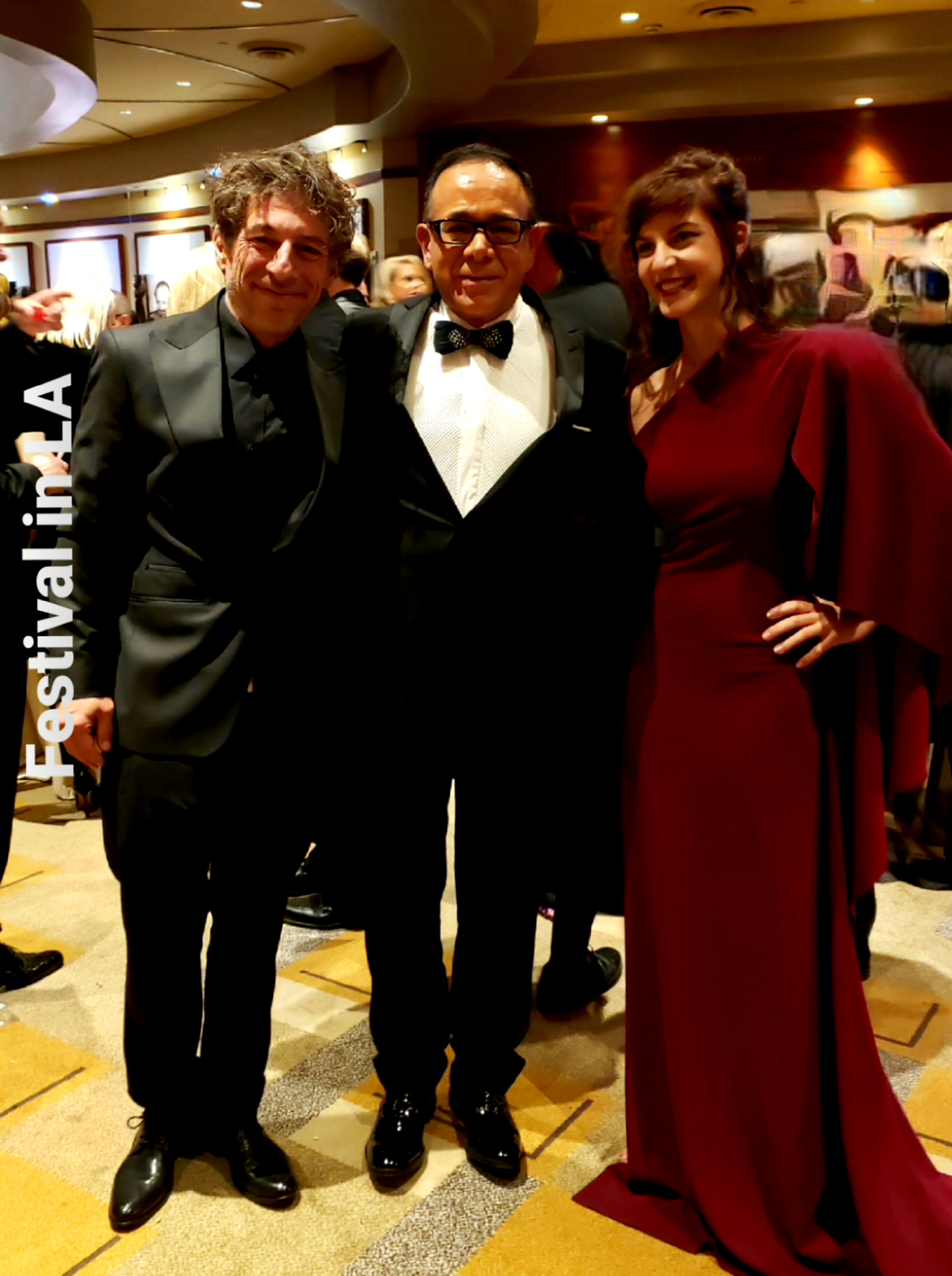
| Feras Fayyad, director of “The Cave.” Film critic José Alberto Hermosillo. Festival in LA ©2019 |
 |
| Film critic José Alberto Hermosillo. Festival in LA ©2019 |
Related Articles:
IF YOU ARE READING FROM A MOBILE DEVICE, CLICK: view web version FOR OTHER COOL FEATURES SUCH AS TRANSLATE POWERED BY GOOGLE, AN INTERACTIVE FILM FESTIVAL CALENDAR, AND MORE.
Festival in LA ©2019