Showing posts with label #AFIFest. Show all posts

Wednesday, April 8, 2020

And Then We Danced: Folk, Love & Pride in Georgia

By José Alberto Hermosillo
 
AFI FEST FILM REVIEW: “And Then We Danced,” a coming-of-age, joyful drama about personal liberation and self-realization in Georgia. Unforgettable, warm, and unique.

The Swedish, Georgian, and French co-production, shot in the Caucasus region, chronicles the story of three aspiring professional dancers: Merab, Mary, and Irakli, the newcomer. They train hard and compete to win a coveted spot in the prestigious National Georgian Ensemble.

The first conflict arises when the strict instructor demands that the students adhere to the rules of the predominantly “masculine” dance. At the same time, the young dancers want to soften the harsh regulations of the old traditions, something nearly impossible in their society.

The second conflict occurs on a lucky day when a new dancer arrives, disrupting the group’s natural balance. Irakli is a strong male who impresses everybody with his prodigious dancing skills, instant charisma, and charming smile. Everybody, including Merab, feels jealous and powerless when he enters the competition.

Besides prestige, being a lead dancer means being socially accepted, making the family proud, and being a much-needed steady source of income in difficult times.

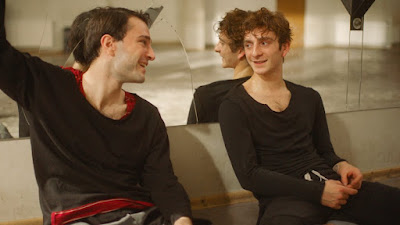
And Then We Danced, still courtesy of Music Box Films
And Then We Danced, still courtesy of Music Box Films.
 
The rivalry between Merab and Irakli intensifies on the dance floor, but their common struggle draws them together.

Merab slowly discovers that his happiness and world center around another man, Irakli. Feeling pushed aside, Mary hangs on to her friendship with Merab and will do anything to keep him happy.
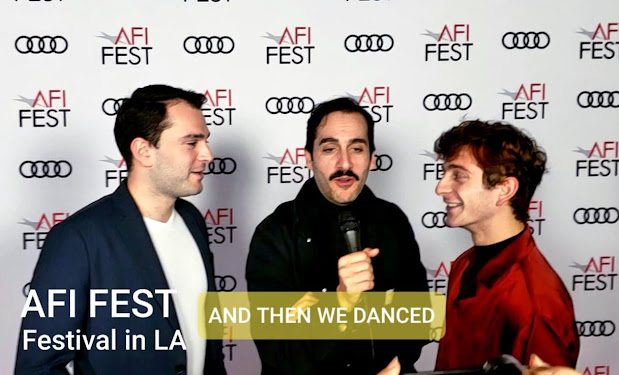
And then We Danced. Photo by José Alberto Hermosillo, Festival in LA ©2019
And then We Danced. Actor Bachi Valishvili, director Levan Akin, and actor Levan Gelbakhiani. Photo by José Alberto Hermosillo, Festival in LA ©2019

“And Then We Danced” takes an authentic approach to Georgian and Armenian cultures, blending those traditions with the modernity of a new generation who want to express themselves freely in their homeland.

The daring writer/director Levan Akin originally planned to make a documentary on Georgian dancers. After watching the first footage, he saw a coherent story and turned it into a feature with a formal narrative. He went out to the streets without permission and shot it “Guerrilla-Style.”

Akin considers himself an extensive researcher, and to make his film even more authentic, he studied the symbolism in Georgian dances, music, and costumes. Then, he juxtaposed those traditional elements of the country’s contemporary culture, subtly displaying the differences between parents, grandparents, and the invigorating youth.
And Then We Danced, still courtesy of Music Box Films
And Then We Danced, still courtesy of Music Box Films.
 
Initially, Akin interviewed some of the best dancers from a locally established dance group, many of whom already knew each other. Once the cast was set, they spent three months rehearsing. 

Levan Gelbakhiani and Bachi Valishvili never knew each other before being cast as Merab and Irakli, respectively. Nevertheless, they dived in and found the chemistry right from the very first moment - and they could externalize those deep emotions for each other in front of the camera from the beginning.
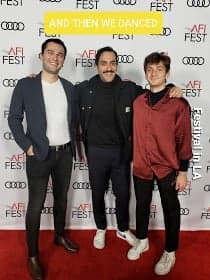
And then We Danced. Actor Bachi Valishvili, director Levan Akin, and actor Levan Gelbakhiani. Photo by José Alberto Hermosillo, Festival in LA ©2019

First-time actor Levan Gelbakhiani is as extraordinary as Merab. His performance brings freshness and intensity to the character. His most challenging scene was dancing alone in the living room - not only because of the space limitations but also because of the physicality required and the real pain he felt in his feet. The young actor recounted how his grandma dragged him to those Georgian dance performances – she wanted to pass on her ancestral culture to her grandson.

Bachi Valishvili plays Irakli beautifully and has a bright future ahead of him in showbiz. He is a professional dancer, not an actor, but he is open to continuing to grow as an actor and a person. He humbly expressed that during Q&A at Fest 2019.

The vivid soundtrack contains traditional Georgian folk music that contrasts with the joyful ABBA songs. The director clarified that ABBA was very popular in Georgia when it was part of the Soviet Union.

“And Then We Danced” is the most controversial film in Georgia’s history, not only for centering the story on a young man who discovers his fascination with another man, but also for mixing new mannerisms with traditional, charged, sacred dances, all with an enormous amount of testosterone and masculinity. These manly rigorous dances are also used as part of their formal weddings.
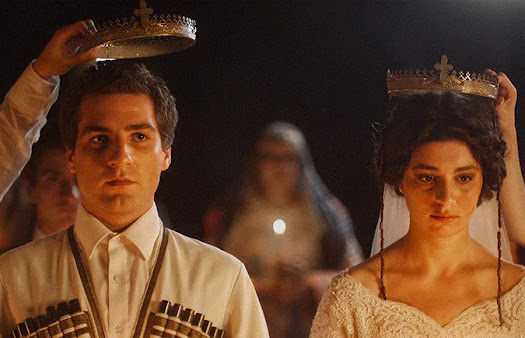
And Then We Danced, Armenian wedding. Photo courtesy of Music Box Films
And Then We Danced, an Armenian wedding. Photo courtesy of Music Box Films
 
The director and the cast received death threats during and after production. The actors said they were surprised by the public’s hostile reactions in their native land. Anti-gay groups sent interrupters to the screenings, and even today, some people are very upset about using the Georgian “ultra-masculine” culture in what they called a “gay movie.”

Amid the conservative confines of Eastern Europe, Georgia is perhaps one of the most progressive countries when it comes to LGBTQ rights. However, those civil liberties are not embraced by all members of society. In other former Soviet Republics, including Russia, the punishment is considerable jail time.

Georgian dance schools were established in the 1950s as a symbol of national identity to preserve centuries of dance tradition. Today, talented and attractive folk dancers are a big tourist attraction.

Yet another controversy arose when Sweden, not Georgia, chose “And Then We Danced” as its best International Feature Film candidate for the 92nd Academy Awards. 

This charming and delightful picture is worth seeing more than once for its honesty and authenticity. After all, we only live once and should do it openly with different cultures and lifestyles.
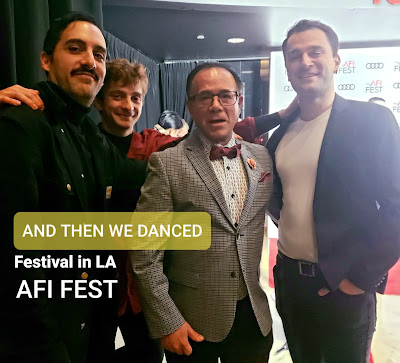
 

And then We Danced. Actor Bachi Valishvili, director Levan Akin, actor Levan Gelbakhiani & critic José Alberto Hermosillo, Festival in LA ©2019
And then We Danced. Actor Bachi Valishvili, director Levan Akin, actor Levan Gelbakhiani & film critic José Alberto Hermosillo, Festival in LA,  ©2019

Related Articles: 
 
IF YOU ARE READING FROM A MOBILE DEVICE, CLICK: view web version FOR OTHER COOL FEATURES SUCH AS TRANSLATE POWERED BY GOOGLE, AN INTERACTIVE FILM FESTIVAL CALENDAR, AND MORE.
 
Festival in LA ©2020

Wednesday, November 30, 2016

Neruda: The Runaway Poet

By José Alberto Hermosillo

“Neruda” is a cinematic work of art, blending poetry, temperament, and passion, featuring a fantastic cast and beautiful Chilean scenery. It is the perfect antihero movie.


In “Neruda,” we learn that Chilean poet and politician Pablo Neruda wrote his famous “Love Poems” in the same romantic style shown in the Italian Academy Award-winning film “Il Postino.”


We didn’t know that Pablo also expressed his people’s suffering in his “other poetry,” leaving an indelible mark on social justice. His poems served as a patriotic manifesto against the Chilean government, making him Public Enemy Number One.


The complex script of “Neruda” skillfully distinguishes fiction from reality, aiming to spark controversy over Chile’s identity and history.


The film begins suddenly and somewhat awkwardly with a lively discussion about Pablo Neruda’s bourgeois lifestyle and the accusations of treason from members of his own Communist Party in 1948.


While trying to defend himself, actor Luis Gnecco portrays Pablo Neruda’s less-than-charismatic side. He strips away the poet’s image as a saint, hero, or demigod, revealing him as a human being made of flesh and bone.


Even more surprisingly, the audience will encounter a very raw, honest, and sometimes grotesque Pablo Neruda who believes he is above everyone, including himself.


At one point in his life, he had to learn a crucial lesson: humility.


A few minutes into the film, investigator Oscar Peluchonneau, played by seasoned Mexican actor Gael Garcia Bernal, starts narrating the poet’s terrible persecution.

The stunning cinematography by Sergio Armstrong (“No,” “The Club”) begins its dramatic progression with the significance of colors. The palette of “Neruda” evolves beautifully. The contrast of colors can be seen in the dark brown lobby of the Chilean Congress, in the city’s bright yellow, and in the sepia tones of the countryside. Toward the climax, the film shifts to a deep blue, almost purple, representing the port exteriors. The cinematography complements the story’s resolution, which is more lavish with the bright white light of the snow and the vibrant colors of Neruda’s exile in Paris.


Neruda’s wife is portrayed by Mercedes Morán as an upper-class Argentine woman who cleverly says, “Communists hate to work, but they love to burn down churches, and that makes them feel alive.”


The film’s editing could be improved. Its rough start makes it difficult to identify whether the main character, the investigator, or Pablo Neruda will be the focus.


As the film progresses with the poet’s writings, poems, and lyrics, it becomes stronger as the script sharpens. The talented cast develops their characters meaningfully throughout.


“Chile has no freedom of speech---” was a declaration of war from Pablo to the government. He even went further, calling President Gonzalez Videla a traitor.


The film also touches on the concentration camps in Chile, where members of the Communist Party, students, and opponents were imprisoned.


These were the “Desaparecidos,” the hundreds who disappeared without a trace at the hands of the government. Augusto Pinochet managed one of these camps and later became Chile’s dictator.


“Neruda” features a noir style seen in the chase between the desperate investigator and the sneaky poet.


This biopic of the award-winning Chilean poet takes a similar approach to Michael Mann’s crime drama “Heat.” The difference is that “Neruda” depicts a thinking fugitive who is unaware of any crime, other than fighting for his right to free speech.


Pablo Larrain, photo by José Alberto Hermosillo, Festival in LA, ©2016

Academy Award-nominated director Pablo Larrain (“No,” “Tony Manero,” “Jackie,” “The Club”) spoke at the AFI FEST presented by Audi 2016 in Los Angeles, saying: “You cannot put Neruda in a box. You cannot describe him as smart, educated, and distinguished because he was someone larger-than-life.”


Larrain added, “It’s complicated to put poetry in cinema. Poets describe our society as it is.”


Pablo Larrain, photo by José Alberto Hermosillo, Festival in LA, ©2016

Pablo and his brother, producer Juan de Dios Larrain, created a remarkable film.


With “Neruda” and “Jackie,” the Larrain brothers craft magic on screen.

The Chilean official entry for the Academy Awards for best foreign language film takes viewers on a journey through the stunning landscapes of Chile, its ports and cities, and the Andes region of “Mapuche.”


In the last confrontation between Pablo and the investigator, he compares himself to Napoleon’s defeat at Waterloo.


Pablo Larrain, director, José Alberto Hermosillo, film critic, Festival in LA, ©2016

The film’s charm emerges when Pablo writes letters and verses about how deeply each character is affected by his life and by his escape from Chile.


In a final letter, Neruda describes real-life events that are about to happen. These words would have more meaning if those situations were part of one of his novels, including the fate of his loyal wife and the stubborn detective who followed him to the “end of the world,” literally.


The Nobel Prize-winning poet was the one who enamored women and broke their hearts.


Pablo Neruda helped break down the walls of hate and abuse of power in Chile. He continued his fight through his writings from exile in France and Italy, using words that gave hope to the people of Chile during the darkest moments of the country’s history. 


Related Articles:

“Endless Poetry” The Atypical Universe of Alejandro Jodorowsky

“Cezanne and I” An Extraordinary Journey of Art and Friendship

“Colossal” Not Your Typical “Godzilla” Movie

25 Great Foreign Films that Did Not Get Distribution in US Theaters


Copyright © Festival in LA, 2016

Thursday, November 17, 2016

FRENCH "DIVINES" WINS THREE AWARDS AT THE AFIFEST 2016

By José Alberto Hermosillo
AFI Fest 2016 Presented by Audi announced the Jury and Audience Awards Winners.

Excellent choices. The 2016 AFIFest winners are absolutely fantastic.
Houda Benyamina, French Director, Divines. Photo by Jose Hermosillo,  COPYRIGHT Festival in LA, 2016
The French production "Divines" won three of the awards, the film has plenty of diversity and creativity, and displays an insightful vision of teenagers in trouble, a must see!!!
Other winners were "The Future Perfect," a corky comedy of Asian immigrants in Argentina. And a war drama "Land of Mine."
THE FUTURE PERFECT, DIR Nele Wohlatz. Photo by Jose Hermosillo © Festival in LA, 2016 

New Auteurs Grand Jury Award: THE FUTURE PERFECT

DIVINES, Dir. Houda Benyamina and actress Amamra Photo by Jose Hermosillo © Festival in LA, 2016
New Auteurs Special Jury Mention for Acting: Oulaya Amamra for DIVINES
Photo by Jose A. Hermosillo © Festival in LA, 2016

Grand Jury Award – Live Action Short: ICEBOX
Grand Jury Award – Animated Short: PUSSY
Live Action Short Special Mention for Comedic Narrative: HOUNDS
Live Action Short Special Mention for Documentary: THE SEND-OFF
Live Action Short Special Mention for Acting: DREAMING OF BALTIMORE
Live Action Short Special Mention for Cinematography: A THOUSAND MIDNIGHTS
Live Action Short Special Mention: SPEAKING IS DIFFICULT
Animated Short Special Jury Mention: SUMMER CAMP ISLAND
Animated Short Special Jury Mention for Mixed Media: DEER FLOWER
Animated Short Special Jury Mention for Visual Aesthetics: SUPERBIA
Mikael Chr. Rieks, producer, Land of Mine, Denmark. Photo by Jose Hermosillo © Festival in LA, 2016  

World Cinema Audience Award: LAND OF MINE
New Auteurs Audience Award: DIVINE
American Independents Audience Award: DONALD CRIED
Breakthrough Audience Award: DIVINES
Breakthrough Audience Award First Runner-Up: ONE WEEK AND A DAY
Breakthrough Audience Award Second Runner-Up: THE RED TURTLE
Photo by Jose Hermosillo © Festival in LA, 2016


Follow us on Twitter 
Like us on Facebook

Related Articles:

25 Great Foreign Films that Did Not Get Distribution in US Theaters

“Cezanne and I” An Extraordinary Journey of Art and Friendship

“Elle” The New “Basic Instinct” with a “French Twist”

“My Life as a Zucchini” The Beautiful Animated Life of a Little Swiss Boy

“Neruda” Runaway Poet

“Colossal” Not Your Typical “Godzilla” Movie

MEXICO'S "THE NIGHT GUARD" WINS LA FILM FESTIVAL

15 Must-See French Films at COLCOA 2017

10 The Best Latino Performances of 2016 And Their Absence From The Nominations

“Endless Poetry” The Atypical Universe of Alejandro Jodorowsky

“Polina” From the Classic Russian Ballet to the World of Contemporary Dance


Copyright © Festival in LA, 2016

Thursday, November 12, 2015

COLOMBIAN FILM WINS AFI FEST 2015

By Jose Alberto Hermosillo,


AFI FEST 2015 Presented by Audi "Awards"

The Colombian film "Land and Shade/LA TIERRA Y LA SOMBRA" wins the New Auteurs Grand Jury Award. The film is directed by César Augusto Acevedo.

"Mustang" cast and producer. Photo by: Jose Alberto Hermosillo

The French film shot in Turkey "Mustang" wins the New Auteurs Audience Award.

New Auteurs Grand Jury Award: LAND AND SHADE / LA TIERTA Y LA SOMBRA (DIR César Augusto Acevedo)


Special Jury Mention for Direction: DISORDER (DIR Alice Winocour)

Dir Lorenzo Vigas, Desde Allá, (Venezuela) Photo by Jose Alberto Hermosillo

Special Jury Mention for Screenplay: DESDE ALLÁ (DIR/SCR Lorenzo Vigas)

GRAND JURY AWARDS, LIVE ACTION AND ANIMATED SHORT

Grand Jury Award for Live Action Short: BOYS (DIR Isabella Carbonell)

Grand Jury Award for Animated Short: WORLD OF TOMORROW (DIR Don Hertzfeldt)

Live Action Short Special Mention for Nonfiction Filmmaking: 
The Reagan Shorts — RONALD REAGAN LIGHTS THE LIGHTS, RONALD REAGAN PARDONS A TURKEY, MARYLAND PUBLIC TELEVISION INTERVIEWS THE REAGANS (DIR Pacho Velez)
Photo by Jose Alberto Hermosillo.
Animated Short Special Jury Mention for Screenwriting: TEETH (DIRS Tom Brown, Daniel Gray)

Animated Short Special Jury Mention for Creative Vision: MANOMAN (DIR Simon Cartwright)

AUDIENCE AWARDS:
World Cinema Audience Award: LANDFILL HARMONIC (DIRS Brad Allgood, Graham Townsley, Juliana Penaranda-Loftus)

"Mustang" Girls. Photo by Jose Alberto Hermosillo.
New Auteurs Audience Award: MUSTANG (DIR Deniz Gamze Ergüven)
Photo by Jose Alberto Hermosillo
American Independents Audience Award: JAMES WHITE (DIR Josh Mond)
 
"Ma" Photo by Jose Alberto Hermosillo

Breakthrough Audience Award: MA (DIR Celia Rowlson-Hall).
AFI FEST Staff and Mustang cast. Photo by Jose A. Hermosillo. Copyrights Festival in LA

RELATED ARTICLS: 
“Ixcanul” Pursuits Guatemala’s First Oscar® Nomination 
“A War” An Important Call to Change the Rules of Engagement

Copyright © 2015 Festival in LA

https://www.facebook.com/pages/Festival-In-LA/649050868483113