Showing posts with label immigrants. Show all posts

Saturday, November 20, 2021

Drunken Birds: Paradox and Poetry in a Canadian Immigration Drama

By José Alberto Hermosillo 


Stunningly photographed and well-executed, “Drunken Birds” reveals the beliefs, actions, and passions of its three uniquely opposite characters with poetic regard across Canada and Mexico.

“Drunken Birds” centers its narrative on love, abandonment, and coming-of-age memories. Divided into three acts, like “Days of Heaven,” “Amores Perros,” and “Magnolia,” the Canadian production offers a compelling dramatization not far from reality. 

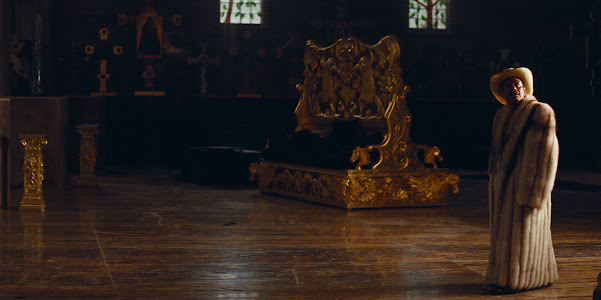
Inspired by seasonal migrant workers in Canada, the film opens with a young man arriving at an apartment complex in Montréal, then shifts to a flashback in Mexico, where it shows a mansion with white tigers and other abandoned, unrestrained animals. Then, a portrait of a man who, more than a patriarch, is a drug lord. He is spending time in prison because someone betrayed him.

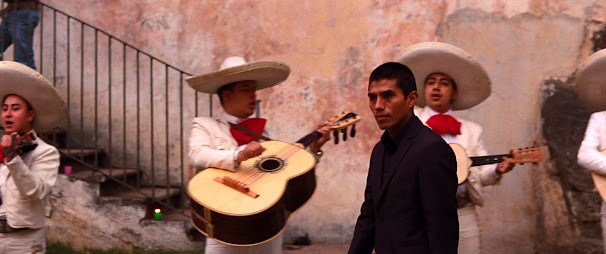
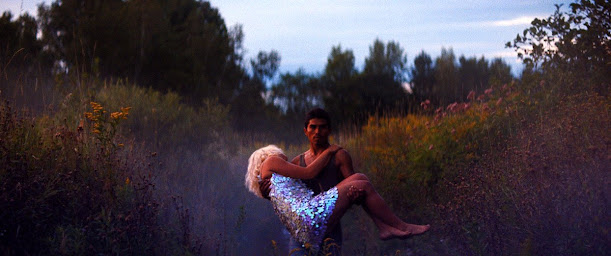
The place holds a secret: a love triangle in which Willi (Jorge Antonio Guerrero) falls for Narco’s wife, Marlena (Yoshira Escárrega). Fearing for their lives, the young lovers flee to Canada, each taking a different route.

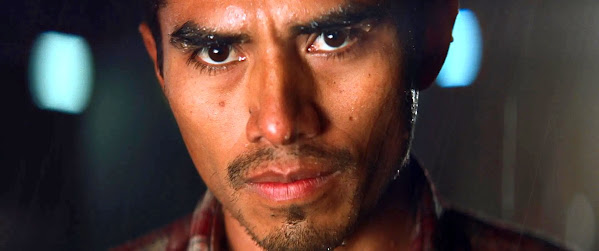
At the Ferme, Vinet – one of the oldest agricultural centers outside Quebec – Willi, along with other seasonal workers, learns the rules and responsibilities of harvesting lettuce. Four years pass, and Willi still misses Marlena, the love of his life.


It is hard to forget a loved one, even in a tranquil oasis.


After his breakthrough performance as Fermín opposite Yalitza Aparicio in the 2018 Academy Award-winning feature “Roma,” Jorge Antonio Guerrero takes the lead in this transcendental Canadian production, playing a Mexican immigrant worker in Canada.

The story takes a dramatic turn when Willi crosses paths with Julie (Hélène Florent), the neglected owner of a Canadian farmhouse, and her precocious teenage daughter, Lea (Marine Johnson), who only wants to have fun in the city.

The complications are straightforward when their past confronts their present. Although the conundrum keeps us wondering about possible resolutions. Everything becomes chaotic when Lea’s silence implicates Willi in wrongdoing.

The brief flashbacks diffuse the story’s emotional context, but the imagery’s beauty holds the narrative well.

“Drunken Birds” is also inspired by the 2011 Mexican Oscar entry “Miss Bala.” The script details the countries where the stories occur: Mexico, Canada, and China.

The well-balanced cinematography is Sara Mishara’s responsibility. She accomplishes cinematic glory by splendidly capturing the “magic hour” lighting. Sara shot the project “Old School” with a 35mm camera. The film’s grain gave her the convenience of plenty of depth in long shots and enhanced the clarity of close-ups, giving the movie the desired “dreamlike style.”

According to its director, Ivan Grbovic, “the characters of this intriguing triptych have distinct personalities with multidimensional layers that are not necessarily likable, although their behaviors are driven by love, desire or curiosity.” He added, “In this puzzle, all the pieces do not always fall together, but they are equally important.”

The independent production has the potential for greatness despite limited resources, although the “bad hombres”’ entrance to the hacienda in Mexico needed better choreography. There are plenty of other films in which the tension is in sync with a festive atmosphere, as seen in local productions such as Luis Puenzo’s “Old Gringo,” Baz Luhrmann’s “Romeo + Juliet,” and Ruy Guerra’s “Eréndida.”

“Drunken Birds,” winner of Best Cinematography at the Philadelphia Film Festival, premiered at the Toronto International Film Festival. It was selected as Canada’s Best International Feature Film entry for the 94th Academy Awards.

Willi’s noble heart compels him to help the needy, which is in his nature, even if it causes trouble with dramatic consequences in his immediate future. We have to remember that no one is guilty until proven otherwise, and no one is blameworthy until the truth comes out, but we are certainly not sure that will ever happen in fiction.


The filmmakers said that people in Canada associated the word “drunk” with love or joy, and birds with unity and migration. It is like a flock of birds moving together instinctively in complete freedom, just as we relate to the film’s characters’ stories effortlessly. 

The climax of “Drunken Birds” or “Les Oiseaux ivres” occurs when the three stores converge at a single point. At that precise moment, justice is most urgently needed, yet the irony is that we cannot always get what we want in life, and we must remember that the greatest enemy of all is silence.

Related Articles:

IF YOU ARE READING FROM A MOBILE DEVICE, CLICK: view web version FOR OTHER COOL FEATURES SUCH AS TRANSLATE POWERED BY GOOGLE, AN INTERACTIVE FILM FESTIVAL CALENDAR, AND MORE AWESOME ARTICLES.

 Festival in LA ©2021

Friday, July 28, 2017

Endless Poetry: The Atypical Universe of Alejandro Jodorowsky

By José Alberto Hermosillo

“Endless Poetry” is a visual feast for the soul and a cinematic masterpiece.
                                               
In his latest and most personal film, Alejandro Jodorowsky recounts his adolescent years in Tocopilla, Chile, as part of a traditional immigrant Russian-Jewish family, using his unique, fascinating, and surrealist style of storytelling.

The poet, writer, filmmaker, philosopher, and accomplished artist Jodorowsky expresses himself in the only way he can, through writing.


One of the first and most severe actions any individual must take is to cut off the genealogical tree—an actual act of bravery required to become independent.

Endless Poetry, Photo courtesy of Abkco Records/Films

Many of the conversations young Jodorowsky (played by his son, Adam Jodorowsky) has with his Alter Ego (played by Alejandro) involve extraordinary philosophical concepts that manifest as symbolism. 
 
By taking off the mask imposed by society, the poet must be bold enough to express his emotions clearly.

The poems become shapes and forms, colors and sounds, integrating perceptions of love, greed, spirituality, cowardice, bravery, identity, sexuality, homosexuality, friendship, honesty, fidelity, and desire.
 
Escorted by other artists, musicians, dancers, contortionists, painters, architects, and writers, the poet’s journey is always a quest for spiritual freedom. 


Endless Poetry. Photo courtesy of Abkco Records/Films
Meeting the established Chilean poets Pablo Neruda and Nicanor Parra was a remarkable experience in Jodorowsky’s life that led to a close friendship, especially with Nicanor. Their relationship mirrored that of Emile Zola and Paul Cezanne centuries earlier, as depicted in Daniele Thomson’s French biopic “Cezanne et moi.”

The film’s score is haunting. The music composer is Alejandro’s son, Adam Jodorowsky, who also plays the lead role in this film and in many of his father’s projects, such as “The Dance of Reality” (2013) and “Santa Sangre” (1989).

Alejandro’s vivid imagination is influenced by his Chilean heritage and the cultures of the countries he lived in—Mexico, France, and Spain. His Jewish, Russian, and Latin roots blend together, reflecting a high degree of sophistication in his Corpus de Obra (body of work).


Jodorowsky’s filmmaking technique is exceptional, comparable to the works of the Colombian artist Botero or the Mexican muralist José Chavez Morado.


“Shut-up! Poets don’t give explanations.” Alejandro shouts, making a powerful statement against self-censorship.


Jodorowsky is not afraid to expose his soul in the nakedness of the body. In writing, those inhibited thoughts must go. Remember, poetry is food for the soul.


The poet is always seeking his own identity.


A muse is essential to the poet’s inspiration. In Jodorowsky’s case, she was the mature woman who shaped his life into adulthood. She was the one who seduced him into his first sexual experience and, furthermore, into an eye-opening fetishist ritual and other perversions.


Endless Poetry. Photo courtesy of Abkco Records/Films

The need for attention and dependence on affection shaped his life, but he didn’t fall until she broke his heart. She was also the same unconventional woman who inspired Nicanor Parra’s poems.
 
After a fire, desolation is all that remains. The only badge an artist can carry is the intellect within - hate, jealousy, and guilt. But emptiness brings depression. Suicide is a constant thought for many artists who have not succeeded.
 
Other artists inspire love and respect. Artists help discover the beauty in life. Artists can turn the music up and start the party with joy and happiness. Excess of freedom can turn into anarchy.
 
Finding legitimacy in the tarot is not an esoteric act of sorcery or an empirical labor of witchcraft; it could also bring hope to the artistic community.
 
Overindulgence brings remorse. With faith, artists must confess all their sins, and nothing is irrelevant, finding comfort in religious conviction.
 
A poet can get the “Rock Star treatment” from friends, fans, and strangers. After all, poetry is an illusion, and life is a game.

Endless Poetry. Photo courtesy of Abkco Records/Films
The circus is another critical component in Jodorowsky’s films. In the chaos, we can find elements of illusion and hypnotic colors. The implausible animals are becoming part of the story as well. 

Let’s not forget the multifaceted clowns who awaken destructive emotions in the audience, where anxiety can confront happiness and amusement.

The circus has a unique sense of an eternal “fiesta” that keeps everybody’s spirit alive.

At the end of the 1960s, the world’s political arena was full of paranoia - “The Cold War was still cold,” Alejandro remembers.

The repression of the artists and intellectuals by the Chilean government was constant.

Burning the material elements of his childhood in his parents’ house represents a painful goodbye to his past – another act of liberation, heralding a brighter future.

Endless Poetry. Photo courtesy of Abkco Records/Films

The film’s glorious moment arrives with a colossal Carnival. There, hundreds of dazzling Red Devils and White Skeletons dance in a monumental cacophony of color and rhythm - the infectious Latin beat of the catchy cumbia song makes everybody feel like dancing.


Then a profound reflection unfolds as Jodorowsky states, “I can’t change the world, but I can start changing myself - I will burn the bridges down.”


Due to the political anticlimax in Chile, Jodorowsky makes a painful decision to say “Adios” to the people he loves and to leave the country by taking a boat into eternal exile. 


Endless Poetry. Photo courtesy of Abkco Records/Films

The nostalgic farewell moment comes from the traditional goodbye song “La barca de oro/The Golden Boat.” With Paris in mind, destiny will take him elsewhere. For instance, Mexico was the country that helped him start his career as a filmmaker. With that location in mind, he may continue the trilogy he began with “The Dance of Reality.”


Jodorowsky’s recurring themes are universal. His distinctive style of filmmaking has remained consistent since his controversial first work, “Fando and Lis,” and has persisted through “El Topo,” “The Holy Mountain,” and “Santa Sangre.”

“Endless Poetry” can be compared to other works of fantasy, surrealism, and existentialism, such as Julie Taymor’s “Titus” (1999) and “Frida” (2002), Alejandro G. Iñarritu’s Best Picture Oscar-winning “Birdman” (2014), Tarsem Singh’s “The Fall” (2006), Peter Greenaway’s “Eisenstein in Guanajuato” (2015), and the French production “Slak Bay” (2016), directed by Bruno Dumont. 

It is worth mentioning Terrence Malick’s “The Tree of Life” (2012) and “Knight of Cups” (2015); Jaco Van Dormael’s “Mr. Nobody” (2013); and the Polish high-spirited masterpiece “Field of Dogs/Onirica” by Lech Majewski (2014). Those eccentric titles follow a pattern of enormous philosophical concepts that seek to explain the meaning of life in movies.

Jodorowsky’s style, as reflected in “Endless Poetry,” can be compared to the works of other great masters of cinema, such as Pasolini, Luis Buñuel, Federico Fellini, or even David Lynch. The truth is, “Endless Poetry” is a very Jodorowsky film in every sense.


Related Articles:   

Cezanne and I: An Extraordinary Journey of Art and Friendship

Elle: The New “Basic Instinct” with a “French Twist”

My Life as a Zucchini: The Beautiful Animated Life of a Little Swiss Boy

Colossal: Not Your Typical “Godzilla” Movie


Copyright © 2017 Festival in LA