
 |
| “Roma” Anarchy and Repression in an Epic B&W Mexican Drama- Festival in LA ©2019 Netflix |
“Roma” is a film of extraordinary beauty and endless poetry, featuring a powerful humanistic and sociological perspective along with subtle political implications.
This exceptional black-and-white Mexican drama gains universal appeal as we delve into its emotional depths beneath the compelling story that could happen to anyone, anywhere in the world.
Alfonso Cuarón’s childhood memories focus on the importance of “place” and “time,” two of the most definitive elements for understanding the true meaning of “Roma.”
In “Roma,” women are depicted as brave, fearless, and lonely. They look out for themselves, support one another, and care for their children. Men are portrayed as irresponsible, with infidelity, irresponsibility, and constant machismo pushing them out of the picture.
 |
| Roma is being screened at the Academy by Netflix. Photo Jose Hermosillo ©2019 Festival in LA |
The main character of “Roma” is Cleo, played by Yalitza Aparicio, delivering a remarkable and fearless performance.
She is the nanny for four kids: a little girl and three young boys, including Alfonso, the stubborn middle child. The youngest is Carlos, a boy with a vivid imagination.
Cleo has an affair with Fermín (Jorge Antonio Guerrero). He and hundreds of other young trainees are counter-fighters trained by an American CIA agent and a Korean instructor, who are hired to violently suppress leftist students protesting.
What “Roma” doesn’t tell you is that in 1971, right after the Olympic Games Mexico 68 and the 1970 Soccer World Cup, Mexico City was on the verge of economic and political chaos. The protesters in the film are portrayed as “victims” of the circumstances. Yet, these so-called victims were also contributing to the chaos by breaking the law—beating up business owners, patrons, and workers—stealing, looting, graffiti-ing, and harming innocent people.
Moreover, these actions by the students don’t justify the government’s killing of over a hundred people during the “Corpus Christi Massacre,” depicted in the film, when Cleo and the grandmother enter a furniture store to buy a cradle for the baby.
“Roma” attempts to portray Mexican history accurately, but it fails to present both sides of the “tortilla.”
Alfonso Cuarón’s personal political agenda subtly accuses and points fingers through symbolism.
The propaganda elements set the right mood for the film. Still, even these are open to interpretation, and many witnesses of those chaotic times may perceive the events differently.
Most of Cuarón’s films are set within specific time frames. For example, “Gravity” takes place during one orbit of a shuttle around Earth, while “Roma” unfolds over nine months of Cleo’s pregnancy.
At the start of this essay, we discussed the importance of “place,” not just as a physical location but as a transitional space where events happen.
In “Colonia Roma,” people pass by without stopping. Their destination might be the Zócalo, but we’re not meant to know for sure. That’s why the film’s framing is intentionally narrow.
 |
| Alfonso Cuarón working in Roma behind the scenes, ©2019 Netflix. |
The cinematography of “Roma” is stunning, and Cuarón handled the camera work with great care. Beyond its beauty and emotional depth, the film also conveys other stories through its rich symbolism.
The bright black-and-white visuals evoke the Golden Age of Mexican cinema.
Recreating 1971 Mexico City was difficult because of the area’s history of damage from two major earthquakes.
Production designer and Oscar© winner Eugenio Caballero (“Pan’s Labyrinth,” “A Monster Calls”) also grew up in Cuarón’s neighborhood. The extensive pre-production process involved detailed research to accurately portray the specific political moments depicted in the story.
 |
| Yalitza Aparicio as Cleo in Roma ©2019 Netflix |
It is fascinating to spot scenes referencing films by Guillermo del Toro, Alejandro G. Iñárritu, and Cuarón himself, often called “The Three Amigos.”
For example, the extended scene where Cleo enters the sea to rescue little Sofi resembles the moment when Maribel Verdú goes into the water in “Y tu mamá también.”
Another example is the European man inside the costume at the party in the woods; it’s a tribute to “Pan’s Labyrinth.”
Finally, the dog “El Borras” escaping the house references “Amores Perros.”
These fun-to-watch moments are easy to recognize for their perfect recreation and camerawork, driven by Cuarón’s energetic eye.
 |
| Roma behind the scenes ©2019 Netflix |
This semi-autobiographical film, set in the 1970s, draws on the Italian Neorealism period. The black-and-white epic features no musical score, and the songs are incidental, coming from the radio or TV. These songs influence the characters’ moods.
The sound design is a vital part of the film. These sounds enhance the climactic moments with a hyper-realistic effect and a vivid sense of experiencing the events, such as the earthquake and ocean waves, connecting them with nature.
 |
| Roma’s real family members and the actors who played them. www.festivalinla.com |
Roma’s casting directors carefully searched for people who looked and felt like the original family.
They traveled all the way to Tlaxiaco in the southern state of Oaxaca to find the lead actress, Yalitza Aparicio, who was then a kindergarten teacher.
 |
| Yalitza Aparicio, Kindergarten Teacher. Festival in LA. |
Yalitza said, “It was a real-life experience to work with Alfonso Cuarón.” She was also fortunate to meet Cuarón’s honest nanny, Libo. Before filming started, the two women passionately discussed their roots. Both came from indigenous, marginalized communities.
“Libo is a woman with a big heart,” Yalitza said. “I wanted to honor her life with my performance, for Libo gave her work and heart to the Cuarón family.”
In the most awarded film of the year, the audience cares about every character without sugar-coating their emotions.
The film includes elements of magic realism. The famous Professor Zovek, an actor called Latin Lover, standing on one leg, provides moments of humor.
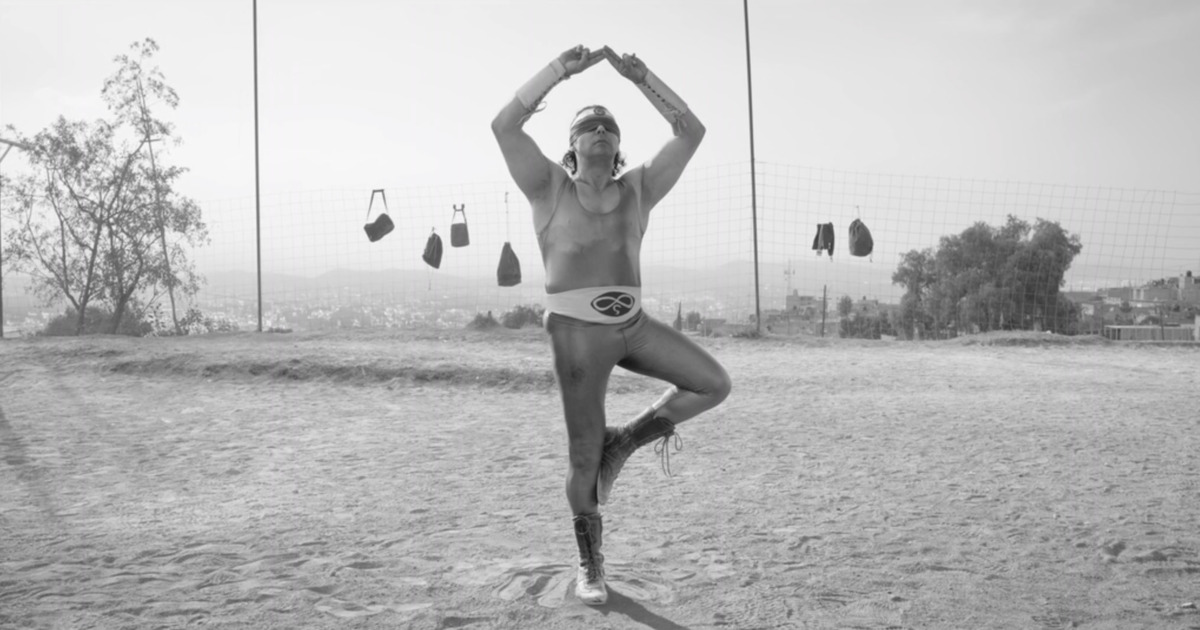 |
| Latin Lover as Professor Zovek in Roma ©2019 Netflix |
For the director, “Roma” is a corridor full of memories. Cuarón wanted to keep it authentic, so he didn’t give the full script to any actors or crew members. He wanted realistic reactions and for the actors to focus on the family’s journey, responding spontaneously.
 |
| Roma behind the scenes ©2019 Netflix |
The Academy Award-winning director stated, “The events depicted in ‘Roma’ have consequences in today’s society, where hate and exclusion expose the vulnerability of the human race.”
The Golden Lion winner also reminds us, “When we watch a movie, viewers share the same experience; they open their senses and connect with the story. It is part of human nature.” He added, “The variety of colors reflects the richness of our society.”
For many critics, including me, “Roma” is the best movie of the year, not only for its visual beauty but also for how it makes us feel.
“Roma” is a significant achievement for all the talented people involved in its creation and for Alfonso Cuarón, who rightly earns his place among the most visionary directors of contemporary cinema.
Roma and Ten New Mexican Trailers


