Wednesday, April 8, 2020

And Then We Danced: Folk, Love & Pride in Georgia

By José Alberto Hermosillo
 
AFI FEST FILM REVIEW: “And Then We Danced,” a coming-of-age, joyful drama about personal liberation and self-realization in Georgia. Unforgettable, warm, and unique.

The Swedish, Georgian, and French co-production, shot in the Caucasus region, chronicles the story of three aspiring professional dancers: Merab, Mary, and Irakli, the newcomer. They train hard and compete to win a coveted spot in the prestigious National Georgian Ensemble.

The first conflict arises when the strict instructor demands that the students adhere to the rules of the predominantly “masculine” dance. At the same time, the young dancers want to soften the harsh regulations of the old traditions, something nearly impossible in their society.

The second conflict occurs on a lucky day when a new dancer arrives, disrupting the group’s natural balance. Irakli is a strong male who impresses everybody with his prodigious dancing skills, instant charisma, and charming smile. Everybody, including Merab, feels jealous and powerless when he enters the competition.

Besides prestige, being a lead dancer means being socially accepted, making the family proud, and being a much-needed steady source of income in difficult times.

And Then We Danced, still courtesy of Music Box Films
And Then We Danced, still courtesy of Music Box Films.
 
The rivalry between Merab and Irakli intensifies on the dance floor, but their common struggle draws them together.

Merab slowly discovers that his happiness and world center around another man, Irakli. Feeling pushed aside, Mary hangs on to her friendship with Merab and will do anything to keep him happy.
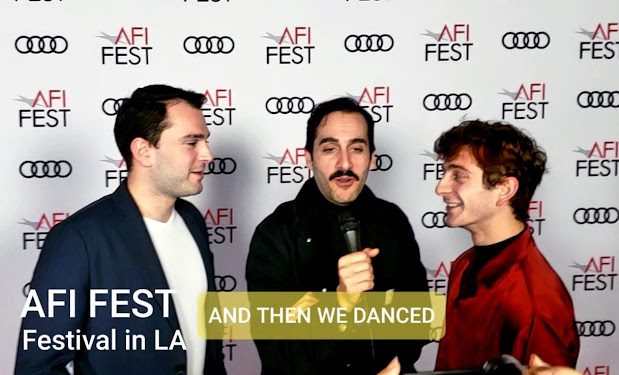
And then We Danced. Photo by José Alberto Hermosillo, Festival in LA ©2019
And then We Danced. Actor Bachi Valishvili, director Levan Akin, and actor Levan Gelbakhiani. Photo by José Alberto Hermosillo, Festival in LA ©2019

“And Then We Danced” takes an authentic approach to Georgian and Armenian cultures, blending those traditions with the modernity of a new generation who want to express themselves freely in their homeland.

The daring writer/director Levan Akin originally planned to make a documentary on Georgian dancers. After watching the first footage, he saw a coherent story and turned it into a feature with a formal narrative. He went out to the streets without permission and shot it “Guerrilla-Style.”

Akin considers himself an extensive researcher, and to make his film even more authentic, he studied the symbolism in Georgian dances, music, and costumes. Then, he juxtaposed those traditional elements of the country’s contemporary culture, subtly displaying the differences between parents, grandparents, and the invigorating youth.
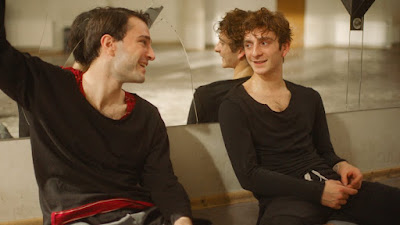
And Then We Danced, still courtesy of Music Box Films
And Then We Danced, still courtesy of Music Box Films.
 
Initially, Akin interviewed some of the best dancers from a locally established dance group, many of whom already knew each other. Once the cast was set, they spent three months rehearsing. 

Levan Gelbakhiani and Bachi Valishvili never knew each other before being cast as Merab and Irakli, respectively. Nevertheless, they dived in and found the chemistry right from the very first moment - and they could externalize those deep emotions for each other in front of the camera from the beginning.
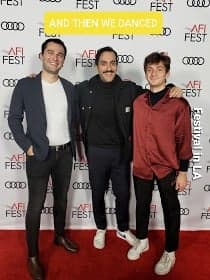
And then We Danced. Actor Bachi Valishvili, director Levan Akin, and actor Levan Gelbakhiani. Photo by José Alberto Hermosillo, Festival in LA ©2019

First-time actor Levan Gelbakhiani is as extraordinary as Merab. His performance brings freshness and intensity to the character. His most challenging scene was dancing alone in the living room - not only because of the space limitations but also because of the physicality required and the real pain he felt in his feet. The young actor recounted how his grandma dragged him to those Georgian dance performances – she wanted to pass on her ancestral culture to her grandson.

Bachi Valishvili plays Irakli beautifully and has a bright future ahead of him in showbiz. He is a professional dancer, not an actor, but he is open to continuing to grow as an actor and a person. He humbly expressed that during Q&A at Fest 2019.

The vivid soundtrack contains traditional Georgian folk music that contrasts with the joyful ABBA songs. The director clarified that ABBA was very popular in Georgia when it was part of the Soviet Union.

“And Then We Danced” is the most controversial film in Georgia’s history, not only for centering the story on a young man who discovers his fascination with another man, but also for mixing new mannerisms with traditional, charged, sacred dances, all with an enormous amount of testosterone and masculinity. These manly rigorous dances are also used as part of their formal weddings.
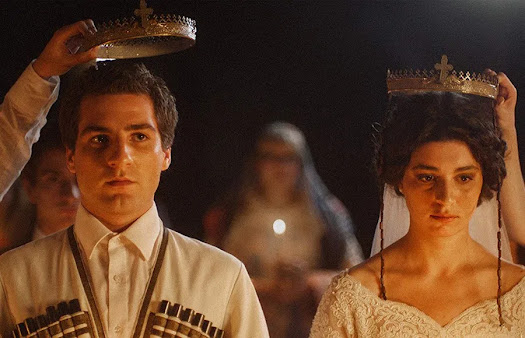
And Then We Danced, Armenian wedding. Photo courtesy of Music Box Films
And Then We Danced, an Armenian wedding. Photo courtesy of Music Box Films
 
The director and the cast received death threats during and after production. The actors said they were surprised by the public’s hostile reactions in their native land. Anti-gay groups sent interrupters to the screenings, and even today, some people are very upset about using the Georgian “ultra-masculine” culture in what they called a “gay movie.”

Amid the conservative confines of Eastern Europe, Georgia is perhaps one of the most progressive countries when it comes to LGBTQ rights. However, those civil liberties are not embraced by all members of society. In other former Soviet Republics, including Russia, the punishment is considerable jail time.

Georgian dance schools were established in the 1950s as a symbol of national identity to preserve centuries of dance tradition. Today, talented and attractive folk dancers are a big tourist attraction.

Yet another controversy arose when Sweden, not Georgia, chose “And Then We Danced” as its best International Feature Film candidate for the 92nd Academy Awards. 

This charming and delightful picture is worth seeing more than once for its honesty and authenticity. After all, we only live once and should do it openly with different cultures and lifestyles.
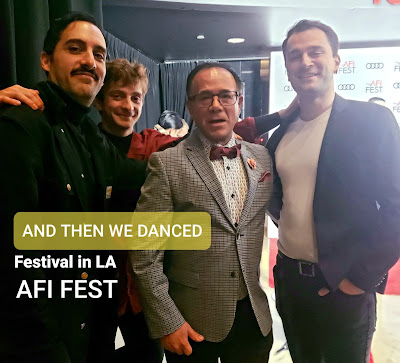
 

And then We Danced. Actor Bachi Valishvili, director Levan Akin, actor Levan Gelbakhiani & critic José Alberto Hermosillo, Festival in LA ©2019
And then We Danced. Actor Bachi Valishvili, director Levan Akin, actor Levan Gelbakhiani & film critic José Alberto Hermosillo, Festival in LA,  ©2019

Related Articles: 
 
IF YOU ARE READING FROM A MOBILE DEVICE, CLICK: view web version FOR OTHER COOL FEATURES SUCH AS TRANSLATE POWERED BY GOOGLE, AN INTERACTIVE FILM FESTIVAL CALENDAR, AND MORE.
 
Festival in LA ©2020

Monday, March 30, 2020

I Lost My Body: I Found A Masterpiece

By José Alberto Hermosillo
I Lost My Body, USA Poster. Photo courtesy Netflix ©2019 

“I Lost My Body” is a hypnotic and poetic animated masterpiece. Remarkable, surreal, bold, and fantastique!

The non-linear narrative unfolds in two parallel and symbolic universes, the Body and the Hand, which intricately converge at the heart-rending moment of separation.

The two leading players must face their unique reality. Naoufel, the body, is searching for love. The Hand, with a mind of its own, is searching for its body. Both characters struggle with a sense of belonging, intermittent recollections of their tragic past, and a mysterious quest to find what truly matters.

I Lost My Body, Gabrielle, and Naoufel. Photo courtesy Netflix ©2019

Working as a pizza delivery boy, Naoufel meets Gabrielle, a young librarian who leaves a lasting impression on him. This is the first occasion someone shows him a ray of affection, and Naoufel falls for Gabrielle.

Gabrielle is a self-absorbed, hardworking woman who looks after her elderly father, the owner of a carpentry shop on the verge of closing.

To break the routine and be close to Gabrielle, Naoufel gets a job at the older man’s shop, where his life will change forever.
 
I Lost My Body. Photo courtesy Netflix ©2019

“I Lost My Body” is an artistic representation of life grappling with tough existential questions.

The sublime and intricate French production is an adaptation of Guillaume Laurant’s novel Happy Hand.

Jérémy Chapin, director and Guillaume Laurant, writer. I Lost My Body. Photo José Alberto Hermosillo, Festival in LA ©2019

Mr. Laurant received his first Oscar nomination for Best Original Screenplay for Amélie in 2001. He also co-wrote A Very Long Engagement in 2004. Throughout a formal narrative, proper use of dialogue and symbolism - in Laurent’s newest adaptation, viewers can get a sense of his innovative “freestyle poetry.”

“It must be peaceful to be cut off from the world like that. To see nothing... hear nothing...” Naoufel.

Jérémy Chapin, director of I Lost My Body. Photo José Alberto Hermosillo, Festival in LA ©2019

First-time director Jérémy Chapin took a modern approach to the book’s narrative and structure. The auteur teamed up with Laurent to adapt the script.
 
Chapin’s style consists of making the invisible visible, which he masterfully achieves in “I Lost My Body.”

Before filming, Chapin asked himself, “How do we make a hand a vibrant character?” He began by looking at his Hand and discovered how to show the Hand’s point of view, then used that perspective to animate the inanimate.

I Lost My Body, The Hand. Photo courtesy Netflix ©2019
 
To lend authenticity to their unique character and to the rest of the film, Chapin underwent an immersive process using various animation techniques: abstract hand drawings, computer-generated animation, and CGI imagery.

“I Lost My Body” is a work of psychological fiction that achieves universality while addressing lost love and other meaningful themes.


CLICK PLAY ON AND CONTINUE READING:

The stunning soundtrack composed by Dan Levy is cosmic, mystical, and whimsical. We perceive ambient sounds blending in with classic, electronic, ethnic, contemporary, French rap, and lullabies. Digging deeper, a fusion of Buddhist and Middle Eastern music identifies with every character and complements the film’s haunting atmosphere.

I Lost My Body, French poster. Netflix ©2019
 
After I saw the film, I was intrigued by the similarities with the crawling Hand of the 1962 Mexican masterpiece “The Exterminating Angel/El ángel exterminador” by Luis Buñuel. I asked the director if he wanted to make a surreal animated piece. He replied, “No. “I Lost My Body” is hard to place in a box... I avidly wanted to find what it means to be a human in the story.” 

Chapin’s experimental narrative explores and mixes different genres: action, drama, suspense, romance, and horror. The concept, bold and volatile, works perfectly.


I Lost My Body, Q&A. Photo José Alberto Hermosillo, Festival in LA ©2019.

In recent years, only a handful of animated films can be considered existentialist: “Waking Life” (2001) and “A Scanner Darkly” (2006), both directed by Richard Linklater (“Boyhood”). Salma Hayek’s production of Kahlil Gibran’s “The Prophet” poems, 2014. “My Entire High School Sinking into the Sea,” 2016, and the Oscar-nominated Swiss-made stop-motion animation “My Life as a Zucchini” also from 2016.

This highly original European animation is set apart from Hollywood’s conventional narrative by exploring more daring subjects with a fresher approach. If “I Lost My Body” were Pixar, the Hand would be talking.

I Lost My Body, sign. Photo José Alberto Hermosillo, Festival in LA ©2019

“I Lost My Body” won numerous awards, becoming the first animated film to win the Critics’ Week Grand Prize at Cannes 2019, the COLCOA Audience Award, and the Best Feature Award at the Annecy Film Festival. It also won three Anny Awards, including Best Independent Animation, Best Music, and Best Writing. The film crowned its award season with a César Award and an Oscar nomination for Best Animated Feature.

To say, “I lost my body,” means declaring, “I lost myself.” 

Symbolically speaking, one is losing not only a part of the body but also dreams, goals, jobs, friendships, parents, love, and hope.

A melancholic feeling permeates the entire movie. One must find a sense of belonging in a society that continually alienates individuals, driving them to a state of complete emptiness.

“I Lost My Body” has plenty of excitement, evocative moments, and thought-provoking questions, and it hopes to remind us of our forgotten dreams from when we were kids.

Jérémy Chapin, director. Guillaume Laurant, writer. I Lost My Body. Film critic José Alberto Hermosillo, Festival in LA, ©2019


Related Articles:
IF YOU ARE READING FROM A MOBILE DEVICE, CLICK: view web version FOR OTHER COOL FEATURES SUCH AS TRANSLATE POWERED BY GOOGLE, AN INTERACTIVE FILM FESTIVAL CALENDAR, AND MORE.

Festival in LA ©2020

Thursday, March 12, 2020

Troop Zero: Young Earthlings on a Mission

By José Alberto Hermosillo

AFI FEST FILM REVIEW: “Troop Zero” is one of the most refreshing movies of the year. An unforgettable underdog children’s adventure based on real-life events that captivates audiences on Amazon Original - Prime Video.


In 1977, NASA sent two Gold Records into space with “The Sounds of the Earth” inside the Voyager spacecraft. NASA invited children from all over the world to record a greeting in their native language.


The National Aeronautics and Space Administration commissioned a small town in Georgia to represent the country. Local children team up to compete for a spot in the recording.


Troop Zero cast at the AFI FEST red carpet. Photo José Alberto Hermosillo ©2019 Festival in LA

There, we meet Christmas Flint, played by young and talented McKenna Grace (“Gifted,” “How to Be a Latin Lover”). Her mother’s absence makes the young dreamer feel that someone in space is listening.

Mckenna Grace, Troop Zero, AFI FEST. Photo José A. Hermosillo ©2019 Festival in LA

To reach her goal, Christmas gathers a group of misfit Birdie Scouts to compete against other “normal” groups.


The goal is to earn as many “merit badges” as possible to succeed in the mission.


Participating in these trials will bring kids together and leave them with warm, lasting memories of their experiences.


Director Bertie, writer Lucy Alibar, and “Troop Zero” cast. Photo José A. Hermosillo ©2019 Festival in LA

According to directors Bert & Bertie, this vibrant and colorful film required two months of preparation and thirty-two days of filming.


After reading the script, they were inspired to develop the original story of “The Voice Recording to Space Set in the 1970s,” which they found meaningful because it involved unconventional children.


Bertie is the co-director of Troop Zero. AFI FEST Premiere. Photo José A. Hermosillo ©2019 Festival in LA

Bert & Bertie worked closely with screenwriter Lucy Alibar, who also wrote “Beasts of the Southern Wild” in 2012. Miss Alibar said she was open to suggestions and allowed the actors to collaborate during rehearsals.


When creating such “diverse” characters, she stated that “they never put colors on them.” They only knew they needed to be racially mixed. Alibar also mentioned she was inspired by her close friends: “They are so cool and different.”


The filmmakers said staging the dance scene was the most challenging part.


Allison Janney and Viola Davis in “Troop Zero.” Photo courtesy of Amazon Originals ©2019 Prime Video

Having two Academy Award-winning actresses in the cast, Allison Janney (“I, Tonya”) and Viola Davis (“Fences”), made the young actors feel starstruck. But as soon as they started working with celebrities, the youngsters gained the confidence to act at their level. The young actors’ performances are authentic and praiseworthy.


The audience may feel that the action in this “brat pack” movie takes too long to get going, but in the end, “Troop Zero” is a rewarding movie to watch.


Troop Zero cast, AFI FEST Premiere. Photo José A. Hermosillo ©2019 Festival in LA

Other successful films that empower children and embrace the much-needed diversity in Hollywood are “Napoleon Dynamite,” “Little Miss Sunshine,” and “Hunt for the Wilderpeople.” These movies also portray adults and children in their unique and fantastic worlds.

Troop Zero cast. AFI FEST Premiere. Photo José Alberto Hermosillo ©2019 Festival in LA

The film teaches us that winning is not that important. What matters is embracing our differences, accepting each other as we are, and gaining confidence by participating in something larger than life that leads to personal gratification. 

“Troop Zero” is simple, but its freshness and lively characters exceed expectations, making the audience enjoy the ride to the end and beyond. 

Troop Zero cast and film critic José Alberto Hermosillo ©2019 Festival in LA


Related Articles:
My Life as a Zucchini: The Animated Life of a Swiss Boy

IF YOU ARE READING FROM A MOBILE DEVICE, CLICK: view web version FOR OTHER COOL FEATURES SUCH AS TRANSLATE POWERED BY GOOGLE, AN INTERACTIVE FILM FESTIVAL CALENDAR, AND MORE.
 
Festival in LA ©2020

Tuesday, February 18, 2020

MAKEUP & HAIRSTYLING - OSCAR WEEK 2020

José Alberto Hermosillo
Makeup & Hairstyling - Oscar Week www.FestivalinLA.com

For the 92nd Academy Awards, the Academy implemented a few new rules, such as increasing the number of nominated films in the Makeup & Hairstyling category from three to five. 

With more nominees, the competition is stimulating. However, the foundation of the category remained unchanged, considering the pre-established literary genres. They always like contemporary/drama, time-period/horror, and sci-fi/ fantasy.

After viewing the 344 seven-minute "baked-off reels" with clips highlighting the quality of Makeup & Hairstyling, members evaluate the eligibility and attributions of each film. Subsequently, the Academy will announce the shortlist of ten semi-finalists to name the five final movies on Nomination Day.

The Academy established the Makeup & Hairstyling branch in 1982. Recognizing the outstanding work of Rick Baker for the film "An American Werewolf in London" as the first Oscar winner.


Rick Baker is a legendary makeup artist and seven-time Oscar winner. His work includes an American Werewolf in Paris, Planet of the Apes, Men in Black, and Ed Wood. Photo: Gabriel Romero ©2019 Festival in LA

Since then, Mr. Baker has won six more times. His second Oscar was for "Harry and the Hendersons" in 1988. The extraordinary work he executed in Tim Burton's "Ed Wood" earned him his third award in 1994. He won again for "The Nutty Professor" in 1996, "Men in Black" in 1997, "How the Grinch Stole Christmas" in 2000, and "The Wolfman" in 2011.

Makeup & Hairstyling. Photo José Alberto Hermosillo ©2019 Festival in LA

And the nominees for Outstanding Makeup & Hairstyling are:

"Bombshell" Kazu Hiro, Anne Morgan, and Vivian Baker. (WINNER).
“Joker” Nicki Ledermann and Kay Georgiou
"Judy" Jeremy Woodhead
"Maleficent: Mistress of Evil" by Paul Gooch, Arjen Tuiten, and David White
"1917" Naomi Donne, Tristan Versluis, and Rebecca Cole
    Makeup & Hairstyling. Photo José Alberto Hermosillo ©2019 Festival in LA

    "Bombshell" 
    Oscar Winners:
    Kazu Hiro, Anne Morgan, and Vivian Baker

    "Bombshell" recounts the scandal over the sexual harassment charges against Roger Ailes, president of Fox News, by a group of female employees.

    The makeup department researched many books and photo files to recreate each character perfectly. Actors were a big help in achieving the desired look.

    Eye makeup was crucial in the creation of every character. The shape of the eyes was essential to give form and expression to the rest of the face. 

    The stunning haircuts and the dramatic prosthetics were vital in achieving the look. They defused the makeup with an airbrush, and this process was pre-established with digital technology and 3D prints.

    The team had three hours to apply the makeup to 90 different characters. They used heavy-forced makeup to accomplish the specific look of a "Barbie Doll" for some of the main actresses.
    Vivian Baker, Anne Morgan, Kazu Hiro, Makeup Artis nominees, Bombshell.  Photo: José Alberto Hermosillo ©2019 Festival in LA
    Bombshell makeup display. Photo: José Alberto Hermosillo ©2019 Festival in LA
    Bombshell makeup & hairstyling display Photo: José Alberto Hermosillo ©2019 Festival in LA
    Bombshell. Photo: José Alberto Hermosillo ©2019 Festival in LA
    Bombshell. Photo José Alberto Hermosillo ©2019 Festival in LA
    Vivian Baker, Anne Morgan, Kazu Hiro, Makeup Artis nominees, Bombshell.  Photo: José Alberto Hermosillo ©2019 Festival in LA
      Kazu Hiro, Makeup Artis OSCAR WINNER for Bombshell.  Photo José Alberto Hermosillo ©2019 Festival in LA

    "Joker"
    Oscar nominees:
    Nicki Ledermann and Kay Georgiou

    Inspired by Marvel's iconic arch-nemesis, "Joker" is the story of one of the most famous anti-heroes in literature. The film focuses on the character's psychology from its initial transformation into a public enemy.

     "Joker's" Oscar nomination for Best Makeup & Hairstyling can be academic, and the truth is that the creation of the character was much more complicated.

    The makeup & hair department spent months planning, logistics, and copyright clearances from the studio and the clown itself, which is a registered trademark.

    The collaboration between director Todd Phillips and actor Joaquin Phoenix achieved the Joker's final look. Joaquin lost so much weight that he made his characterization impeccable.

    Talented makeup artist Nicki Ledermann ("The Greatest Showman" and "The Irishman") spoke about the layers of makeup she had to apply to Joaquin's character and how she had to be aware of continuity. She used different products for the bloody scenes, including solvable or waterproof makeup.

    The Joker's hair demanded a very distinctive tone of green. Hairstylist Kay Georgiou went to the produce section of a nearby market and found the perfect broccoli green color.

    They applied wigs and makeup in 15 minutes every day. The clown makeup was used 30 days out of the 60 days of the shooting schedule.

    Nicki Ledermann, makeup artist nominee, Joker. Photo José Alberto Hermosillo ©2019 Festival in LA
    Joker's hair's color is broccoli green.  
    Photo: José Alberto Hermosillo ©2019 Festival in LA
     Joker makeup & hairstyling display.  
    Photo: José Alberto Hermosillo ©2019 Festival in LA
    Joker makeup & hairstyling display. 
     Photo: José Alberto Hermosillo ©2019 Festival in LA
     Joker makeup & hairstyling display.  
    Photo: José Alberto Hermosillo ©2019 Festival in LA
    Joker makeup & hairstyling display.  
    Photo José Alberto Hermosillo ©2019 Festival in LA
     "Joker" makeup & hairstyling, Oscar nominee.  
    Photo José Alberto Hermosillo ©2019 Festival in LA
    Nicki Ledermann, makeup artist nominee, Joker. Film critic José Alberto Hermosillo ©2019 Festival in LA

    "Judy" 
    Oscar nominee: 
    Jeremy Woodhead

    "Judy" is the tumultuous biopic of Judy Garland that focuses on her last trip to London in 1968. Renée Zellweger gives an Oscar-worthy performance portraying the legendary actress of "The Wizard of Oz."

    In charge of the stupendous makeup & hairstyling design is Jeremy Woodhead. For the characterization, he used prosthetics, wigs, and contact lenses. The makeup transformation of Renée into Judy took two hours daily with staggering results.
    Judy display. Photo: José Alberto Hermosillo ©2019 Festival in LA
    Judy display. Photo: José Alberto Hermosillo ©2019 Festival in LA

    "Maleficent: Mistress of Evil" 
    Oscar nominees: 
    Paul Gooch, Arjen Tuiten, and David White

    In Disney's "Maleficent: Mistress of Evil," the dark forces doomed the family ties between Maleficent and her goddaughter, Princess Aurora. New allies and evil characters will try to impede the nuptials. Envy, ambition, and prejudices play a big part in this fantastic flick.

    The design of the makeup & hairstyling of "Maleficent: Mistress of Evil" required prosthetics, hair, horns, and a good foundation. The entire composition took two to five hours to apply to most actors. 

    The design of the faces had to match the environment harmoniously. They camouflaged their appearance with fur and feathers accordingly.

    The most challenging task for the makeup department was continuity. They had to match one take to the other during the dramatic scenes. For Angelina's lips, forty shades of red were not good enough; she wanted a more specific type of red. 

    The makeup department paid close attention to detail. The hands and nails of the female characters were oil paintings. For the male characters, they used silicone prosthetics.
    Arjen Tuiten, makeup artist nominee. Maleficent: Mistress of Evil. 
    Photo José Alberto Hermosillo ©2019 Festival in LA
    Maleficent: Mistress of Evil. Photo: José Alberto Hermosillo ©2019 Festival in LA
    Maleficent: Mistress of Evil. Photo: José Alberto Hermosillo ©2019 Festival in LA
      Maleficent: Mistress of Evil. Photo José Alberto Hermosillo ©2019 Festival in LA
    Maleficent: Mistress of Evil makeup display. Photo José Alberto Hermosillo ©2019 Festival in LA
    Maleficent: Mistress of Evil. Photo: José Alberto Hermosillo ©2019 Festival in LA
    Arjen Tuiten is a makeup artist nominee for Maleficent: Mistress of Evil.  Film critic José Alberto Hermosillo ©2019 Festival in LA

    "1917" 
    Oscar nominees: 
    Naomi Donne, Tristan Versluis, and Rebecca Cole

    In "1917," two young soldiers were commissioned to deliver a crucial message to the front line to save hundreds on April 6, 1917, during WW I. As the story progresses in this war movie, the challenges for the makeup and hair department are enormous. 

    The makeup artists went to the Imperial War Museum in London to research the human anatomy and composition of the diverse ethnicities represented in the film to get the facts. They did an exhaustive examination of medical books and photographs, focusing on facial and body hair, broken teeth, and even how the soldiers bled. Coincidentally, the British Museum was founded in 1917 as well.

    The film unfolds in one take. In reality, the filmmakers did it in 30 continuous shots. The makeup crew had a short time to work with the actors for the bleeding scenes, and they built a rig to automatically pump the blood on cue under their uniforms.

    Another fascinating challenge in the makeup process was the use of the "blending point." The blending point is a technique used in movies to camouflage editing. In an epic war flick such as "1917," the makeup department had to utilize this approach to make dead characters turn "blue" in real-time and on a large scale to make this movie as realistic as possible.
    1917 makeup display. Photo: José Alberto Hermosillo ©2019 Festival in LA
    1917 makeup display. Photo: José Alberto Hermosillo ©2019 Festival in LA
    1917 makeup display. Photo: José Alberto Hermosillo ©2019 Festival in LA
    "1917" dental implants, makeup display. Photo José Alberto Hermosillo ©2019 Festival in LA
    Photo: José Alberto Hermosillo ©2019 Festival in LA
    Naomi Donne is an Oscar nominee for "1917."
     Photo: Gabriel Romero ©2019 Festival in LA
    Related Articles:   

    IF YOU ARE READING FROM A MOBILE DEVICE, CLICK: view web version FOR OTHER COOL FEATURES SUCH AS TRANSLATE POWERED BY GOOGLE, AN INTERACTIVE FILM FESTIVAL CALENDAR, AND MORE.
    Festival in LA ©2020